The National Transportation Safety Board (NTSB) released its preliminary report for the ongoing investigation of a fatal crash involving a pedestrian and an Uber Technologies Inc., test vehicle in Tempe, Ariz.
The modified 2017 Volvo XC90, occupied by one vehicle operator and operating with a self-driving system in computer control mode, struck a pedestrian March 18, 2018. The pedestrian suffered fatal injuries, the vehicle operator was not injured.
Ad Loading...
The NTSB’s preliminary report, which by its nature does not contain probable cause, states the pedestrian was dressed in dark clothing, did not look in the direction of the vehicle until just before impact, and crossed the road in a section not directly illuminated by lighting. The pedestrian was pushing a bicycle that did not have side reflectors and the front and rear reflectors, along with the forward headlamp, were perpendicular to the path of the oncoming vehicle. The pedestrian entered the roadway from a brick median, where signs facing toward the roadway warn pedestrians to use a crosswalk, which is located 360 feet north of the Mill Avenue crash site. The report also notes the pedestrian’s post-accident toxicology test results were positive for methamphetamine and marijuana.
SAN FRANCISCO — Two months after a fatal crash that killed a pedestrian, Uber has shut down its self-driving car operation in Arizona, Reuters reports.
The company, however, is not shuttering its entire autonomous vehicle program and will focus on limited testing in Pittsburgh and two cities in California. For the full story, click here.
In its report the NTSB said Uber equipped the test vehicle with a developmental, self-driving system, consisting of forward- and side-facing cameras, radars, Light Detection and Ranging, navigation sensors, and a computing and data storage unit integrated into the vehicle. The vehicle was factory equipped with several advanced driver assistance functions by the original manufacturer Volvo Cars, including a collision avoidance function with automatic emergency braking as well as functions for detecting driver alertness and road sign information. The Volvo functions are disabled only when the test vehicle is operated in computer control mode.
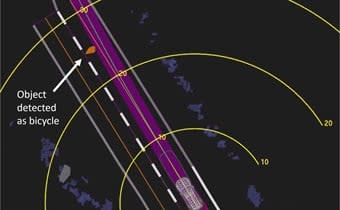
The report states data obtained from the self-driving system shows the system first registered radar and LIDAR observations of the pedestrian about six seconds before impact, when the vehicle was traveling 43 mph. As the vehicle and pedestrian paths converged, the self-driving system software classified the pedestrian as an unknown object, as a vehicle, and then as a bicycle with varying expectations of future travel path. At 1.3 seconds before impact, the self-driving system determined that emergency braking was needed to mitigate a collision. According to Uber emergency braking maneuvers are not enabled while the vehicle is under computer control to reduce the potential for erratic vehicle behavior. The vehicle operator is relied on to intervene and take action. The system is not designed to alert the operator.
This Uber self-driving system data playback from the fatal, March 18, 2018, crash of an Uber Technologies, Inc., test vehicle in Tempe, Ariz., shows when, at 1.3 seconds before impact, the system determined emergency braking was needed to mitigate a collision. The yellow bands depict meters ahead of the vehicle, the orange lines show the center of mapped travel lanes, the purple area shows the path of the vehicle, and the green line depicts the center of that path.
In the report the NTSB said the self-driving system data showed the vehicle operator engaged the steering wheel less than a second before impact and began braking less than a second after impact. The vehicle operator said in an NTSB interview that she had been monitoring the self-driving interface and that while her personal and business phones were in the vehicle neither were in use until after the crash.
All aspects of the self-driving system were operating normally at the time of the crash, and there were no faults or diagnostic messages.
Ad Loading...
The NTSB continues to gather information on the Uber self-driving system, the vehicle interface, the vehicle operator’s personal and business cell phones, the vehicle operator, the pedestrian, and the roadway.
The preliminary report contains no analysis and does not discuss probable cause. The information in the report is preliminary and subject to change as the NTSB’s ongoing investigation progresses. As such, no conclusions about probable cause should be drawn from the information in the preliminary report.
CEO Magnus Friberg discusses Luminator’s shift toward becoming a digital partner, the growing importance of software and interoperability, and how AI can help agencies improve operations and passenger experience.
In METRO's latest installment, we take a look at recent news from Complete Coach Works, Beep, FlixBus, and more partnerships making headlines across the transportation sector.
In a recent episode of METROspectives, CharterUP Founder/CEO Armir Harris discussed the company’s evolution from an online charter bus marketplace into a technology platform supporting public- and private-sector mobility and much more.
Through its NAVI program, JTA is showing how autonomous vehicles, intelligent infrastructure, and coordinated operations can work together to deliver everyday public transportation.
From manufacturers and suppliers to transit agencies and motorcoach operators, these updates offer a snapshot of the projects, partnerships and business moves driving the industry forward.
Former LA Metro Chief Innovation Officer Joshua Schank discusses why good ideas aren't enough, how transit agencies can overcome resistance to change, and why today's challenges demand more innovation.
From manufacturers and suppliers to transit agencies and motorcoach operators, these updates offer a snapshot of the projects, partnerships and business moves driving the industry forward.
Vice President of New Mobility Stephen Joos discusses how CharterUP is leveraging its nationwide transportation network, technology platform, and autonomous vehicle partnerships to expand into workforce mobility, campus shuttles, and transit solutions.