



NY Mayor unveils Brooklyn-Queens streetcar plan
The new transit line — the first New York City streetcar in more than 50 years — would stretch 16 miles from Astoria in Queens to Sunset Park in Brooklyn, linking together neighborhoods long underserved by public transit with some of the fastest-growing job hubs.

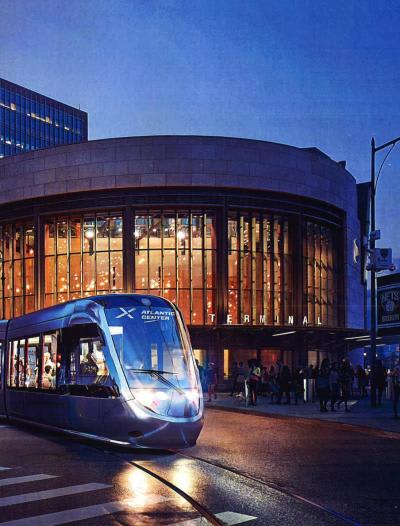
Friends of the Brooklyn Queens Connector
">Friends of the Brooklyn Queens Connector
New York Mayor Bill de Blasio was joined by several local and transit officials to detail his plans for a new streetcar service: the Brooklyn-Queens Connector (BQX). The new transit line — the first New York City streetcar in more than 50 years — would stretch 16 miles from Astoria in Queens to Sunset Park in Brooklyn, linking together neighborhoods long underserved by public transit with some of the fastest-growing job hubs.
When fully built-out, it could serve almost 50,000 passengers per day, making it one of the biggest urban streetcar systems in the nation.
“People in neighborhoods like Red Hook haven’t had the quality transit they need and deserve. This new service means opportunity for those families, and it’s also going to strengthen communities up and down the waterfront. Anyone can see the enormous growth happening here – it’s time we brought new transit to these neighborhoods for all those people and jobs,” said Mayor de Blasio.
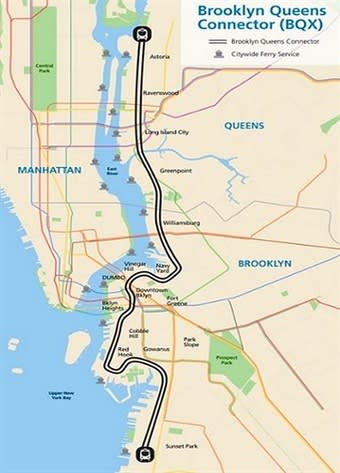
The Brooklyn-Queens waterfront is one of the fastest-growing parts of the city, with more than 405,000 residents and 296,000 workers. But transit capacity hasn’t kept pace with population and employment growth. The BQX would link together long-isolated neighborhoods and bring 21st century public transit to meet the needs of a growing city. Following extensive community outreach and planning, the Administration foresees breaking ground on the project in 2019-2020.
“The BQX will provide the modern, efficient, state-of-the-art transit link that the growing Brooklyn and Queens waterfront, which is underserved by the current subway system, urgently needs,” said Department of Transportation Commissioner Polly Trottenberg. “The BQX will provide a cost-effective transportation option for neighborhoods all along the East River that will also spur economic development and more vibrant communities for all New Yorkers.”
The BQX would run along a 16-mile corridor through Astoria, Ravenswood, Long Island City, Greenpoint, Williamsburg, Brooklyn Navy Yard, DUMBO, Downtown Brooklyn, Brooklyn Heights, Cobble Hill, Red Hook, Gowanus and Sunset Park.
Will link to 13 NYCHA developments with more than 40,000 tenants — roughly 10% of the city’s public housing residents.
Ties together several “innovation clusters” in which the city has made significant economic development investments, including the Brooklyn Navy Yard, the Brooklyn Army Terminal and the Cornell Tech campus on Roosevelt Island via a ferry connection.
The Administration will begin engaging communities along the Brooklyn-Queens waterfront this year to develop the new service’s exact route, operations and a phasing plan for implementation.
More Rail
Amtrak, CN Reach Agreements to Strengthen Passenger Rail Service, Safety
The agreement resolves a more than decade-long proceeding before the Surface Transportation Board concerning the terms and conditions for Amtrak services, such as the City of New Orleans, Illini/Saluki, and Wolverine.
Read More →
New York MTA Advances Final Contract for Second Avenue Subway Expansion
Contract Four is the largest in the Second Avenue Subway Phase 2 project and includes construction of station infrastructure, tracks, and signals for the subway expansion, MTA officials said. Work on Contract Four will begin in 2027.
Read More →
San Diego MTS Breaks Monthly Trolley Ridership Record
Agency officials said July’s ridership indicates MTS’s continued recovery from the pandemic.
Read More →
Report Examines NJ TRANSIT Reliability, Funding Challenges
The Garden State Initiative analysis examines the roles of Amtrak infrastructure, fleet management, and agency operations while recommending a more performance-based approach to improving reliability.
Read More →
Stadler, CapMetro Sign Long-Term Rail Fleet Support Agreement
Beginning in 2027, Stadler will provide on-site technical expertise, spare parts support, training, and obsolescence management to help extend the reliability and longevity of CapMetro’s GTW fleet.
Read More →
Biz Briefs: Alstom Lands Canadian Contract, LYT to Supply California TSP, and More
In METRO's latest installment, we take a look at recent news from Complete Coach Works, Beep, FlixBus, and more partnerships making headlines across the transportation sector.
Read More →
CATS Gold Line Marks 5 Years of Service, 2.8M Passenger Trips
With a six-mile expansion planned, the Charlotte streetcar is positioned to connect more neighborhoods and major transit hubs across the region.
Read More →
Why Simulating Pedestrian Movement Has Become Essential for Modern Rail Stations
Pedestrian microsimulation is helping rail planners identify bottlenecks, test station designs, and prepare complex transit hubs for growing passenger volumes.
Read More →
Amtrak Begins Major Construction at New York’s Sunnyside Yard
The new maintenance facility will support Amtrak’s Airo trainsets while improving maintenance efficiency and turnaround times in New York.
Read More →
Chicago Leaders Unveil Plans for O’Hare Airport Express Train
The privately developed project would offer a 15-minute trip between downtown and O’Hare’s Terminal 2, with trains operating every 15 minutes on a dedicated track. The service would use battery-electric trains and three existing freight rail rights-of-way.
Read More →