



NY MTA opens first new rail station in 2-plus decades
The $2.42 billion, 1.5-mile extension of the 7 Subway Line Icon Line to 34 St-11 Av was funded by the City of New York. City funding included $2.1 billion for the station in addition to $266 million for other non-subway related infrastructure work

NY MTA
NY MTA
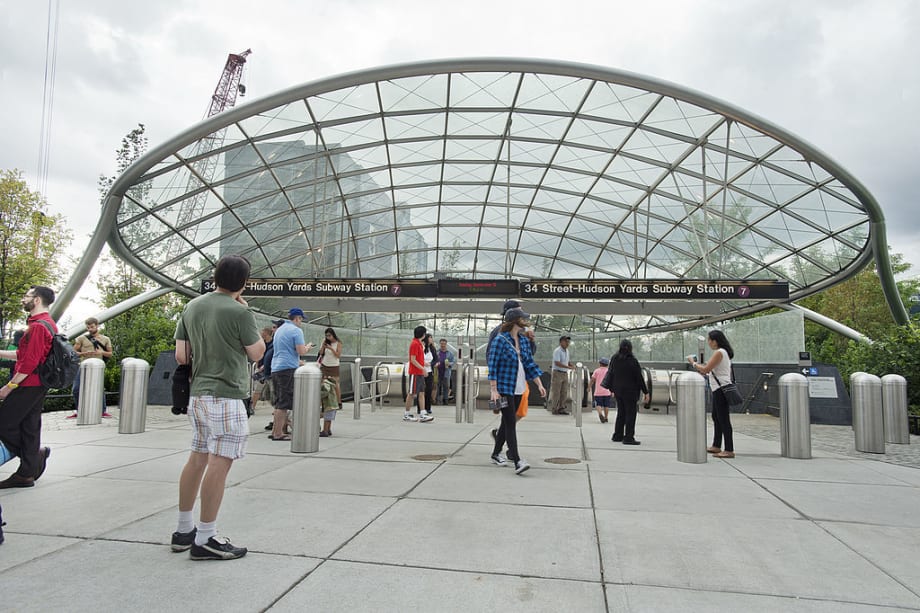
New York’s Metropolitan Transportation Authority (MTA) opened the new 34 St-Hudson Yards 7 Subway Line Station, a modern marvel with 21st Century amenities that introduces subway service to the far West Side of midtown Manhattan, fostering transit-oriented development in the emerging, mixed-use community there.
The $2.42 billion, 1.5-mile extension of the 7 Subway Line Icon Line to 34 St-11 Av was funded by the City of New York. City funding included $2.1 billion for the station in addition to $266 million for other non-subway related infrastructure work. The MTA contributed $53 million for the extension, helping spur the development and transformation of the rezoned far West Side. It is the first new station added to the subway system since MTA New York City Transit opened the Lexington Av-63 St, Roosevelt Island, and 21 St-Queensbridge stations in 1989.
NY MTA
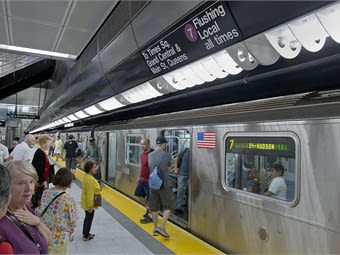
MTA Chairman and CEO Thomas F. Prendergast was joined by Mayor Bill de Blasio, MTA Capital Construction President Dr. Michael Horodniceanu, New York City Transit Interim President James L. Ferrara and other elected officials and stakeholders to cut the ribbon marking the opening of the 34 St-Hudson Yards 7 Subway Line Icon Station. The station is expected to serve more than 32,000 entries and exits on weekdays when it opens and is designed to handle as many as 25,000 during a peak hour.
“This station is the centerpiece of an ambitious plan to make the far West Side of Manhattan a top-tier destination for residents and visitors alike while meeting the daily needs of millions of subway riders, and one that is poised to meet future needs,” Gov. Andrew M. Cuomo said. “It is a clear example of how the City and State can work together to support a transit network that drives our regional economy.”
Station Amenities
The station and the new subway line contain state-of-the-art mechanical, electrical and communications equipment and systems. Highly functional public spaces provide capacity for future system changes, integrating signage, lighting, digital advertising and artwork. The new 34 St-Hudson Yards 7 Subway Line Station contains other notable “firsts” for the New York City Transit subway system including the longest column-free station platform and the longest escalators inside any station.
The station is also the first to comply with ADA requirements with two inclined elevators between the upper and lower mezzanines. The elevators travel 82 feet vertically and 152 feet horizontally at the speed of 100 feet per minute. They can accommodate five wheelchairs or 15 standing customers.
NY MTA
The 34 St-Hudson Yards 7 Subway Line Station has three public floors — the upper mezzanine (27.6 feet below street level), the lower mezzanine (109 feet below street level) and the platform level (125 feet below street level). Access from the street level to the upper mezzanine at the main entrance is provided by four low-rise escalators and two staircases. An ADA elevator located in the new park outside of the main entrance provides access to the upper mezzanine. From the upper mezzanine, customers will access the lower mezzanine using five high-rise escalators and the two inclined elevators. Eight sets of stairs and one ADA elevator provide access from the lower mezzanine to the platform level.
Among the station’s modern amenities, the platform level is air-tempered, maintaining a year-round temperature between 72 and 78 degrees Fahrenheit.
The station also features 12 Help Point Intercoms that allow customers to communicate with the station agent or the Rail Control Center in the case of an emergency. The station is adorned with 24 55-inch digital screens on the lower mezzanine that will show advertising and service notices from New York City Transit.
Eight On-the-Go screens and cell phone connectivity and Wi-Fi will be added in the near future, all of which will provide a new level of service and communications for customers. Countdown clocks will come to the station upon completion of the installation of Communications-Based Train Control slated for 2017.
The entire 34 St-Hudson Yards 7 Subway Line Icon Station features high-end finishes such as stainless steel tile wall panels, painted steel ceiling panels, granite floor tile, energy efficient lighting and other architectural features.
More Rail

New York MTA Advances Final Contract for Second Avenue Subway Expansion
Contract Four is the largest in the Second Avenue Subway Phase 2 project and includes construction of station infrastructure, tracks, and signals for the subway expansion, MTA officials said. Work on Contract Four will begin in 2027.
Read More →
San Diego MTS Breaks Monthly Trolley Ridership Record
Agency officials said July’s ridership indicates MTS’s continued recovery from the pandemic.
Read More →
Report Examines NJ TRANSIT Reliability, Funding Challenges
The Garden State Initiative analysis examines the roles of Amtrak infrastructure, fleet management, and agency operations while recommending a more performance-based approach to improving reliability.
Read More →
Stadler, CapMetro Sign Long-Term Rail Fleet Support Agreement
Beginning in 2027, Stadler will provide on-site technical expertise, spare parts support, training, and obsolescence management to help extend the reliability and longevity of CapMetro’s GTW fleet.
Read More →
Biz Briefs: Alstom Lands Canadian Contract, LYT to Supply California TSP, and More
In METRO's latest installment, we take a look at recent news from Complete Coach Works, Beep, FlixBus, and more partnerships making headlines across the transportation sector.
Read More →
CATS Gold Line Marks 5 Years of Service, 2.8M Passenger Trips
With a six-mile expansion planned, the Charlotte streetcar is positioned to connect more neighborhoods and major transit hubs across the region.
Read More →
Why Simulating Pedestrian Movement Has Become Essential for Modern Rail Stations
Pedestrian microsimulation is helping rail planners identify bottlenecks, test station designs, and prepare complex transit hubs for growing passenger volumes.
Read More →
Amtrak Begins Major Construction at New York’s Sunnyside Yard
The new maintenance facility will support Amtrak’s Airo trainsets while improving maintenance efficiency and turnaround times in New York.
Read More →
Chicago Leaders Unveil Plans for O’Hare Airport Express Train
The privately developed project would offer a 15-minute trip between downtown and O’Hare’s Terminal 2, with trains operating every 15 minutes on a dedicated track. The service would use battery-electric trains and three existing freight rail rights-of-way.
Read More →
OCTA Maps Out 30-Year Strategy to Protect Coastal Rail Corridor
The draft feasibility report identifies strategies to protect the coastal rail line for decades as the agency continues near-term stabilization and sand placement efforts.
Read More →