




RELATED: NY MTA reorg. plan to improve service, end project delays
NY MTA to co-host bidding event to solicit rail signaling technologies
The MTA also announced the creation of the University Partnership for Adaptive Technologies & Mass Transit Innovation.
September 24, 2019
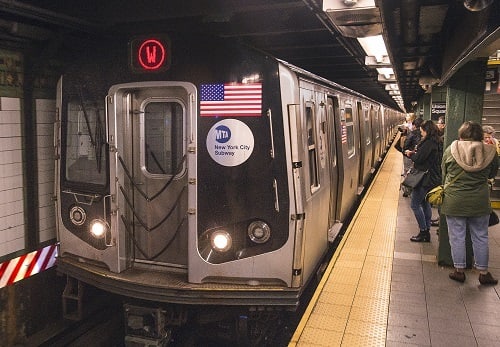
New York City’s subways have long run on a fixed-block signaling system.
MTA/Patrick Cashin
2 min to read
New York City’s subways have long run on a fixed-block signaling system.
MTA/Patrick Cashin
The New York MTA and its public-private initiative, the Transit Innovation Partnership, announced a new collaborative effort exploring signal modernization that will include co-hosting a bidding conference to solicit technological innovations and proposals for reimagining the MTA’s signal systems.
New York City’s subways have long run on a fixed-block signaling system. Though still able to move millions, the aging infrastructure frequently poses challenges and requires near-constant maintenance work. Modern signaling like communications-based train control (CBTC) allows trains to interact with one another seamlessly. This allows the system to run more trains with less space between them. Where CBTC is present, on-time performance rises dramatically. The signaling conference will allow the MTA to tap into innovators who may leapfrog to an entirely new approach to re-signaling the subway system.
The MTA also announced the creation of the University Partnership for Adaptive Technologies & Mass Transit Innovation. Under this partnership, Cornell Tech, New York University and Columbia University will create a joint working group that will coordinate with the MTA — particularly the new Research, Development and Innovation Office — as well as the Transit Innovation Partnership, to leverage the intellectual capital of faculty and students to identify ways to leapfrog current solutions to the MTA’s challenges and to help ensure capital plan projects are done as efficiently as possible.
The working group will explore the development and adaptation of new technologies to see how they can be applied to existing mass transit technologies, and, within the first year, develop a detailed operating plan and budget to accomplish specific goals including leveraging faculty and student expertise of the partnering institutions.
The MTA aims to grow relationships with tech partners that may prove helpful in identifying new or outside-the-box solutions to better deliver projects announced earlier this month in the agency’s historic $51.5 billion 2020-2024 Capital Plan. Today’s conference covered signaling, accessibility, fare evasion and cyber issues.
The proposed capital program will modernize the subways by adding capacity, increasing reliability, and accelerating accessibility. The program includes full funding for Phase 2 of the Second Avenue Subway from a mixture of federal and local sources. Systemwide priority initiatives funded by the plan include signal modernization, new subway cars, station accessibility, station improvements, and track replacement. $7.1 billion of the Capital Plan will go toward signal modernization along six subway lines, including the Lexington Avenue Line serving more than 50% of riders.
More Management

LIT Marks 10-Year Milestone at Annual Summit
Hosted by the COTA from September 10 to 13, the Summit carried the theme “Celebrating 10 Years of Excellence, Leadership, and Impact,” with every part of the program honoring the people, agencies, and partners who built LIT over its first decade.
Read More →
People Movement: Dan Dipert Coaches Adds Third-Generation Leader, Keolis Names New Valley Metro VP/GM, and More
In this edition, we also cover recent appointments and announcements at the Wabtec, SilverRide, HNTB, and more, showcasing the individuals helping to shape the future of transportation.
Read More →
METRO Opens Submissions for 2026 Motorcoach Awards
Nominations are now being accepted for METRO Magazine’s Operator of the Year and Innovative Operator of the Year awards.
Read More →

New York MTA Advances Final Contract for Second Avenue Subway Expansion
Contract Four is the largest in the Second Avenue Subway Phase 2 project and includes construction of station infrastructure, tracks, and signals for the subway expansion, MTA officials said. Work on Contract Four will begin in 2027.
Read More →
Transit Agencies Highlight Safety Gains at National Summit
Leaders from 15 major transit systems shared crime-reduction results and safety initiatives while discussing the role of continued federal support.
Read More →
NITA Names New Leadership, Expands Reduced-Fare Program at First Board Meeting
The new regional transit authority appointed its first board chair and interim executive director while extending reduced fares across CTA, Metra, and Pace for eligible riders.
Read More →
Beyond the Checklist: A Structured Approach to Transit Maintenance
Reliability-Centered Maintenance helps transit agencies move beyond routine checklists to focus limited resources on the assets and failures that have the greatest impact on safety, reliability, and service.
Read More →
APTA 2026 Nominating Committee Selects Leadership Slate, Names Chair and Vice Chair Nominees
Leadership changes will help shape the association’s priorities and its representation of the transportation industry during the 2026–2027 term.
Read More →
DART Launches Major Security, Fare Enforcement Initiative
The 90-day demonstration will deploy coordinated security teams at five light rail stations while testing controlled access and gathering data to guide future investments.
Read More →
Sponsored•September 9, 2026
Advancing Fare Collection Through Technology and Innovation
Learn about delivering 1300 gates at 91 stations while managing fare evasion. Explore the large scale deployment, solution customization and real-world results that affect the region. Prepare for deployment in your region now.
Read More →