



Office building rents 40% higher when transit accessible, study finds
Nationally, the CSAs of Denver, New York/New Jersey, Washington, D.C., and the San Francisco Bay Area are rated the highest on the transit-accessibility scale.


In the analysis, transit-accessible buildings are defined as those within a 10-minute walk from a subway, commuter rail, or light rail facility.
Aaron Logan

In the analysis, transit-accessible buildings are defined as those within a 10-minute walk from a subway, commuter rail, or light rail facility.
Aaron Logan
The national average rent in transit-accessible office buildings was 65% higher than the average market rent in early 2018, Transwestern reports in a new analysis of mass transit’s influence on the office market. The examination of 15 major metros shows average rent in Central Business Districts was $43.48 per square foot "triple net" (NNN) for transit-accessible buildings versus $26.01 per square foot NNN for car-dependent buildings. Transit-accessible office space was also at a premium in the suburbs, with average rent of $33.43 per square foot NNN being nearly 50% higher than rent in car-dependent buildings.
The triple net (NNN) in a commercial real estate lease refers to the taxes, property insurance, and common area maintenance charges that tenants or lessees pay for in addition to their base rent.
“As workplace amenities have become increasingly important to companies in attracting and retaining talent, tenants are most certainly keeping accessibility to mass transit on their radar when surveying office product,” said Brian Landes, director, GIS/location intelligence, for Transwestern. “Not surprisingly, vacancy for transit-accessible buildings is lower than overall vacancy, which makes these buildings extremely attractive to commercial real estate investors.”
In the analysis, transit-accessible buildings are defined as those within a 10-minute walk from a subway, commuter rail, or light rail facility. Based on the combined statistical areas (CSAs) in the set, approximately 39% of total office inventory is categorized as transit-accessible, while the remainder is car-dependent. Nationally, the CSAs of Denver, New York/New Jersey, Washington, D.C., and the San Francisco Bay Area are rated the highest on the transit-accessibility scale, with approximately half of the office market’s inventory or greater qualifying as transit-accessible.
Landes said, “For a tenant, landlord or investor, accessibility to mass transit is only one of many factors that should be considered when making a real estate decision, and there are many markets and submarkets throughout the country that are performing well without a significant mass transit infrastructure. But the data demonstrates that this amenity can have implications for everything from a qualified labor force to long-term property values.”
To see how the 15 markets compare, click here.
More New Mobility

ENC Unveils ZAVIR Medium-Duty Electric Shuttle at APTA EXPO
The new ZAVIR brand targets shuttle and paratransit operations with battery-electric and range-extended electric vehicle options.
Read More →
Public Transit Conference Returning to GFX in 2027, Call for Papers Now Open
The Call for Papers is now open, allowing transit agency professionals and industry experts to help shape the PTC educational program by submitting session ideas for consideration.
Read More →
Everett Transit, Community Transit Outline Consolidation Agreement
The proposed agreement calls for a 50% increase in bus service in Everett, a new microtransit zone, continued paratransit service, and the transfer of Everett Transit operations to Community Transit.
Read More →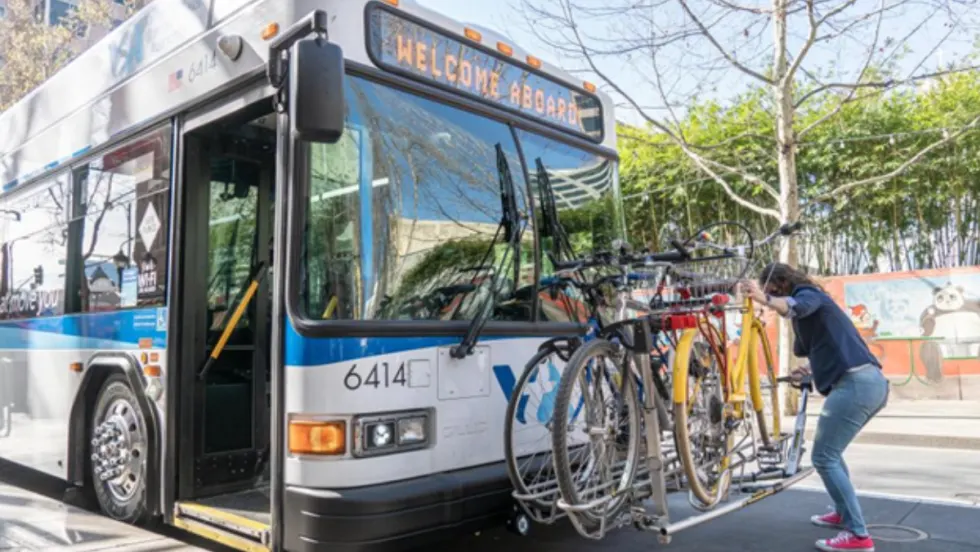
What Multimodal Data Can Tell Transit Agencies About Rider Demand
See how bike-on-bus data is giving transit agencies new insight into rider demand, capacity constraints, and gaps in first- and last-mile connections.
Read More →
From Hardware to Digital Partner: Luminator Charts Its Next Chapter
CEO Magnus Friberg discusses Luminator’s shift toward becoming a digital partner, the growing importance of software and interoperability, and how AI can help agencies improve operations and passenger experience.
Read More →
Biz Briefs: Alstom Lands Canadian Contract, LYT to Supply California TSP, and More
In METRO's latest installment, we take a look at recent news from Complete Coach Works, Beep, FlixBus, and more partnerships making headlines across the transportation sector.
Read More →
CharterUP’s Armir Harris on Technology, AI, and the Future of Group Mobility
In a recent episode of METROspectives, CharterUP Founder/CEO Armir Harris discussed the company’s evolution from an online charter bus marketplace into a technology platform supporting public- and private-sector mobility and much more.
Read More →
Jacksonville’s NAVI Project Charts a New Course for Autonomous Public Transportation
Through its NAVI program, JTA is showing how autonomous vehicles, intelligent infrastructure, and coordinated operations can work together to deliver everyday public transportation.
Read More →
Biz Briefs: Luminator Marks Milestone and More
From manufacturers and suppliers to transit agencies and motorcoach operators, these updates offer a snapshot of the projects, partnerships and business moves driving the industry forward.
Read More →
New Tricks for Old Bureaucracies: Joshua Schank on Making Transit Innovation Stick
Former LA Metro Chief Innovation Officer Joshua Schank discusses why good ideas aren't enough, how transit agencies can overcome resistance to change, and why today's challenges demand more innovation.
Read More →