



Palm Tran Helps Transport Pets after Hurricane Irma
Palm Tran utilized four buses, included a 60-foot articulated bus, for transporting the pets. The effort involved multiple trips and took two days.

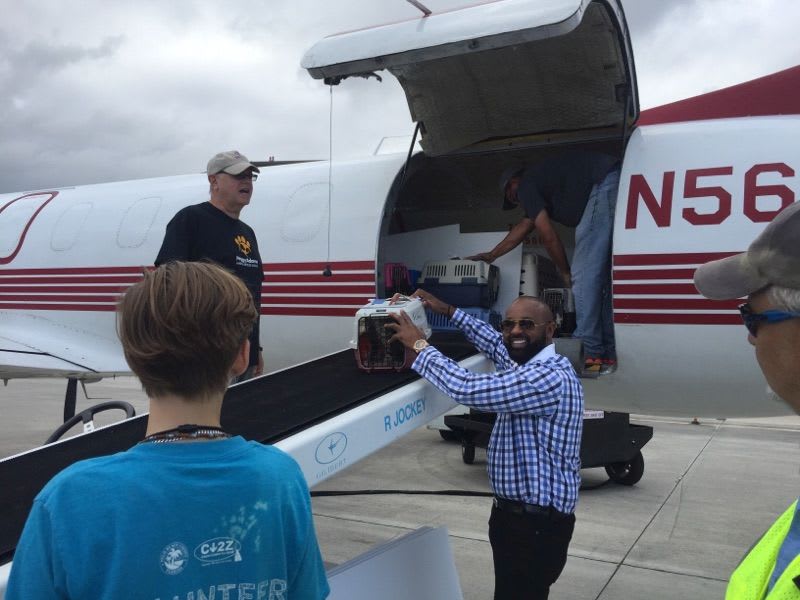
Palm Tran Executive Director Clinton B. Forbes assists in loading pets on an aircraft at Palm Beach International Airport following Hurricane Irma on Sept. 13.
Palm Tran Executive Director Clinton B. Forbes assists in loading pets on an aircraft at Palm Beach International Airport following Hurricane Irma on Sept. 13.
In a rush to escape Hurricane Irma’s wrath, there were reports innocent dogs and cats were abandoned by their owners. Others escaped yards and enclosures as high wind wreaked havoc. As the animals were captured in the hurricane’s aftermath, shelters were quickly running out of space. To make more room, Palm Tran worked with rescue groups to provide bus transportation for about 200 dogs and cats from shelters to Palm Beach International Airport. Peggy Adams Animal Rescue League and Palm Beach County Animal Care & Control coordinated air transportation for the animals, many of which had been at the shelters prior to the storm. The animals were flown north to shelters in New York and New Hampshire in the hopes of finding forever homes, creating the space desperately needed for the influx of animals to Florida shelters.
“Community service is at the heart of everything we do at Palm Tran and that includes serving the four-legged members of our community in a time of need,” Palm Tran Executive Director Clinton B. Forbes said.

Cats and dogs wait to be loaded and transported by Palm Tran buses to the Palm Beach Airport on Sept. 13.
“Our experience with Palm Tran was fantastic. The drivers were great, and everyone involved was thrilled to be part of this endeavor to move our adoptable dogs and cats to our northern state partners. On behalf of the staff, volunteers, and animals, we thank you.” said Dianne Sauve of Animal Care and Control.
Palm Tran utilized four buses, included a 60-foot articulated bus, for transporting the pets. The effort involved multiple trips and took two days.
More Management

LIT Marks 10-Year Milestone at Annual Summit
Hosted by the COTA from September 10 to 13, the Summit carried the theme “Celebrating 10 Years of Excellence, Leadership, and Impact,” with every part of the program honoring the people, agencies, and partners who built LIT over its first decade.
Read More →
People Movement: Dan Dipert Coaches Adds Third-Generation Leader, Keolis Names New Valley Metro VP/GM, and More
In this edition, we also cover recent appointments and announcements at the Wabtec, SilverRide, HNTB, and more, showcasing the individuals helping to shape the future of transportation.
Read More →
METRO Opens Submissions for 2026 Motorcoach Awards
Nominations are now being accepted for METRO Magazine’s Operator of the Year and Innovative Operator of the Year awards.
Read More →

New York MTA Advances Final Contract for Second Avenue Subway Expansion
Contract Four is the largest in the Second Avenue Subway Phase 2 project and includes construction of station infrastructure, tracks, and signals for the subway expansion, MTA officials said. Work on Contract Four will begin in 2027.
Read More →
Transit Agencies Highlight Safety Gains at National Summit
Leaders from 15 major transit systems shared crime-reduction results and safety initiatives while discussing the role of continued federal support.
Read More →
NITA Names New Leadership, Expands Reduced-Fare Program at First Board Meeting
The new regional transit authority appointed its first board chair and interim executive director while extending reduced fares across CTA, Metra, and Pace for eligible riders.
Read More →
Beyond the Checklist: A Structured Approach to Transit Maintenance
Reliability-Centered Maintenance helps transit agencies move beyond routine checklists to focus limited resources on the assets and failures that have the greatest impact on safety, reliability, and service.
Read More →
APTA 2026 Nominating Committee Selects Leadership Slate, Names Chair and Vice Chair Nominees
Leadership changes will help shape the association’s priorities and its representation of the transportation industry during the 2026–2027 term.
Read More →
DART Launches Major Security, Fare Enforcement Initiative
The 90-day demonstration will deploy coordinated security teams at five light rail stations while testing controlled access and gathering data to guide future investments.
Read More →
Advancing Fare Collection Through Technology and Innovation
Learn about delivering 1300 gates at 91 stations while managing fare evasion. Explore the large scale deployment, solution customization and real-world results that affect the region. Prepare for deployment in your region now.
Read More →