



Poll shows support for new sales tax to support San Diego transit
The early polling results are the first step in a broad discussion that transit officials plan to have with the public.

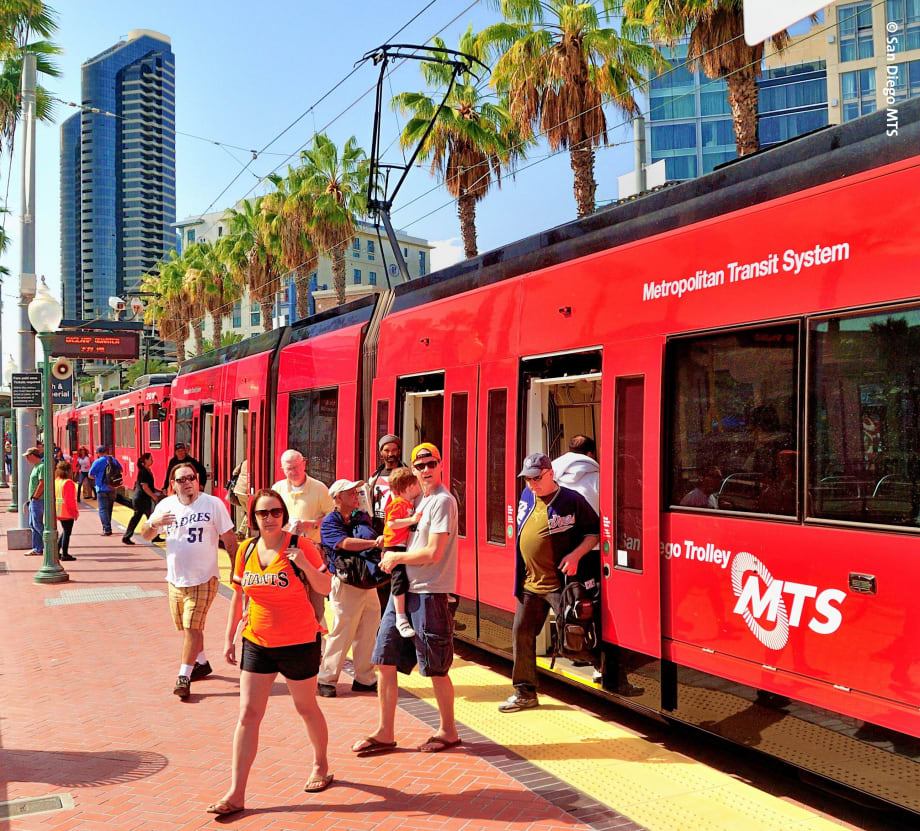
In the next six months, MTS will convene industry-sector focus groups and a Community Advisory Committee made up of civic-minded, neighborhood-based organizations to gain more insights about how transit can best take on the issues San Diego is facing.
INIT
In the next six months, MTS will convene industry-sector focus groups and a Community Advisory Committee made up of civic-minded, neighborhood-based organizations to gain more insights about how transit can best take on the issues San Diego is facing.
INIT
According to a recent poll conducted by FM3 Research, public support is very strong to fund more transit projects with a possible new half-cent sales tax. Transportation officials from the Metropolitan Transit System (MTS) and the San Diego Association of Governments (SANDAG) made the announcement, releasing details on the poll results and adding that this is the first step in a broad public dialogue the agency will embark on over the next nine months.
The early polling results are the first step in a broad discussion that transit officials plan to have with the public. In the next six months, MTS will convene industry-sector focus groups and a Community Advisory Committee made up of civic-minded, neighborhood-based organizations to gain more insights about how transit can best take on the issues San Diego is facing such as housing, traffic congestion, carbon emissions reduction, and more. The full Public Participation Plan includes even more outreach and feedback opportunities for residents. The agency will then analyze all the public input provided and propose an expenditure and financing plan tentatively by the end of the year.
“It is time to reimagine how our region moves by working together to create a transit strategy that connects our communities, reduces congestion, provides more transportation options, and builds the foundation for a cleaner, greener, more sustainable future,” said San Diego County Supervisor and MTS Board Member Nathan Fletcher.
The MTS service area serves a smaller, defined geographic area than SANDAG, which covers the 18 cities and the County of San Diego. MTS serves 10 cities and the unincorporated areas in south and central San Diego county.
The recent survey was conducted by FM3 Research and found that a large majority of San Diego residents are willing to pay a little more to increase and improve public transportation options. The poll found that 70% of San Diego voters would support a half-cent sales tax increase to fund transit projects, such as a Trolley connection to the airport and improving roads that support transit services. Additionally, 69% of the respondents had a positive impression of MTS.
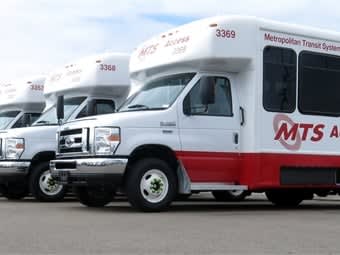
The MTS service area serves a smaller, defined geographic area than SANDAG, which covers the 18 cities and the County of San Diego.
MTS
FM3 conducted 834 cellphone, landline, and online interviews between February 9 to 18, among likely 2020 election voters registered within MTS' area of service. Interviews were conducted in English and Spanish. The margin of error for the full sample is 3.5%.
The survey asked respondents to rank project priorities. The top four projects listed were:
Improving roads to support transit services.
Connecting the Trolley to the San Diego International Airport.
Improving safety at bus stops and Trolley stations, including lighting, and adding security.
Increasing transit services connecting jobs with housing for lower-income residents.
In regards to the support for a half-cent MTS sales tax measure, 44% of voters were “definitely yes” in favor of a measure, 23% were “probably yes,” and 3% “lean yes.” In total, 70% of respondents showed support for a sales tax measure. FM3 concluded: “The level of support is in line with early polling in similar and successful projects across the state.”
More Management

METRO Opens Submissions for 2026 Motorcoach Awards
Nominations are now being accepted for METRO Magazine’s Operator of the Year and Innovative Operator of the Year awards.
Read More →
New York MTA Advances Final Contract for Second Avenue Subway Expansion
Contract Four is the largest in the Second Avenue Subway Phase 2 project and includes construction of station infrastructure, tracks, and signals for the subway expansion, MTA officials said. Work on Contract Four will begin in 2027.
Read More →
Transit Agencies Highlight Safety Gains at National Summit
Leaders from 15 major transit systems shared crime-reduction results and safety initiatives while discussing the role of continued federal support.
Read More →

NITA Names New Leadership, Expands Reduced-Fare Program at First Board Meeting
The new regional transit authority appointed its first board chair and interim executive director while extending reduced fares across CTA, Metra, and Pace for eligible riders.
Read More →
Beyond the Checklist: A Structured Approach to Transit Maintenance
Reliability-Centered Maintenance helps transit agencies move beyond routine checklists to focus limited resources on the assets and failures that have the greatest impact on safety, reliability, and service.
Read More →
APTA 2026 Nominating Committee Selects Leadership Slate, Names Chair and Vice Chair Nominees
Leadership changes will help shape the association’s priorities and its representation of the transportation industry during the 2026–2027 term.
Read More →
DART Launches Major Security, Fare Enforcement Initiative
The 90-day demonstration will deploy coordinated security teams at five light rail stations while testing controlled access and gathering data to guide future investments.
Read More →
Advancing Fare Collection Through Technology and Innovation
Learn about delivering 1300 gates at 91 stations while managing fare evasion. Explore the large scale deployment, solution customization and real-world results that affect the region. Prepare for deployment in your region now.
Read More →
Game Day in Motion: Moving Millions During the 2026 World Cup
Between packed transit stations and team motorcoaches, see how agencies and operators across North America tackled the transportation demands of the 2026 FIFA World Cup.
Read More →
Surface Transportation Extension Averts Shutdown, Leaves Transit Funding Gap
The stopgap keeps federal transportation programs moving, but missing advance funding could complicate the transit and rail projects agencies are planning next.
Read More →