




RELATED: New financing tools make electric bus buying easier
Proterra partners to create $200M credit facility to scale battery leasing
The move with Mitsui & Co. Ltd. is expected to lower the upfront costs of zero-emission buses.
April 16, 2019
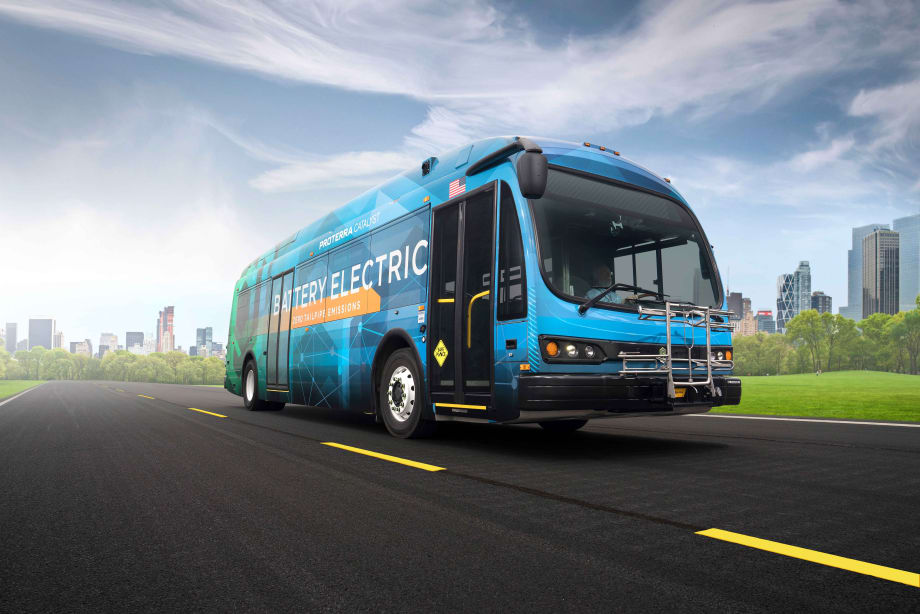
By decoupling the batteries from the sale of its buses, Proterra enables transit customers to purchase the electric bus and lease the batteries over the 12-year lifetime of the bus.
Proterra
2 min to read
By decoupling the batteries from the sale of its buses, Proterra enables transit customers to purchase the electric bus and lease the batteries over the 12-year lifetime of the bus.
Proterra
Proterra partnered with Mitsui & Co. Ltd. to create a $200 million credit facility in support of a battery lease program. Mitsui, a Japanese investment and trading company, holds a diversified portfolio of businesses in various sectors including mobility, infrastructure, and renewable energy. The battery leasing credit facility, the first of its kind in the North American public transit industry, is expected to lower the upfront costs of zero-emission buses and put Proterra electric buses at roughly the same price as a diesel bus.
By decoupling the batteries from the sale of its buses, Proterra enables transit customers to purchase the electric bus and lease the batteries over the 12-year lifetime of the bus. As a result of the battery lease, the initial capital expense for the electric bus will be similar to a diesel or CNG bus, and customers can utilize the operating funds previously earmarked for fuel to pay for the battery lease. Additionally, under the 12-year battery lease, Proterra will own and guarantee the performance of the batteries through the life of the bus, decreasing operator risk.
The battery lease agreement also provides a performance warranty on the batteries and new batteries at mid-life to help customers ensure they always have plenty of energy to meet their route needs and hedge against future replacement battery costs. The battery lease program removes one of the biggest barriers to electric bus adoption, and transit agencies will now be able to modernize fleets faster and achieve their zero carbon goals sooner.
In addition to the battery leasing initiative, Proterra and Mitsui have established a program to use batteries from the leasing program in secondary applications after the end of their useful life in a vehicle. Proterra’s E2 battery packs are designed with secondary usage in mind, with simplified integration for easy removal and a form factor that enables repurposing.
In 2015, the FAST Act specifically authorized the ability to lease batteries separate from a vehicle. Since then, more than a dozen Proterra customers, including Park City, Utah and Moline, Illinois, are already using or have agreed to use the battery lease program. Park City was the first customer to enter into a battery service agreement with Proterra for a fleet of six Catalyst buses that were funded as part of the 2016 Low or No-Emission Bus Program. Park City plans to lease batteries for its next set of seven Catalyst vehicles in pursuit of its long-term goal of going 100% electric.
More Technology

From Hardware to Digital Partner: Luminator Charts Its Next Chapter
CEO Magnus Friberg discusses Luminator’s shift toward becoming a digital partner, the growing importance of software and interoperability, and how AI can help agencies improve operations and passenger experience.
Read More →
Beyond the Checklist: A Structured Approach to Transit Maintenance
Reliability-Centered Maintenance helps transit agencies move beyond routine checklists to focus limited resources on the assets and failures that have the greatest impact on safety, reliability, and service.
Read More →
NJ TRANSIT Advances Bus Technology Upgrades Across Statewide Fleet
More than 1,500 buses now feature upgraded technology designed to improve arrival predictions and provide free Wi-Fi, with deployment expected to reach nearly 2,000 buses by the end of 2026.
Read More →

Building a Flexible Path to Transit Electrification
John Hroncich discusses BAE Systems’ modular and scalable approach, lessons learned from decades of real-world operations, and how agencies can identify electrification strategies that fit their fleets.
Read More →
Biz Briefs: Alstom Lands Canadian Contract, LYT to Supply California TSP, and More
In METRO's latest installment, we take a look at recent news from Complete Coach Works, Beep, FlixBus, and more partnerships making headlines across the transportation sector.
Read More →
Sponsored•September 8, 2026
From Legacy Silos to Conversational Intelligence
What if transit leaders could ask any operational question and get a trusted answer in seconds? Conversational AI is transforming how agencies use their data.
Read More →
USDOT Announces Rail Vehicle Replacement Grants, Chattanooga AV Shuttle Funding
More than $191 million in federal funding will help three transit agencies replace aging rail vehicles and support a new autonomous shuttle service in Chattanooga.
Read More →
Bus Tech Talk: Keeping Transit Technicians Ahead of the Technology Curve
LA Metro’s Obed Mejia discusses technician training, evolving maintenance technology, fleet replacement, and strategies for getting the most out of today’s transit fleets.
Read More →
Biz Briefs: RIPTA Unveils New Frontrunners, Clevland RTA Adds New Siemens, and More
In METRO's latest installment, we take a look at recent news from Siemens, Prevost, Dodge, and more partnerships making headlines across the transportation sector.
Read More →
Why Simulating Pedestrian Movement Has Become Essential for Modern Rail Stations
Pedestrian microsimulation is helping rail planners identify bottlenecks, test station designs, and prepare complex transit hubs for growing passenger volumes.
Read More →