



Public Transit GM Q&A: What has been the impact of new technology?
We asked top transit officials from around the nation what was the last tech they implemented and what was its impact.


Turner
What was the last technology you’ve implemented and what was its impact on your agency?

Ruggles
Debbie Ruggles, Interim GM
Tulsa Transit
Tulsa, Okla.
Tulsa Transit recently implemented a Quality Assurance software that helps track bus operator customer service performance. Using a set of performance standards, the Quality Assurance Supervisor views video recordings of bus operators interacting with customers in revenue service. The software scores the bus operators and produces quarterly scorecards detailing strengths and areas of needed improvement.

Draggoo
Sandy Draggoo, CEO
Capital Area Transportation Authority
Lansing, Mich.
CATA implemented Trapeze’s Service Infractions software in February 2017 in an effort to better uphold our paratransit no-show policy. Service Infractions automates the collection of details regarding service abuses as well as investigations into no-show violations. Prior to implementation, these were time-intensive, manual processes that took up to five days to complete. Service Infractions allows us to complete these tasks within an hour, resulting in greater efficiencies and a marked reduction in paratransit no-shows.

Jablonski
Paul Jablonski, CEO
San Diego MTS
San Diego
MTS just launched mobile ticketing. Branded as Compass Cloud, the popularity has surpassed expectations with almost 11,000 accounts and over $100,000 of fares purchased in the first month. With more than 85% of MTS passengers carrying a mobile phone, Compass Cloud is responsive to customer demand. It also caters to the summer tourist and special events boom in San Diego. Mobile ticketing takes pressure off manual ticket sales and lines at ticket-vending machines.

Turner
Kim Turner, Transit Director
Torrance Transit System
Torrance, Calif.
In April of this year, we implemented our Automatic Vehicle Locator system that provides real-time bus arrival information on mobile devices via mobile applications and text messaging. The technology improves the customer experience by providing ADA-compliant displays and announcements. The system also aids us with data collection for scheduling/service planning, increases passenger-operator safety, promotes efficiency and decreases operational costs.

Capelle
Ben Capelle, Deputy GM
Laketran
Painesville, Ohio
Laketran implemented real-time tools that allow dispatch, customer service and customers to track buses and plan trips in real time. Laketran’s real-time information is accessible online and via text message using a short code displayed at all 715 bus stop locations. LED real-time arrival displays were also installed at major transfer locations. Paratransit customers can receive automated phone calls when the bus is on the way to pick them up through the GPS and AVL systems that provide real-time information data feeds.

Roelfs
Doug Roelfs, GM
Greater Peoria Mass Transit District/CityLink
Peoria, Ill.
We recently completed the Google Maps project so that our customers can now use Google maps to plan their CityLink trips. It has only been in effect a few months and to date we are getting favorable comments from our passengers on how easy it works and are glad that it is available. We plan on implementing AVL next year to take another step towards helping customers use the CityLink service.
Knueppel
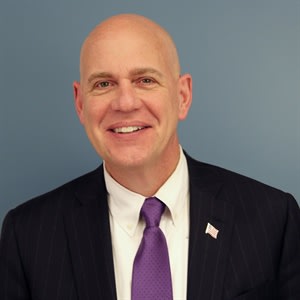
Jeffrey Knueppel, GM
Southeastern Pennsylvania Transportation Authority
Philadelphia
SEPTA’s video program includes 22,000 cameras on its fleet of over 2,800 buses, trains and trolleys — plus another 2,100 cameras at train stations. The video program plans, collects, reviews, preserves, stores and produces data from mobile and fixed systems. It enhances safety and security on the system as a crime deterrent and invaluable investigative tool for police. It’s also a proven money saver by deterring fraudulent lawsuits — claims payouts have decreased by $17 million over the last five years. SEPTA expects to see more benefits moving forward, as all new revenue vehicles will be camera-equipped.
Varner
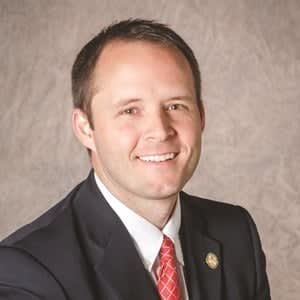
Jarod Varner, Executive Director/CEO
Rock Region Metro
North Little Rock, Ark.
Rock Region METRO recently implemented the METROTrack system providing customers with real-time, predictive arrival information through a smartphone application and other devices. The investment in such a sophisticated resource reinforced the value and appreciation we feel for customers while impressing upon non-riders that we are serious about improving the customer experience and earning their support. Our METROTrack system, free onboard Wi-Fi, and enhanced website have modernized our agency and increased civic pride central Arkansans feel for their transit system.
More Management

METRO Opens Submissions for 2026 Motorcoach Awards
Nominations are now being accepted for METRO Magazine’s Operator of the Year and Innovative Operator of the Year awards.
Read More →
New York MTA Advances Final Contract for Second Avenue Subway Expansion
Contract Four is the largest in the Second Avenue Subway Phase 2 project and includes construction of station infrastructure, tracks, and signals for the subway expansion, MTA officials said. Work on Contract Four will begin in 2027.
Read More →
Transit Agencies Highlight Safety Gains at National Summit
Leaders from 15 major transit systems shared crime-reduction results and safety initiatives while discussing the role of continued federal support.
Read More →

NITA Names New Leadership, Expands Reduced-Fare Program at First Board Meeting
The new regional transit authority appointed its first board chair and interim executive director while extending reduced fares across CTA, Metra, and Pace for eligible riders.
Read More →
Beyond the Checklist: A Structured Approach to Transit Maintenance
Reliability-Centered Maintenance helps transit agencies move beyond routine checklists to focus limited resources on the assets and failures that have the greatest impact on safety, reliability, and service.
Read More →
APTA 2026 Nominating Committee Selects Leadership Slate, Names Chair and Vice Chair Nominees
Leadership changes will help shape the association’s priorities and its representation of the transportation industry during the 2026–2027 term.
Read More →
DART Launches Major Security, Fare Enforcement Initiative
The 90-day demonstration will deploy coordinated security teams at five light rail stations while testing controlled access and gathering data to guide future investments.
Read More →
Advancing Fare Collection Through Technology and Innovation
Learn about delivering 1300 gates at 91 stations while managing fare evasion. Explore the large scale deployment, solution customization and real-world results that affect the region. Prepare for deployment in your region now.
Read More →
Game Day in Motion: Moving Millions During the 2026 World Cup
Between packed transit stations and team motorcoaches, see how agencies and operators across North America tackled the transportation demands of the 2026 FIFA World Cup.
Read More →
Surface Transportation Extension Averts Shutdown, Leaves Transit Funding Gap
The stopgap keeps federal transportation programs moving, but missing advance funding could complicate the transit and rail projects agencies are planning next.
Read More →