



Q&A with DART chief Gary Thomas
Some of the significant achievements during Thomas’ nearly 20-year tenure with the agency include, doubling DART's rail system length twice to 90 miles.

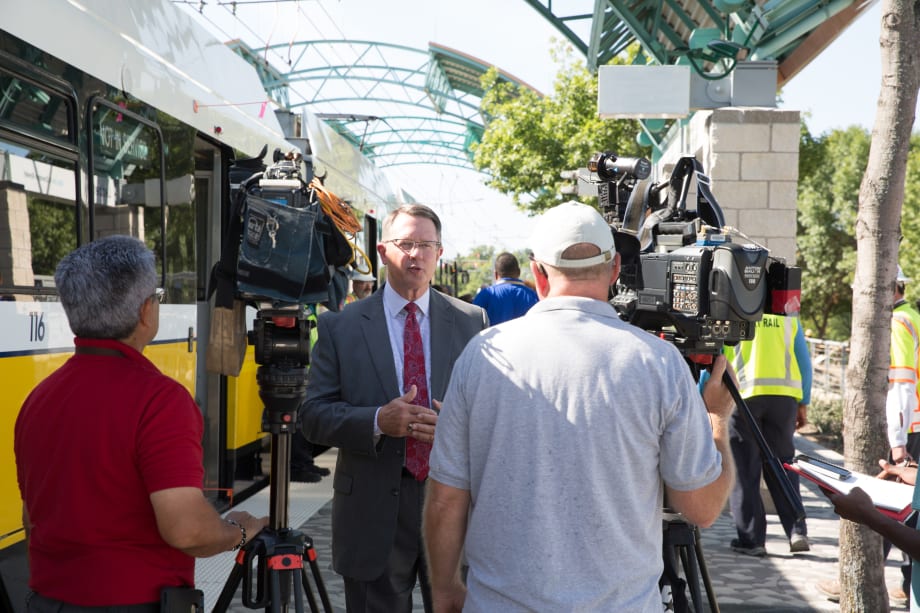
Gary Thomas, president/executive director of Dallas Area Rapid Transit (DART), has been named APTA’s Outstanding Public Transportation Manager of the Year.
Some of the significant achievements during Thomas’ nearly 20-year tenure with DART include:
The DART Rail system has doubled in length twice to 90 miles.
Capital projects, including the South Oak Cliff Blue Line Extension, have consistently come in under budget and ahead of schedule.
The last Orange Line segment to the new DFW International Airport Station opened in 2014.
DART’s bus fleet has been converted to compressed natural gas.
Electric streetcars returned to downtown Dallas in 2015.
How did you first become involved in the transportation industry?
Not intentionally. I trained as an architect and engineer and have degrees in both. My first work with DART was working on a bus park-and-ride project as a consulting engineer.
What does your present position entail?
Since 2001, I’ve been the CEO of DART. In many ways, my job is like CEOs at other large organizations. But, working in the public sector in a large media market is a little different. It’s not only essential to effectively lead a successful and diverse team to build our growing system and serve our community. I do a lot of work with local stakeholders, community leaders, and elected officials at all levels to grow support for DART and our efforts to transform our community around transit.
What are some of your accomplishments you’re most proud of?
We’ve built a great team that has achieved so many things for our region. Since becoming president/executive director, we’ve doubled our light rail system twice to 90 (soon-to-be 93) miles, transformed our paratransit service to make it more responsive to our customers, replaced our bus fleet with compressed natural gas buses and developed plans for the continued expansion of our transit system.
What’s most challenging about your job?
Keeping up with the demand for DART. Having seen our system, cities outside our service area want to get on board. We have to find a way to respond positively to that interest while honoring the investment made by our cities. At the same time, we must ensure that we’re providing the best possible service to our current customers. That not only helps drive ridership and satisfaction, it makes DART a more attractive investment for non-transit cities looking for a way to effectively address their growing needs.
What is rewarding about your job?
I think it’s responding to the challenges I mentioned. I also think it’s the opportunity to do that along with a great team. We’ve developed a group of passionate, aggressive and really successful leaders. We couldn’t have done what we’ve accomplished without each other. We’re always looking for the next thing, and it’s very rewarding to lead them.
What skills have helped you get where you are?
Patience (ok, probably not as much as I need) and the ability to think long term.
Who has inspired you throughout your career?
My family because they keep me grounded and focused on what’s important.
What do you like to do outside of work?
My wife and I enjoy traveling. That can take the form of a trip overseas, which usually involves sampling the local transit network, or a road trip through the Texas Hill Country in search of great barbeque or chicken fried steak.
More Management

METRO Opens Submissions for 2026 Motorcoach Awards
Nominations are now being accepted for METRO Magazine’s Operator of the Year and Innovative Operator of the Year awards.
Read More →
New York MTA Advances Final Contract for Second Avenue Subway Expansion
Contract Four is the largest in the Second Avenue Subway Phase 2 project and includes construction of station infrastructure, tracks, and signals for the subway expansion, MTA officials said. Work on Contract Four will begin in 2027.
Read More →
Transit Agencies Highlight Safety Gains at National Summit
Leaders from 15 major transit systems shared crime-reduction results and safety initiatives while discussing the role of continued federal support.
Read More →

NITA Names New Leadership, Expands Reduced-Fare Program at First Board Meeting
The new regional transit authority appointed its first board chair and interim executive director while extending reduced fares across CTA, Metra, and Pace for eligible riders.
Read More →
Beyond the Checklist: A Structured Approach to Transit Maintenance
Reliability-Centered Maintenance helps transit agencies move beyond routine checklists to focus limited resources on the assets and failures that have the greatest impact on safety, reliability, and service.
Read More →
APTA 2026 Nominating Committee Selects Leadership Slate, Names Chair and Vice Chair Nominees
Leadership changes will help shape the association’s priorities and its representation of the transportation industry during the 2026–2027 term.
Read More →
DART Launches Major Security, Fare Enforcement Initiative
The 90-day demonstration will deploy coordinated security teams at five light rail stations while testing controlled access and gathering data to guide future investments.
Read More →
Advancing Fare Collection Through Technology and Innovation
Learn about delivering 1300 gates at 91 stations while managing fare evasion. Explore the large scale deployment, solution customization and real-world results that affect the region. Prepare for deployment in your region now.
Read More →
Game Day in Motion: Moving Millions During the 2026 World Cup
Between packed transit stations and team motorcoaches, see how agencies and operators across North America tackled the transportation demands of the 2026 FIFA World Cup.
Read More →
Surface Transportation Extension Averts Shutdown, Leaves Transit Funding Gap
The stopgap keeps federal transportation programs moving, but missing advance funding could complicate the transit and rail projects agencies are planning next.
Read More →