




RELATED: How to Develop a Successful Transit Facility Project
RNL completes Metro Expo maintenance, ops facility
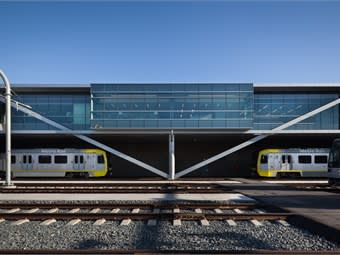
Five major building components make up the facility: the main building, secondary building, wash building, the cleaning platform and the guardhouse.
June 9, 2016

RNL
2 min to read
RNL
RNL, an international architecture, planning and design firm, recently completed work on the new Los Angeles County Metropolitan Transportation Authority (Metro) Division 14 Expo Light Rail Operations & Maintenance Facility. The facility is designed to support the Expo Line Transit Corridor. RNL provided architecture, interior design, lighting design, and sustainable design on the OMF project.
The new Metro Expo Line to Santa Monica extends west from the Culver City Station to Santa Monica, Calif. For the first time in over 60 years, the 6.6-mile link connects Santa Monica by rail to Downtown L.A., Pasadena, San Fernando Valley, South Bay, Long Beach, and a number of points in between. Division 14 is a critical component of that service, according to Metro officials.
“It was important to Metro that the Expo Maintenance Facility represent innovation, sustainability, functionality, and wellness,” said Tim Lindholm, executive officer, Capital Projects with Metro. “These were all key concerns RNL and Maintenance Design Group were able to incorporate into the design of the facility. The completed facility is on track to attain LEED Gold certification, and beyond that, we anticipate it to be a favorite workplace for Metro employees."
Division 14 is one of the first buildings that passengers on the new Expo Light Rail Line will see when passing into Santa Monica. More than 18,000 boardings are expected after the first 12 months of operations.
“RNL strives to make the facilities we design not only beautiful and functional, but also healthy and safe for employees,” said RNL Senior Associate Sean Feeney, RA, LEED AP, and lead architect on the project. “To that end, we wanted to take advantage of natural daylight to reduce electrical demand, as well as use the mild Southern California climate to reduce mechanical demand. We maximized natural light, ventilation and views to make the space a healthier, more enjoyable work environment for employees.”
Division 14 encompasses over 70,000 square feet of building area on a narrow 9.7-acre site. Five major building components make up the facility: the main building, secondary building, wash building, the cleaning platform and the guardhouse.
RNL has a long history of working with Metro to improve transit facilities, including the newly opened Division 13 Bus Operations and Maintenance Facility and the El Monte Transit Station. Metro serves as the transportation planner and coordinator, designer, builder, and operator for one of the country’s largest, most populous counties. More than 9.6 million people live, work, and play within its 1,433-square-mile service area.
More Rail

New York MTA Advances Final Contract for Second Avenue Subway Expansion
Contract Four is the largest in the Second Avenue Subway Phase 2 project and includes construction of station infrastructure, tracks, and signals for the subway expansion, MTA officials said. Work on Contract Four will begin in 2027.
Read More →
San Diego MTS Breaks Monthly Trolley Ridership Record
Agency officials said July’s ridership indicates MTS’s continued recovery from the pandemic.
Read More →
Report Examines NJ TRANSIT Reliability, Funding Challenges
The Garden State Initiative analysis examines the roles of Amtrak infrastructure, fleet management, and agency operations while recommending a more performance-based approach to improving reliability.
Read More →
Stadler, CapMetro Sign Long-Term Rail Fleet Support Agreement
Beginning in 2027, Stadler will provide on-site technical expertise, spare parts support, training, and obsolescence management to help extend the reliability and longevity of CapMetro’s GTW fleet.
Read More →
Biz Briefs: Alstom Lands Canadian Contract, LYT to Supply California TSP, and More
In METRO's latest installment, we take a look at recent news from Complete Coach Works, Beep, FlixBus, and more partnerships making headlines across the transportation sector.
Read More →
CATS Gold Line Marks 5 Years of Service, 2.8M Passenger Trips
With a six-mile expansion planned, the Charlotte streetcar is positioned to connect more neighborhoods and major transit hubs across the region.
Read More →
Why Simulating Pedestrian Movement Has Become Essential for Modern Rail Stations
Pedestrian microsimulation is helping rail planners identify bottlenecks, test station designs, and prepare complex transit hubs for growing passenger volumes.
Read More →
Amtrak Begins Major Construction at New York’s Sunnyside Yard
The new maintenance facility will support Amtrak’s Airo trainsets while improving maintenance efficiency and turnaround times in New York.
Read More →
Chicago Leaders Unveil Plans for O’Hare Airport Express Train
The privately developed project would offer a 15-minute trip between downtown and O’Hare’s Terminal 2, with trains operating every 15 minutes on a dedicated track. The service would use battery-electric trains and three existing freight rail rights-of-way.
Read More →
OCTA Maps Out 30-Year Strategy to Protect Coastal Rail Corridor
The draft feasibility report identifies strategies to protect the coastal rail line for decades as the agency continues near-term stabilization and sand placement efforts.
Read More →