



Sacramento RT avoids service reductions planned for January 2017
In the last week, RT staff has worked closely with RT’s funding agencies and has identified a $1 million potential operating fund source.

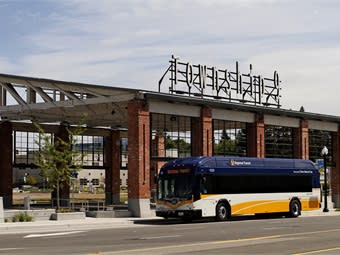
Phil Kampel Photography
Phil Kampel Photography
Calif.’s Sacramento Regional Transit District (RT) announced that it will avoid service reductions that were expected to be implemented in January 2017.
In April 2016, RT began the process and development of a plan for service changes effective Jan. 1, 2017. The proposal would potentially include the reduction, realignment or discontinuation of bus routes and light rail service totaling $1 million in annualized savings to address a budget deficit for FY 2017.
During the past 45 days, RT staff conducted open house discussions and received many appeals from customers imploring RT to not cut service. RT staff also carefully analyzed the feedback from RT board members and community stakeholders and continued to look for any potential funding sources to determine if the service reductions could be delayed or canceled.
In the last week, RT staff has worked closely with RT’s funding agencies and has identified a $1 million potential operating fund source.
In addition, based on the latest operating revenue estimates, RT staff has revised the operating budget down by $2 million. To address this structural budget deficit issue, RT’s management team has taken the following three actions: $270,000 decrease in all non-personnel-related cost categories, reduction of 20 administrative employee positions and a significant decrease in annual salary adjustments for certain labor groups totaling a savings of $2 million.
Through these actions, it was announced RT has achieved the required amount of savings to close the budget gap and avoid major service cuts planned for January 2017.
The reduction in force process began last week. The affected employees will be on paid administrative leave for 30 to 45 days, and will receive a severance package and COBRA medical insurance for six months.
"Our customers are our first priority," said Henry Li, RT's current assistant GM, administration, and new GM/CEO, effective July 1. "The resulting actions were made to minimize the impact to our riders and employees, as well as improve service quality."
More Management

LIT Marks 10-Year Milestone at Annual Summit
Hosted by the COTA from September 10 to 13, the Summit carried the theme “Celebrating 10 Years of Excellence, Leadership, and Impact,” with every part of the program honoring the people, agencies, and partners who built LIT over its first decade.
Read More →
People Movement: Dan Dipert Coaches Adds Third-Generation Leader, Keolis Names New Valley Metro VP/GM, and More
In this edition, we also cover recent appointments and announcements at the Wabtec, SilverRide, HNTB, and more, showcasing the individuals helping to shape the future of transportation.
Read More →
METRO Opens Submissions for 2026 Motorcoach Awards
Nominations are now being accepted for METRO Magazine’s Operator of the Year and Innovative Operator of the Year awards.
Read More →

New York MTA Advances Final Contract for Second Avenue Subway Expansion
Contract Four is the largest in the Second Avenue Subway Phase 2 project and includes construction of station infrastructure, tracks, and signals for the subway expansion, MTA officials said. Work on Contract Four will begin in 2027.
Read More →
Transit Agencies Highlight Safety Gains at National Summit
Leaders from 15 major transit systems shared crime-reduction results and safety initiatives while discussing the role of continued federal support.
Read More →
NITA Names New Leadership, Expands Reduced-Fare Program at First Board Meeting
The new regional transit authority appointed its first board chair and interim executive director while extending reduced fares across CTA, Metra, and Pace for eligible riders.
Read More →
Beyond the Checklist: A Structured Approach to Transit Maintenance
Reliability-Centered Maintenance helps transit agencies move beyond routine checklists to focus limited resources on the assets and failures that have the greatest impact on safety, reliability, and service.
Read More →
APTA 2026 Nominating Committee Selects Leadership Slate, Names Chair and Vice Chair Nominees
Leadership changes will help shape the association’s priorities and its representation of the transportation industry during the 2026–2027 term.
Read More →
DART Launches Major Security, Fare Enforcement Initiative
The 90-day demonstration will deploy coordinated security teams at five light rail stations while testing controlled access and gathering data to guide future investments.
Read More →
Advancing Fare Collection Through Technology and Innovation
Learn about delivering 1300 gates at 91 stations while managing fare evasion. Explore the large scale deployment, solution customization and real-world results that affect the region. Prepare for deployment in your region now.
Read More →