



San Diego MTS adds first of 77 propane buses to fleet
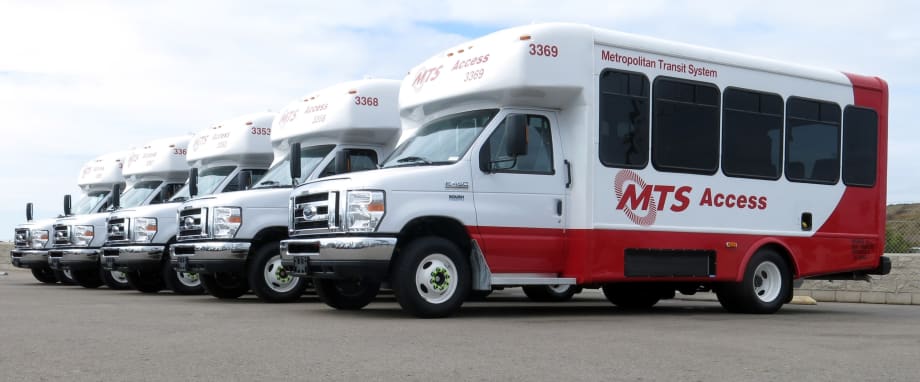
The new paratransit buses are 2016 Starcraft Allstars on Ford E-450 chassis. The minibuses are 2016 El Dorado National-Aero Elite 320 on Ford F-550 chassis.

San Diego MTS
San Diego MTS
The San Diego Metropolitan Transit System (MTS) announced the first of 77 buses powered by clean propane gas have arrived at its Copley Park facility. These are the first propane-powered buses in San Diego’s transit fleet and are estimated to reduce greenhouse gas emissions by two million pounds per year.
“MTS has made great strides to reduce its carbon footprint in San Diego over the past decade. Propane-powered buses are the latest example,” said MTS CEO Paul Jablonski. “Over the lifecycle of all 77 propane buses purchased, the San Diego region will experience a reduction of more than 13 million pounds of greenhouse gas emissions.”
MTS operates a fleet of 37 minibuses and 173 paratransit buses, primarily for its complementary ADA paratransit operations and some low-capacity fixed routes. To upgrade the existing fleet, MTS purchased 31 minibuses and 46 paratransit buses, which are scheduled for delivery at various times within the next 10 months. The first five paratransit buses were delivered earlier this month and put into service late last week. The new paratransit buses are 2016 Starcraft Allstars on Ford E-450 chassis. The minibuses are 2016 El Dorado National-Aero Elite 320 on Ford F-550 chassis.
Previously, all paratransit buses and minibuses were powered by unleaded gasoline. In addition to the environmental benefits, propane gas is significantly less expensive. By converting 77 buses to propane, MTS will realize a total cost savings of nearly $5.8 million during the five to seven-year operational lifecycle of the vehicles.
More Technology

From Hardware to Digital Partner: Luminator Charts Its Next Chapter
CEO Magnus Friberg discusses Luminator’s shift toward becoming a digital partner, the growing importance of software and interoperability, and how AI can help agencies improve operations and passenger experience.
Read More →
Beyond the Checklist: A Structured Approach to Transit Maintenance
Reliability-Centered Maintenance helps transit agencies move beyond routine checklists to focus limited resources on the assets and failures that have the greatest impact on safety, reliability, and service.
Read More →
NJ TRANSIT Advances Bus Technology Upgrades Across Statewide Fleet
More than 1,500 buses now feature upgraded technology designed to improve arrival predictions and provide free Wi-Fi, with deployment expected to reach nearly 2,000 buses by the end of 2026.
Read More →

Building a Flexible Path to Transit Electrification
John Hroncich discusses BAE Systems’ modular and scalable approach, lessons learned from decades of real-world operations, and how agencies can identify electrification strategies that fit their fleets.
Read More →
Biz Briefs: Alstom Lands Canadian Contract, LYT to Supply California TSP, and More
In METRO's latest installment, we take a look at recent news from Complete Coach Works, Beep, FlixBus, and more partnerships making headlines across the transportation sector.
Read More →
From Legacy Silos to Conversational Intelligence
What if transit leaders could ask any operational question and get a trusted answer in seconds? Conversational AI is transforming how agencies use their data.
Read More →
USDOT Announces Rail Vehicle Replacement Grants, Chattanooga AV Shuttle Funding
More than $191 million in federal funding will help three transit agencies replace aging rail vehicles and support a new autonomous shuttle service in Chattanooga.
Read More →
Bus Tech Talk: Keeping Transit Technicians Ahead of the Technology Curve
LA Metro’s Obed Mejia discusses technician training, evolving maintenance technology, fleet replacement, and strategies for getting the most out of today’s transit fleets.
Read More →
Biz Briefs: RIPTA Unveils New Frontrunners, Clevland RTA Adds New Siemens, and More
In METRO's latest installment, we take a look at recent news from Siemens, Prevost, Dodge, and more partnerships making headlines across the transportation sector.
Read More →
Why Simulating Pedestrian Movement Has Become Essential for Modern Rail Stations
Pedestrian microsimulation is helping rail planners identify bottlenecks, test station designs, and prepare complex transit hubs for growing passenger volumes.
Read More →