



Seattle agency heads talk service disruption procedures during protests
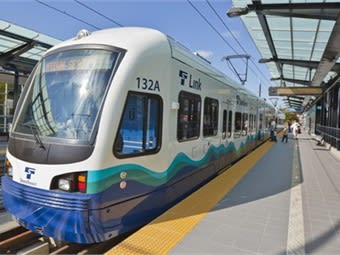
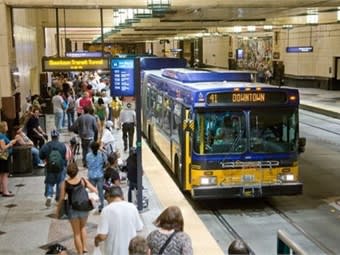
Sound Transit's Peter Rogoff and King County Metro GM Rob Gannon met Monday after rail and bus service to and from the SeaTac/Airport station was interrupted for about 30 minutes Saturday at the request of Port of Seattle law enforcement officials.


PBWorld
PBWorld
At the direction of Sound Transit Chair Dave Somers and King County Executive Dow Constantine, Sound Transit and King County Metro transit have formalized a protocol under which the agencies’ senior leadership will review all future requests by law enforcement to interrupt rail or bus service during protests.
The elected leaders called for the two agencies to meet on Monday after Link light rail and bus service to and from the SeaTac/Airport station was interrupted for about 30 minutes Saturday at the request of Port of Seattle law enforcement officials.
The interruption of Link service started at about 6:27 p.m., ended at about 7 p.m. and affected three northbound trains and three southbound trains. It was initiated after the Port of Seattle contacted the Link Control Center. Metro operates Link service under contract to Sound Transit and was asked to suspend service due to safety and security concerns. A short time later Sound Transit CEO Peter Rogoff rescinded the service interruption after observers at the scene determined there was no apparent threat to public safety. The Port of Seattle concurred.
Rogoff and King County Metro General Manager Rob Gannon met Monday to discuss formalized and strengthened protocols that will apply for any future requests for suspensions of rail and bus services that law enforcement agencies make in association with protest activities.
KC Metro
At the meeting, Rogoff and Gannon confirmed that both agencies will continue to comply with legal requirements to honor requests from local law enforcement agencies to suspend bus or rail service due to safety and security concerns. Going forward, the two agencies will simultaneously initiate a formal protocol for CEO and/or GM review of any disruption associated with protest activity to determine if continuing to provide transit service represents a genuine threat to the public’s safety and security.
“Transit should always be available for those who want to participate in our democracy,” said Constantine. “Under the new protocol, any request by law enforcement to disrupt rail or bus service, except for an immediate and serious threat, will be quickly reviewed by senior leadership at both Sound Transit and King County Metro. This will help protect both public safety and the constitutional right to peacefully assemble.”
“As a transit agency, our first obligation is to deliver our passengers to wherever they want to go in a safe and secure manner. That includes passengers desiring to peacefully assemble to protest government policies,” Rogoff said. “Protecting public safety requires us to suspend service whenever requested by area law enforcement. But going forward, when protest activity is involved, we will immediately and independently evaluate conditions on the ground with the goal of restarting service as soon as possible. Sound Transit and Metro will advocate with jurisdictions to observe criteria for service disruptions that are based solely around the safety of the public.”
More Management

METRO Opens Submissions for 2026 Motorcoach Awards
Nominations are now being accepted for METRO Magazine’s Operator of the Year and Innovative Operator of the Year awards.
Read More →
New York MTA Advances Final Contract for Second Avenue Subway Expansion
Contract Four is the largest in the Second Avenue Subway Phase 2 project and includes construction of station infrastructure, tracks, and signals for the subway expansion, MTA officials said. Work on Contract Four will begin in 2027.
Read More →
Transit Agencies Highlight Safety Gains at National Summit
Leaders from 15 major transit systems shared crime-reduction results and safety initiatives while discussing the role of continued federal support.
Read More →

NITA Names New Leadership, Expands Reduced-Fare Program at First Board Meeting
The new regional transit authority appointed its first board chair and interim executive director while extending reduced fares across CTA, Metra, and Pace for eligible riders.
Read More →
Beyond the Checklist: A Structured Approach to Transit Maintenance
Reliability-Centered Maintenance helps transit agencies move beyond routine checklists to focus limited resources on the assets and failures that have the greatest impact on safety, reliability, and service.
Read More →
APTA 2026 Nominating Committee Selects Leadership Slate, Names Chair and Vice Chair Nominees
Leadership changes will help shape the association’s priorities and its representation of the transportation industry during the 2026–2027 term.
Read More →
DART Launches Major Security, Fare Enforcement Initiative
The 90-day demonstration will deploy coordinated security teams at five light rail stations while testing controlled access and gathering data to guide future investments.
Read More →
Advancing Fare Collection Through Technology and Innovation
Learn about delivering 1300 gates at 91 stations while managing fare evasion. Explore the large scale deployment, solution customization and real-world results that affect the region. Prepare for deployment in your region now.
Read More →
Game Day in Motion: Moving Millions During the 2026 World Cup
Between packed transit stations and team motorcoaches, see how agencies and operators across North America tackled the transportation demands of the 2026 FIFA World Cup.
Read More →
Surface Transportation Extension Averts Shutdown, Leaves Transit Funding Gap
The stopgap keeps federal transportation programs moving, but missing advance funding could complicate the transit and rail projects agencies are planning next.
Read More →