



Senator unveils bus, train driver texting legislation
Law will ban any driver or conductor from using electronic devices while inside any public or private transportation vehicle. The legislation will also heavily penalize those who put the public’s safety at risk.

Today, U.S. Senator Charles E. Schumer unveiled new legislation that will ban train conductors and bus drivers from texting on their cell phones while on the job.
The legislation comes in the wake of major mass transit accidents in Massachusetts and California that were caused by distracted operators who were texting on their cell phones while operating the mass transit vehicles. There were 25 deaths as a result of these accidents alone. There is also an ongoing investigation into the recent Washington D.C. Metro crash that left nine dead, although the cause of this accident is not yet known.
Schumer’s legislation will ban any driver or conductor from using electronic devices while inside any public or private transportation vehicle. The legislation will also heavily penalize those who put the public’s safety at risk. The Department of Transportation currently has a ban on texting for rail conductors but not mass transit or buses.
“Texting while conducting a train or driving a bus is not only irresponsible, it’s extremely dangerous,” Schumer said. “By texting by while driving, mass transit operators are shirking on their responsibility to provide riders with a safe and reliable means of transportation. These injuries and deaths underscore the dire need for sweeping legislation. With my new bill, conductors and drivers will finally be held accountable for their risky behavior that puts the public in peril.”
Recently, the American Medical Association identified texting while driving as a public health risk and cited a study that found that texting while driving causes a 400 percent increase in time spent with eyes off the road. However, texting while driving affects train conductors and bus drivers, as well as car operators. In September 2008, the worst train crash in 15 years took place in Los Angeles when a train conductor receiving and sending text messages went through a red light and collided with a freight train, killing 25 people and injuring 135.
In May 2009, a MBTA trolley in Boston ran a red light and crashed into another trolley. The conductor admitted to texting when the accident took place. Forty-nine people were injured. Earlier this year, a San Antonio bus driver was caught on video driving through rush hour traffic while texting on his cell phone. The bus inevitably crashed into an SUV.
The Federal Railroad Administration (FRA), part of the U.S. Department of Transportation (DOT), issued an emergency order in October 2008 to restrict on duty railroad operating employees from using cell phones and other electronic devices. The decision to issue the order came after the Los Angeles crash that killed 25 people, which raised serious concerns within FRA and DOT over the safety of rail transportation when electronic devices were used by conductors.
Schumer’s legislation accomplishes four goals:
First, it bans any driver or conductor from using any electronic devices while inside any public or private transportation vehicle they are operating.
Second, the legislation creates severe penalties and fines for any driver or conductor found using an electronic device inside a transportation vehicle they are operating.
Third, the legislation directs conductor and driver training programs to emphasize the danger of texting while operating a vehicle.
Lastly, it creates a hotline for concerned citizens to call when they witness a driver or conductor using an electronic device while operating a vehicle.
Schumer added, “In order to protect New Yorkers from the type of tragic public transportation accidents that recently rocked California, Massachusetts, and Texas, we must act quickly to get this legislation passed. By enforcing these strict penalties, New Yorkers will feel safer traveling on public transportation in the future.”
More Bus

Biz Briefs: OCTA Taps Clean Energy for Hydrogen Station, Stadler to Supply Via Rail Vehicles, and More
From manufacturers and suppliers to transit agencies and motorcoach operators, these updates offer a snapshot of the projects, partnerships and business moves driving the industry forward.
Read More →
METRO Magazine Announces 2026 Innovative Solutions Awards Winners
Projects Recognized for Advancing Mobility Through Technology, Accessibility, Workforce Innovation, and Operational Excellence
Read More →
Biz Briefs: STV teams with Amtrak, Motorcoach Operators Boost Fleet and Land Contracts, and More
From manufacturers and suppliers to transit agencies and motorcoach operators, these updates offer a snapshot of the projects, partnerships and business moves driving the industry forward.
Read More →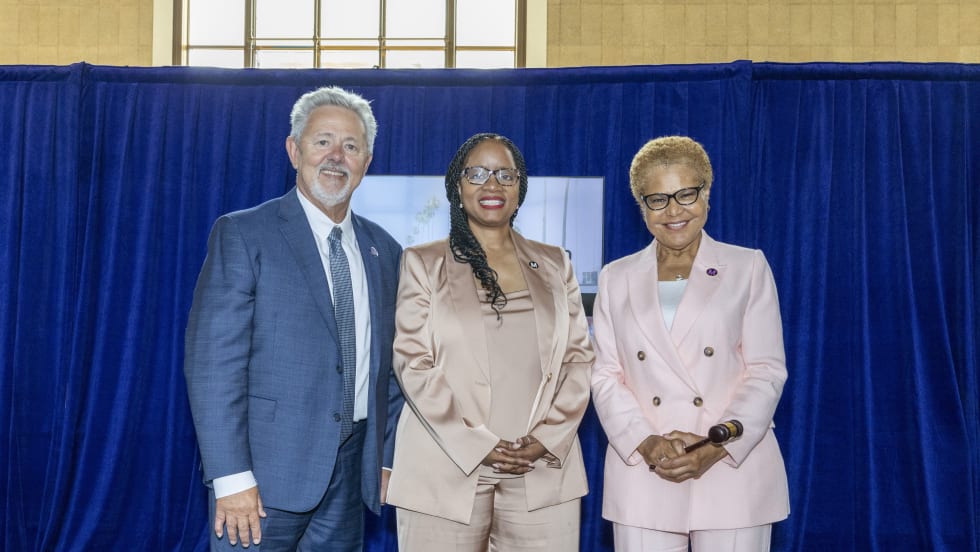
LA Metro Marks Banner Year, Sets Ambitious Goals for New Fiscal Year
Incoming LA Metro Board Chair and Los Angeles Mayor Karen Bass joined outgoing Board Chair Fernando Dutra and LA Metro CEO Stephanie Wiggins to review accomplishments from fiscal year 2026, which included the opening of new rail extensions, advancement of major transit projects, expanded safety programs, and new rider amenities.
Read More →
DART Taps Nathaniel P. Ford Sr. as Next President/CEO
Since 2012, Ford has served as the CEO of the Jacksonville Transportation Authority
Read More →
AC Transit’s Cecil Blandon on Building the Next Generation of Transit Maintenance Leaders
The agency’s maintenance chief discusses leadership, workforce development, zero-emission technology, and preparing technicians for the future of public transportation.
Read More →
Building the Next Generation of Transit Technology
In this edition of METROspectives, Luminator CEO Magnus Friberg discusses the company's transformation, the growing role of AI and software, and what's next for transit technology.
Read More →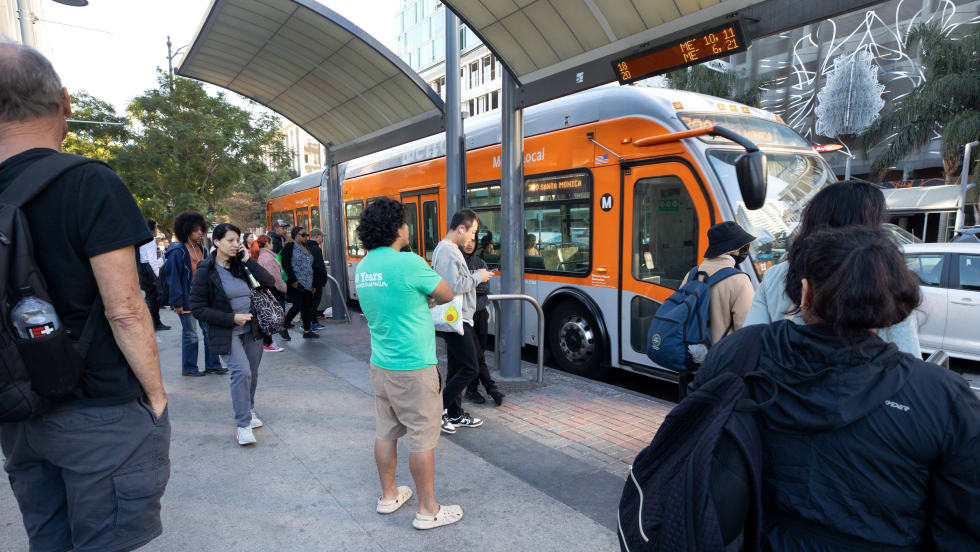
June LA Metro Ridership Surges 2 Million Year Over Year
Total June ridership increased for both weekdays and weekends. Weekday ridership was 953,820, which grew 8.4% from June 2025; Saturdays increased nearly 13% year-over-year to 708,826; and Sundays increased 7.7% to 611,534 from June 2025, according to LA Metro.
Read More →
Washington's Pierce Transit Board Sends Transit Funding Measure to November Ballot
With the adoption of Resolution 2026-006, the measure moves to the Pierce County Auditor, giving voters in the Pierce Transit service area the decision on whether to fund an expansion of local transit service within the agency’s service area.
Read More →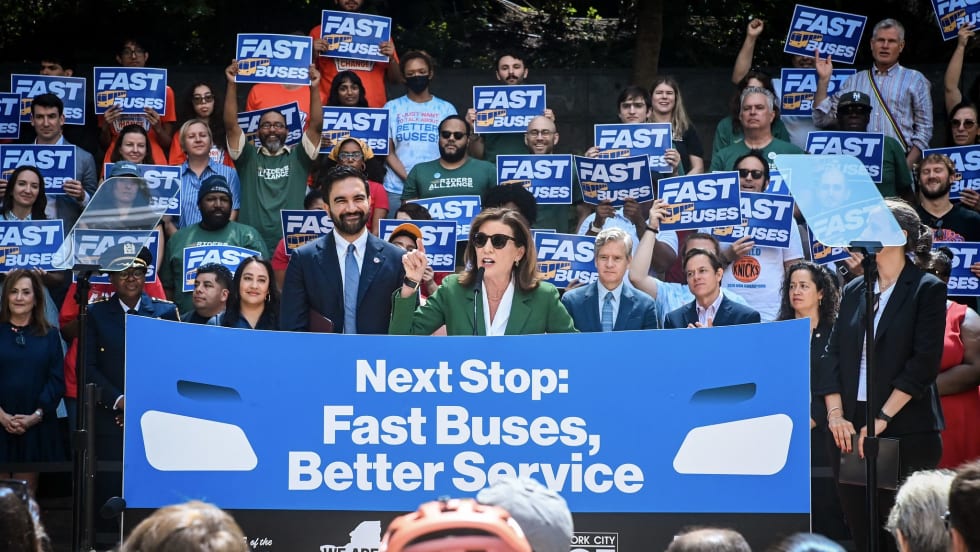
New York Unveils Sweeping Plan to Modernize City Bus Service
Next Stop: Fast Buses, Better Service identifies 50 priority bus corridors for improvements across the five boroughs and launches the City’s next generation of rapid bus service along five key routes.
Read More →