




RELATED: Sound Transit moves forward with 2 key rail extensions
Sound Transit adding 5 more Brookville Equipment Corp. LRVs
The new cars will begin arriving in the third quarter of 2020 and complete delivery by the first quarter of 2021.
November 20, 2017
Sound Transit
2 min to read
Sound Transit
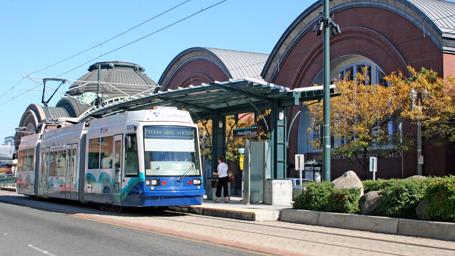
Seattle’s Sound Transit board of directors approved an order for five additional light rail vehicles from Brookville Equipment Corp. for the Tacoma Link Extension. The new cars will begin arriving in the third quarter of 2020 and complete delivery by the first quarter of 2021.
The five new light rail vehicles will supplement the existing fleet of three vehicles that now operate on a 1.6-mile, six-station line between the Tacoma Dome and Theater District. The 2.4-mile extension will expand service to the Stadium and Hilltop neighborhoods, serve six new stations and one relocated station, and include an expanded Operations and Maintenance facility (OMF) where cars will be stored. Construction on the extension begins next fall, with service starting in 2022.
“Ordering more light railcars for the Tacoma Link Extension will ensure sufficient fleet capacity to run trains on the expanded line,” said Sound Transit Vice Chair and Tacoma Mayor Marilyn Strickland. “By ordering these cars now, we will have the equipment we need to begin service to the Stadium and Hilltop communities when construction is complete.”
“This order for five new light railcars is an exciting milestone for a project that has undergone years of planning and community input and is now in the final stages of design,” said Sound Transit CEO Peter Rogoff. “As Sound Transit works hard to bring more regional mass transit to Pierce County, the investments we’re making now to help Tacoma residents and commuters get around the city will serve many generations to come.”
The $26.5 million contract with Brookville Equipment Corp. includes options to procure up to five additional LRVs. The amount approved under this action does not include funding for these options.
Trains on the Tacoma Link Extension will travel at-grade, in-street with traffic along Stadium Way, North 1st Street, Division Avenue, and Martin Luther King Jr. Way. Service will run every 10 minutes during peak periods and 20 minutes during nonpeak periods. The project was approved by voters in 2008.
More Rail

FTA Ends Direct Oversight of MBTA Safety Actions
The federal agency closed its remaining special directive to the Massachusetts Department of Public Utilities following a safety review that began in 2022.
Read More →
Amtrak, CN Reach Agreements to Strengthen Passenger Rail Service, Safety
The agreement resolves a more than decade-long proceeding before the Surface Transportation Board concerning the terms and conditions for Amtrak services, such as the City of New Orleans, Illini/Saluki, and Wolverine.
Read More →
New York MTA Advances Final Contract for Second Avenue Subway Expansion
Contract Four is the largest in the Second Avenue Subway Phase 2 project and includes construction of station infrastructure, tracks, and signals for the subway expansion, MTA officials said. Work on Contract Four will begin in 2027.
Read More →
San Diego MTS Breaks Monthly Trolley Ridership Record
Agency officials said July’s ridership indicates MTS’s continued recovery from the pandemic.
Read More →
Report Examines NJ TRANSIT Reliability, Funding Challenges
The Garden State Initiative analysis examines the roles of Amtrak infrastructure, fleet management, and agency operations while recommending a more performance-based approach to improving reliability.
Read More →
Stadler, CapMetro Sign Long-Term Rail Fleet Support Agreement
Beginning in 2027, Stadler will provide on-site technical expertise, spare parts support, training, and obsolescence management to help extend the reliability and longevity of CapMetro’s GTW fleet.
Read More →
Biz Briefs: Alstom Lands Canadian Contract, LYT to Supply California TSP, and More
In METRO's latest installment, we take a look at recent news from Complete Coach Works, Beep, FlixBus, and more partnerships making headlines across the transportation sector.
Read More →
CATS Gold Line Marks 5 Years of Service, 2.8M Passenger Trips
With a six-mile expansion planned, the Charlotte streetcar is positioned to connect more neighborhoods and major transit hubs across the region.
Read More →
Why Simulating Pedestrian Movement Has Become Essential for Modern Rail Stations
Pedestrian microsimulation is helping rail planners identify bottlenecks, test station designs, and prepare complex transit hubs for growing passenger volumes.
Read More →
Amtrak Begins Major Construction at New York’s Sunnyside Yard
The new maintenance facility will support Amtrak’s Airo trainsets while improving maintenance efficiency and turnaround times in New York.
Read More →