




The D45 CRT LE’s breakthrough accessibility design features a second door with an automated ramp and a curb-level vestibule with seating for passengers, including those with wheelchairs and other mobility devices.
SouthWest Transit orders MCI D45 CRT LE Commuter Coaches
The Buy America-compliant model recently passed its Altoona test.
November 26, 2018
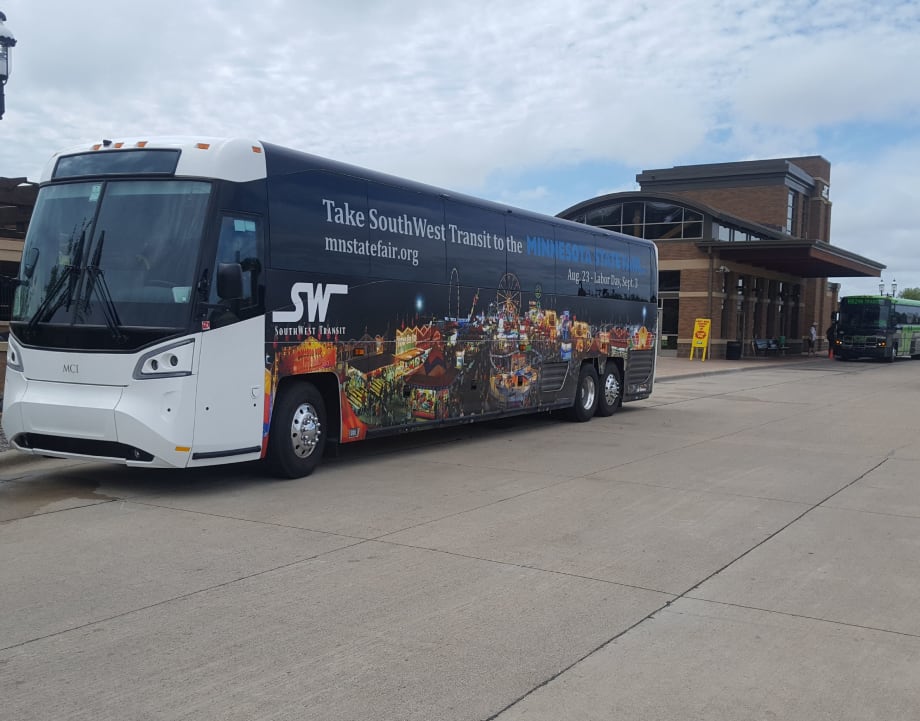
The D45 CRT LE’s breakthrough accessibility design features a second door with an automated ramp and a curb-level vestibule with seating for passengers, including those with wheelchairs and other mobility devices.
MCI
2 min to read

The D45 CRT LE’s breakthrough accessibility design features a second door with an automated ramp and a curb-level vestibule with seating for passengers, including those with wheelchairs and other mobility devices.
MCI
Motor Coach Industries (MCI), a U.S. subsidiary of NFI Group Inc., announced Eden Prairie, Minnesota’s SouthWest Transit is taking a major step forward in passenger accessibility with the order of two new MCI D45 CRT LE Commuter Coaches. It is the first U.S. transit agency to order the groundbreaking coaches for its fleet.
The D45 CRT LE’s breakthrough accessibility design features a second door with an automated ramp and a curb-level vestibule with seating for passengers, including those with wheelchairs and other mobility devices. The front entry features a roomy, well-lit, ergonomically designed spiral entryway leading to upper-level forward seating. The dual entry system has shown significant decreases in dwell times to match low-floor transit boarding times.
The Buy America-compliant new model recently passed its Altoona test, the U.S. Federal Transit Administration’s reliability-test for new bus models at the Altoona, Pennsylvania, test center. In 2020, MCI plans to begin production on a battery-electric version of the model.
Since its October 2017 industry debut, MCI’s next-generation Commuter Coach has toured the country in passenger tests, including one by SouthWest Transit during this summer’s Minnesota State Fair where SouthWest Transit provided over 100,000 rides.
Len Simich, CEO of SouthWest, said the company’s two new MCI D45 CRT LE coaches allow for better vehicle scheduling and a cost-savings by providing the right vehicle for both the load demand and accessibility needs. “On our express city-to-suburban routes, we currently either have to deploy the lift on our current fleet of commuter coaches, which requires additional time, or deploy a 40-foot low-floor vehicle that doesn’t always match well with the passenger loads that bus will experience during the course of the trips it makes during the peak hours,” he explained.
Simich also said that during SouthWest’s test of the MCI D45 CRT LE, passengers with mobility challenges highly favored the new vestibule design, which was actually created with the help of accessibility user groups. “It’s an exclusive design that allows passengers with mobility devices ease of entry and secure designated seating,” he said. “From what these passengers have told us, the D45 CRT LE creates a comfort level they appreciate.”
SouthWest’s new D45 CRT LE coaches will come with Kiel seating for 52 passengers, featuring cup holders and arm rests along with power outlets, Wi-Fi connectivity and bike racks. MCI anticipates that delivery will take place by the end of May 2019.
More Bus

New York MTA Plans Largest Bus Fleet Upgrade in More Than a Decade
The agency is seeking manufacturers for 650 new CNG buses to replace aging vehicles, improve reliability, and advance its broader fleet modernization strategy.
Read More →
Building a Flexible Path to Transit Electrification
John Hroncich discusses BAE Systems’ modular and scalable approach, lessons learned from decades of real-world operations, and how agencies can identify electrification strategies that fit their fleets.
Read More →
Bus Tech Talk: Keeping Transit Technicians Ahead of the Technology Curve
LA Metro’s Obed Mejia discusses technician training, evolving maintenance technology, fleet replacement, and strategies for getting the most out of today’s transit fleets.
Read More →
Biz Briefs: RIPTA Unveils New Frontrunners, Clevland RTA Adds New Siemens, and More
In METRO's latest installment, we take a look at recent news from Siemens, Prevost, Dodge, and more partnerships making headlines across the transportation sector.
Read More →
People Movement: Holly Arnold Joins Transdev and More
In this edition, we also cover recent appointments and announcements at Pace, CamTran, MCI, and more, showcasing the individuals helping to shape the future of transportation.
Read More →
The High Cost of Transit Buses: Industry Leaders Look to Procurement Reform
Transit leaders and policymakers examine how standardized bus designs, streamlined procurement, and predictable funding could help agencies stretch budgets and deliver better service.
Read More →
The Business Voice Behind Public Transportation
As chair of APTA’s Business Members Board of Governors, Ray Melleady explains how more than 850 business members are partnering with transit agencies to advance funding, innovation, and industry-wide collaboration.
Read More →
From Surviving to Thriving: Building Stronger Transportation Organizations
Bus Business Consultants founder Brian Dickson shares lessons on leadership, organizational health, and creating options for long-term success in a changing transportation industry.
Read More →
Finding the ‘Happy Medium’: Optimizing Maintenance Without Sacrificing Reliability
The key to maintenance optimization isn’t doing less work—it’s doing the right work at the right time on the right assets.
Read More →
LA Metro, City of West Hollywood, and Partners Advance Smarter Bus Lane Enforcement
The award-winning partnership combines AI-powered detection with human oversight to improve bus reliability, accessibility, and enforcement efficiency.
Read More →