



Study: Commuters go to great lengths to avoid sitting by strangers
The greatest unspoken rule of bus travel is that if other seats are available you shouldn’t sit next to someone else. As the passengers in the study claimed, “It makes you look weird."

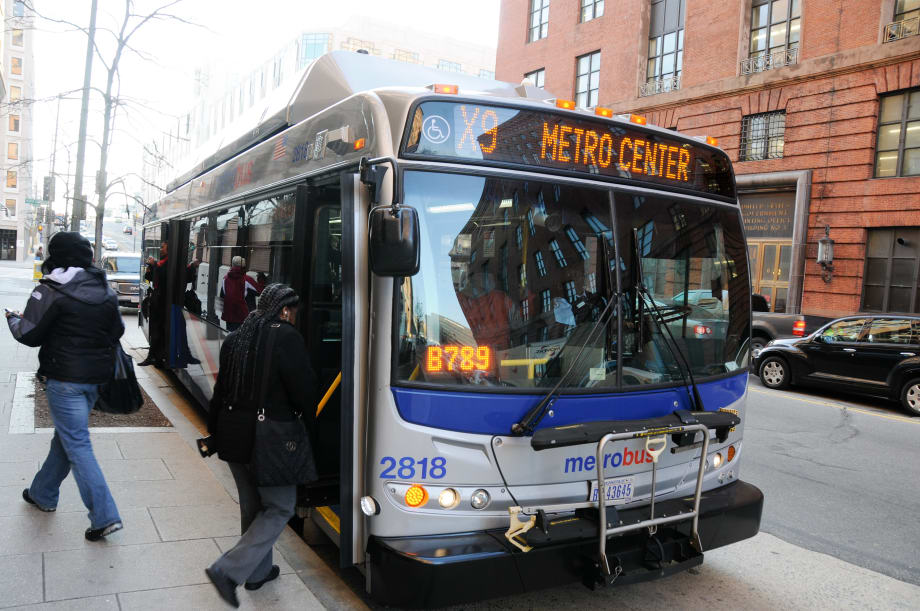
WMATA Photograph by Larry Levine.
You’re on the bus, and one of the only free seats is next to you. How, and why, do you stop another passenger sitting there? New research reveals the tactics commuters use to avoid each other, a practice the paper published in Symbolic Interaction describes as "nonsocial transient behavior."
The study was carried out by Esther Kim, from Yale University, who chalked up thousands of miles of bus travel to examine the unspoken rules and behaviors of commuters.
Over three years Kim took coach trips across the U.S. Kim’s first trip, between Connecticut and New Mexico, took two days and 17 hours, and this was followed by further adventures from California to Illinois, Colorado to New York, and Texas to Nevada.
“We live in a world of strangers, where life in public spaces feels increasingly anonymous,” said Kim. “However, avoiding other people actually requires quite a lot of effort and this is especially true in confined spaces like public transport.”
Kim found that the greatest unspoken rule of bus travel is that if other seats are available you shouldn’t sit next to someone else. As the passengers claimed, “It makes you look weird.” When all the rows are filled and more passengers are getting aboard the seated passengers initiate a performance to strategically avoid anyone sitting next to them.
“I became what’s known as an experienced traveler and I jotted down many of the different methods people use to avoid sitting next to someone else,” said Kim. “We engage in all sorts of behavior to avoid others, pretending to be busy, checking phones, rummaging through bags, looking past people or falling asleep. Sometimes we even don a ‘don’t bother me face’ or what’s known as the ‘hate stare.’”
The best advice from Kim’s fellow passengers was:
• Avoid eye contact with other people.
• Lean against the window and stretch out your legs.
• Place a large bag on the empty seat.
• Sit on the aisle seat and turn on your iPod so you can pretend you can’t hear people asking for the window seat.
• Place several items on the spare seat so it’s not worth the passenger’s time waiting for you to move them.
• Look out the window with a blank stare to look crazy.
• Pretend to be asleep.
• Put your coat on the seat to make it appear already taken.
• If all else fails, lie and say the seat has been taken by someone else.
“This all changes however when it is announced that the bus will be full so all seats should be made available,” Kim observed. “The objective changes, from sitting alone to sitting next to a ‘normal’ person.”
Kim found that race, class, gender and other background characteristics were not key concerns for commuters when they discovered someone had to sit next them. They all just wanted to avoid the "crazy person."
Kim found that this nonsocial behavior is also driven by safety concerns, especially for coach travel, which is perceived to be dangerous with ill-lit bus stations. Kim also found that passengers expected each other to be jaded by delays or other inconveniences.
“In a cafe, which is more relaxed, people often ask strangers to watch their stuff for a moment,” said Kim. “Yet at bus stations that rarely happens as people assume their fellow passengers will be tired and stressed out.”
“Ultimately this nonsocial behavior is due to the many frustrations of sharing a small public space together for a lengthy amount of time,” concluded Kim. “Yet this deliberate disengagement is a calculated social action, which is part of a wider culture of social isolation in public spaces.”
More Bus

Scenes from APTA TRANSform & EXPO 2026
Transit leaders, manufacturers, and industry professionals gathered in Chicago to explore new technologies, share ideas, and discuss the future of public transportation.
Read More →
More Than a Summer Job: Building the Next Generation of Transit Talent
The Delaware River Port Authority and PATCO have transformed their internship program into a hands-on professional development experience that introduces students to the breadth of transportation careers — and creates a pipeline for future employees.
Read More →
LA Metro Board Awards 220 Battery-Electric Bus Contract to ENC
The contract, which is the largest base award of battery-electric buses by a U.S. transit agency, will be built in Southern California, sustaining good jobs as LA prepares to welcome the world in 2028
Read More →
Public Transit Conference Returning to GFX in 2027, Call for Papers Now Open
The Call for Papers is now open, allowing transit agency professionals and industry experts to help shape the PTC educational program by submitting session ideas for consideration.
Read More →
Indian River Transit’s Community-Focused Approach Earns National Recognition
Named APTA’s 2026 Outstanding Public Transportation System in its size category, Florida’s Indian River County transit system continues to grow ridership through fare-free service and a focus on evolving community needs.
Read More →
ENC Lands MATA Contract and More in Biz Briefs
In this edition of Biz Briefs, we spotlight the latest developments shaping the future of mobility.
Read More →
From Surviving to Thriving: Building Stronger Transportation Organizations
Bus Business Consultants founder Brian Dickson shares lessons on leadership, organizational health, and creating options for long-term success in a changing transportation industry.
Read More →
Everett Transit, Community Transit Outline Consolidation Agreement
The proposed agreement calls for a 50% increase in bus service in Everett, a new microtransit zone, continued paratransit service, and the transfer of Everett Transit operations to Community Transit.
Read More →
SEPTA Details Accelerate Vision for Transit System
The plan outlines investments in trolley modernization, new Metro and Regional Rail vehicles, accessible stations, and more frequent bus and rail service.
Read More →
Report: Transit Bus Manufacturing Supports 34,100 Jobs, $5.1B in GDP
The “Buses Mean Business” report examines the transit bus manufacturing industry’s economic footprint, supply chain, and rising demand for vehicle replacements.
Read More →