




Tapped In: TARTA Taps ETA Transit for New Intelligent Transit System
TARTA Moves Forward With Redesign Project
The TARTA Next project involved multiple levels of community engagement, including a task force of community stakeholders.
October 24, 2022

TARTA's Board of Trustees approved the agency's updated vision and system redesign.
Photo: TARTA
3 min to read
After 18 months of community, employee, and customer engagement, the Toledo Area Regional Transit Authority's (TARTA) updated vision and system redesign was approved by TARTA's Board of Trustees, according to the agency's news release.
The TARTA Next project involved multiple levels of community engagement, including a task force of community stakeholders, surveys for TARTA customers and employees, and 12 public engagement events. The result is a list of proposed service expansions and improvements that stem directly from the needs and travel habits of TARTA customers, the membership of Lucas County in the authority, and TARTA's financial realities.
“In 2021, the voters expressed their support for modernizing TARTA by approving the change of our funding model to a sales tax and expanding our service area," said Laura Koprowski, TARTA CEO. "When they did that, it was with the understanding that we would improve the fleet, technology, and customer experience, and provide everyone in Lucas County with access to public transportation.”
TARTA's evolution will include:
Microtransit, which will allow public transit options to reach all of Lucas County. Initial microtransit zones will launch in early 2023.
The extension of fixed route service to Spring Meadows in early 2023 followed by new service for Oregon by 2024.
The expansion of TARPS coverage area beginning in 2023, in line with TARTA's fixed-route service.
Simplification and streamlining service of fixed route service, including a new connection between the Junction neighborhood and Uptown Toledo.
New customer amenities including covered bus shelters, bus stop signs, and connection points throughout the service area to better link to mobility options.
In addition to those changes, the TARTA Next vision calls for a number of long-term improvements over the course of the next five-to-10 years. Those include:
Developing new connection points to improve customer experience for those who transfer between different TARTA services.
Increasing special event transportation to festivals, sporting events, and other happenings.
Purchasing new vehicles including electric and hydrogen fuel-cell buses.
Improving bus stop positioning, signage, and pedestrian access points.
"TARTA's staff has been hard at work in the last couple of years changing the direction of this organization based on what customers have asked for, and it's an exciting thing to be a part of," said Kelsie Hoagland, TARTA Board of Trustees president. "We're eager to put this plan into action and make TARTA easier, more efficient, and more comfortable for all of the people who depend on it."
The microtransit pilot will bring on-demand service, similar to ride-sharing services, to different areas of Lucas County in the next year, according to TARTA. Customers will be able to request rides on accessible vehicles that arrive within 30 to 60 minutes, connecting them from western Lucas County and Rossford to TARTA fixed route vehicles.
More Management

Bringing Austin’s First Light Rail System to Life
Austin Transit Partnership CEO Greg Canally discusses the city's nearly 10-mile light rail project, its collaborative approach to project delivery, the importance of community engagement, and the milestones ahead as construction approaches in 2027.
Read More →
ETA CEO John Maglio on Transit Technology, Innovation, and Building Agency Trust
ETA founder and CEO John Maglio explores the evolution of transit technology, the importance of reliable systems, and how stronger partnerships can help agencies improve operations and the passenger experience.
Read More →
Metra Draft Plan Outlines Costs, Service Improvements for Regional Rail
The Systemwide Network Plan identifies infrastructure needs and potential investments to expand all-day, bidirectional rail service across the Chicago region.
Read More →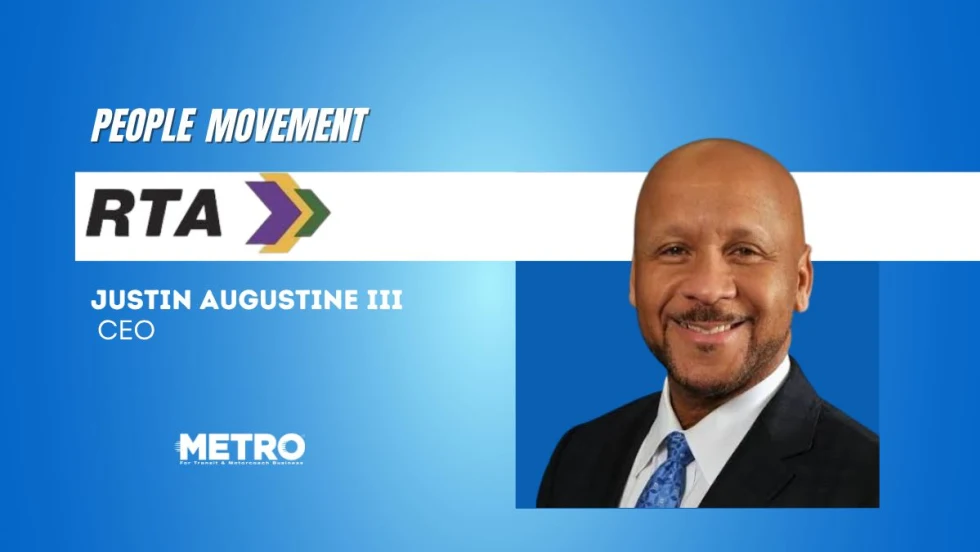
New Orleans RTA Names Augustine III as New CEO
In this edition, we also spotlight recent personnel moves at HDR, PATH, STV, and more, highlighting the people taking on new roles across the transportation industry.
Read More →
How Transit Agencies Are Using Free Rides to Improve Voting Access
Transit agencies are using fare-free service, trip-planning tools, and targeted rides to improve voting access. See what other agencies can learn from these efforts.
Read More →
Caltrain’s Electrification Drives a New Era of Ridership Growth
The railroad’s shift to electric service has brought more frequent trains, stronger customer satisfaction, and increased ridership, earning it APTA’s Outstanding Public Transportation System award.
Read More →
Chicago, Charlotte Transit Agencies Expand Rider Support Programs
CTA launched crisis intervention teams as CATS prepares to deploy fare ambassadors, expanding customer assistance and security efforts across both systems.
Read More →
New York MTA Launches Historic $1.9B Signal, Track Modernization Project
Funded in part by congestion pricing revenue, the project will replace nearly century-old signals along the A and C lines in Brooklyn and Queens.
Read More →
Brian Dickson on Building Stronger, More Resilient Transportation Organizations
Bus Business Consultants Founder Brian Dickson discusses the leadership principles, operational discipline, and strategic planning that separate transportation companies positioned for long-term success from those stuck in survival mode.
Read More →
LA Metro Breaks Ground on Vermont BRT Project
The 12.4-mile corridor is projected to serve 66,200 daily riders, reduce travel times by up to 24%, and create the nation's busiest bus rapid transit corridor.
Read More →