




Keep Reading: Through Leadership, Laura Hendricks Builds A Culture and A Legacy
Transdev Extends University Shuttle Plans with Renewed Contracts
Transdev extends campus shuttle partnerships nationwide, renewing contracts with major universities in California, South Carolina, and Minnesota.
September 4, 2025
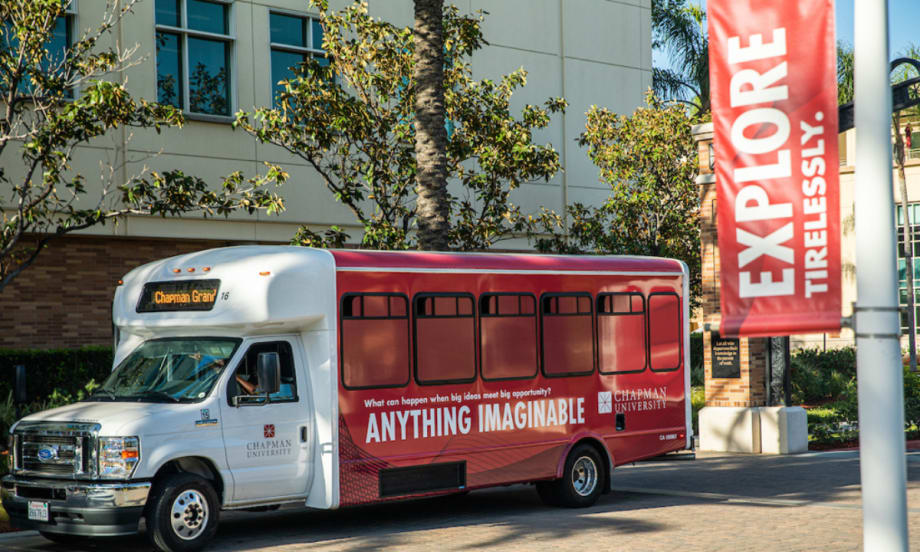
Chapman University’s 19-vehicle shuttle fleet provided 71,000 rides in six months.
Photo: Transdev
4 min to read
Transdev has renewed several major university shuttle contracts, including with Chapman University, Clemson University, and the University of Minnesota. The agreements add to the company's more than 32 active shuttle contracts with colleges across the country, part of its business line dedicated to higher education transportation.
Chapman University Advancing Flexible Campus Transit
Chapman University, located in California, extended its partnership with Transdev to continue to operate its on-campus shuttle system, effective June 1, 2025. The agreement marks the extension of a previous contract, entering a three-year commitment with two optional one-year extensions, reinforcing Chapman's commitment to enhancing campus mobility for students, faculty, and staff.
According to a release, the shuttle system, which includes a fleet of 19 university-owned vehicles powered by a mix of compressed natural gas (CNG) and gasoline, has already proven essential to campus life, providing over 71,000 rides in just six months.
"This is a high-touch, high-flexibility environment that demands more than a one-size-fits-all approach," said Rich Rogers, senior vice president of the Southwest region of Transdev U.S. "Chapman was looking for a team that shares their passion for quality, and we're thrilled to be that team."
The contract includes daily shuttle operations during the academic year, charter services for university events, a limited summer schedule, and flexible coordination to align with Chapman's evolving academic calendar.
To support the system, Transdev will provide a dedicated team of 19 drivers and three additional personnel responsible for daily operations and vehicle maintenance. In addition, Transdev will optimize services for the future to include advanced scheduling and autonomous capabilities with existing Transdev operations in the area.
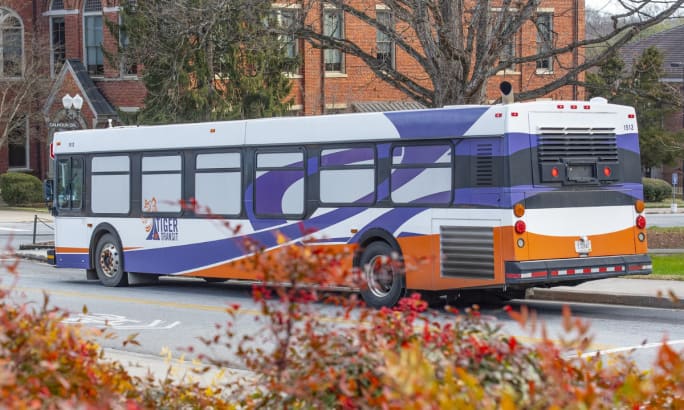
Clemson University’s shuttle fleet grows as Transdev invests in 13 new Gillig buses.
Photo: Transdev
Clemson University Renews Long-Term Commitment
Transdev's partnership with Clemson University, located in South Carolina, continues with a seven-year base contract, including four option years, to operate the Tiger Transit shuttle system. With this renewal, Transdev will procure 13 new Gillig diesel buses, expanding and modernizing the university's current 20-vehicle fleet. The service is supported by 23 drivers and seven staff, ensuring round-the-clock availability for students and employees.
"This isn't just transportation, it's an essential part of the student experience," said Nick Promponas, senior vice president of transit at Transdev U.S. "Our strength as a financially secure partner allows us to invest in new vehicles and long-term planning, setting Clemson up for success for years to come."
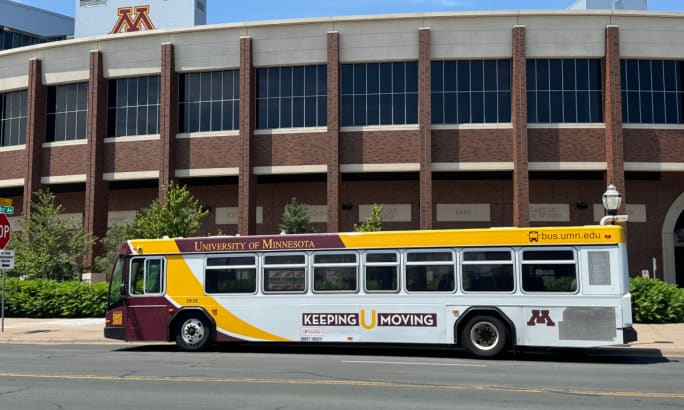
With 38 drivers and 25 staff, Transdev manages the University of Minnesota’s campus shuttle fleet.
Photo: Transdev
University of Minnesota Scaling for Complexity
In the Twin Cities, Transdev has been selected to continue operating and maintaining the University of Minnesota's 37-vehicle fleet, which includes cutaways and standard transit buses. With a service area covering both Minneapolis and St. Paul, this high-volume system demands rigorous coordination and operational excellence. Transdev will deploy 38 drivers and 25 support staff for the contract, which includes a three-year base term and three optional years.
"The University of Minnesota is a perfect example of how our scale, experience, and industry knowledge make us the best partner for complex shuttle systems to enhance the educational mission of our higher education partners," said Paul Buharin, senior vice president of the Midwest region at Transdev U.S.
According to a release, Transdev's strength in managing alternative fuel vehicles, including hybrids, also plays a key role in this partnership.
"We're leveraging our extensive expertise as an organization with alternative fuel vehicles to ensure that the local team has the skills and knowledge necessary to protect the life of the university's latest investment," said Sean Powers, director of business development at Transdev U.S.
How University Needs Differ From Public Transit
Campus shuttle systems differ significantly from traditional public transit. Schedules vary by semester, demand fluctuates throughout the day, and the need for charter flexibility, reliable planning, and adaptable service models is constant. Transdev's ability to respond to these service elements is unmatched.
"As a trusted partner to higher education institutions, we understand that campus shuttle systems do more than just move people — they create connections and make daily life easier for students, faculty, and staff," said Susan Sweat, chief operating officer at Transdev U.S. "Our commitment is to provide not only reliable and flexible service, but also the expertise and partnership that help universities plan for the future with confidence."
More Management

METRO Opens Submissions for 2026 Motorcoach Awards
Nominations are now being accepted for METRO Magazine’s Operator of the Year and Innovative Operator of the Year awards.
Read More →
New York MTA Advances Final Contract for Second Avenue Subway Expansion
Contract Four is the largest in the Second Avenue Subway Phase 2 project and includes construction of station infrastructure, tracks, and signals for the subway expansion, MTA officials said. Work on Contract Four will begin in 2027.
Read More →
Transit Agencies Highlight Safety Gains at National Summit
Leaders from 15 major transit systems shared crime-reduction results and safety initiatives while discussing the role of continued federal support.
Read More →

NITA Names New Leadership, Expands Reduced-Fare Program at First Board Meeting
The new regional transit authority appointed its first board chair and interim executive director while extending reduced fares across CTA, Metra, and Pace for eligible riders.
Read More →
Beyond the Checklist: A Structured Approach to Transit Maintenance
Reliability-Centered Maintenance helps transit agencies move beyond routine checklists to focus limited resources on the assets and failures that have the greatest impact on safety, reliability, and service.
Read More →
APTA 2026 Nominating Committee Selects Leadership Slate, Names Chair and Vice Chair Nominees
Leadership changes will help shape the association’s priorities and its representation of the transportation industry during the 2026–2027 term.
Read More →
DART Launches Major Security, Fare Enforcement Initiative
The 90-day demonstration will deploy coordinated security teams at five light rail stations while testing controlled access and gathering data to guide future investments.
Read More →
Sponsored•September 9, 2026
Advancing Fare Collection Through Technology and Innovation
Learn about delivering 1300 gates at 91 stations while managing fare evasion. Explore the large scale deployment, solution customization and real-world results that affect the region. Prepare for deployment in your region now.
Read More →
Game Day in Motion: Moving Millions During the 2026 World Cup
Between packed transit stations and team motorcoaches, see how agencies and operators across North America tackled the transportation demands of the 2026 FIFA World Cup.
Read More →
Surface Transportation Extension Averts Shutdown, Leaves Transit Funding Gap
The stopgap keeps federal transportation programs moving, but missing advance funding could complicate the transit and rail projects agencies are planning next.
Read More →