



Transportation bill cuts draw criticism
"It will severely curtail the purchase of new buses and trains, reduce critical maintenance and safety programs, and could cut operating funds for transit systems in small communities and rural areas," said APTA President William Millar.

Rep. John Mica's (R-FL) six-year $230 billion transportation reauthorization proposal, unveiled Thursday, drew criticism for its nearly 20 percent reduction in spending from the previous long-term transportation bill. Other portions of the bill, which streamlined project delivery and simplified federal grant programs, were lauded.
Responses to the proposal include:
William Millar, president, American Public Transportation Association
“APTA commends the leadership of Chairman John Mica (R-FL) and the House Transportation and Infrastructure Committee for moving forward with developing a six-year, multi-modal surface transportation authorization bill. The Chairman’s efforts to expand project financing, streamline project delivery, and simplify federal grant programs are important components of the proposal. However, the bill’s investment levels, which are severely limited under the House-passed budget resolution and its rules, are woefully short of what is required to address the nation’s surface transportation infrastructure investment needs...
“This proposal would severely underfund critical elements of the federal transit program. The funding will not permit public transit agencies to address the costs of getting the existing systems to a state of good repair, which the U.S. DOT has estimated as a one-time cost of $78 billion, let alone meet the growing demand for public transportation services in the United States. It will severely curtail the purchase of new buses and trains, reduce critical maintenance and safety programs, and could cut operating funds for transit systems in small communities and rural areas.
Deron Lovaas, federal transportation policy director, National Resources Defense Council
"Rep. Mica’s bill would take the next exit ramp off the superhighway to a smarter, 21st century transportation system. This is no time to slam the foot of Big Government on the brakes. Instead, we need to go full speed ahead with targeted investments that prepare us for the rest of this century, and beyond.’’
Marcia Hale, president, Building America's Future
“We appreciate many of the proposed policy reforms that were announced today but we are disappointed by the funding level. We applaud the fact that Chairman Mica recognizes states and cities want certainty when it comes to long-term transportation funding but this proposal shows a significant cut from current funding levels. Many of the announced policy reforms are welcomed as they will ensure tax dollars are invested more wisely and efficiently...
Chairman Mica outlined several important policy reforms which BAF has long recommended, and applauds, including: greater accountability, cutting through red tape to expedite project completion, leveraging federal dollars, providing increased funding for TIFIA, the elimination of earmarks, some increased flexibility to current tolling programs, and utilizing public private partnerships.
Edward Wytkind, president, Transportation Trades Department, AFL-CIO
“At a time when our transportation system is crumbling, and unemployment continues to hover around 9 percent nationally, we need to be doing more — not less — to address today’s and tomorrow’s transportation needs. Yet the bill described today doesn’t even keep investment levels stagnant — it cuts them by 35 percent. According to Congressional estimates, 500,000 jobs will be lost in the first year alone."
(Summary of Proposal)
Highway, Transit and Highway Safety Programs
Transportation Reauthorization Bill Funding
Provides $230 billion over six years from the Highway Trust Fund – consistent with the amount of revenue deposited into the Highway Trust Fund during that time frame.
Better Leverage Existing Resources
Funds the TIFIA program at $1 billion per year and provides incentives for states to create and capitalize State Infrastructure Banks.
Surface Transportation Program Reform
Consolidates or eliminates nearly 70 duplicative programs or programs not in the federal interest.
No longer requires states to spend highway funding on non-highway activities, but permits states to fund those activities if they so choose.
Streamlining the Project Delivery Process
Cuts bureaucratic red tape by allowing federal agencies to review transportation projects concurrently, delegates project approval authority to states, and establishes hard deadlines for federal agencies to make decisions on permits and project approvals.
Expands the list of activities that qualify for Categorical Exclusions – an approval process that is faster and simpler than the standard process.
Federal Highway Program
Distributes nearly all federal highway funding to state DOTs through formula programs designed to preserve existing highways, build new highway capacity, and address congestion, freight mobility, and highway safety.
Focuses the Federal Highway Program on the Interstate Highway System and the National Highway System – the highways that facilitate interstate travel and commerce.
Transit
Removes current barriers that prevent the private sector from offering public transportation services, provides more focus on transit programs that benefit suburban and rural areas, and improves transit options for the elderly and disabled.
Highway and Motor Carrier Safety
Ensures that federal regulators keep unsafe trucks and buses off the road while allowing companies that operate in a safe and responsible manner to continue to do so.
Incentivizes states to enact laws that prevent impaired driving, increase seatbelt use and improve the safety of younger drivers.
Passenger and Freight Rail Programs
Better Leveraging of Federal Funds
Leverages private sector dollars and expertise.
Eliminates unnecessary grant programs.
Improves Current Programs
Reforms underperforming programs, such as the Railroad Rehabilitation and Improvement Financing (RRIF) Program, to enhance participation.
Promotes transparency and accountability in rail programs.
Streamlines Rail Project Delivery
Reduces red tape by allowing concurrent reviews of rail projects, setting hard deadlines for decisions by agencies, and increasing coordination among agencies.
Delegates more authority to the states.
Expands the use of categorical exclusions for certain classes of projects.
Enhances Rail Safety
Ensures positive train control is properly implemented in the safest manner.
Promotes Regulatory Reform
Requires rail regulations to be based on reasoned cost/benefit analysis and the best available science, and to consider effects on jobs and the economy.
More Paratransit
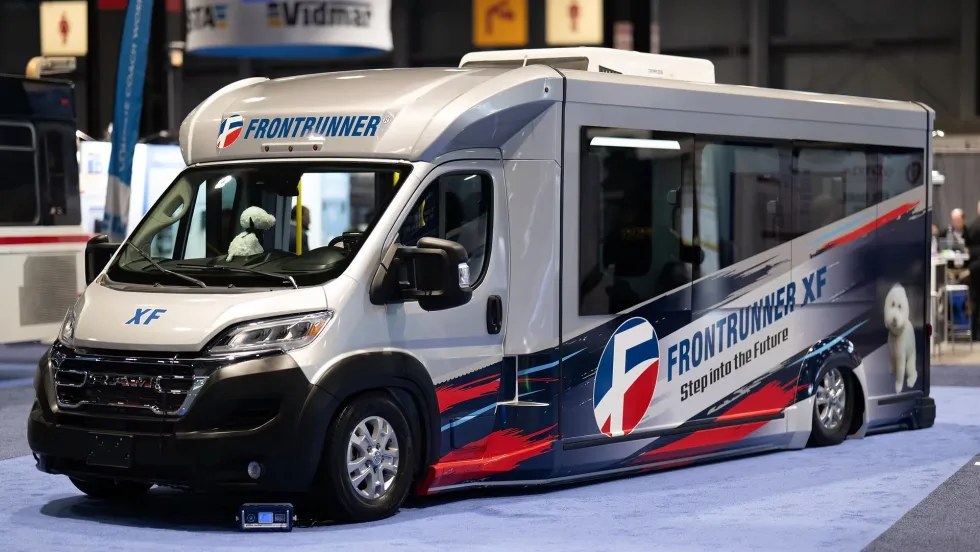
Frontrunner Bus Group Introduces XF Low-Floor Bus with Enhanced Accessibility
The new mid-sized bus features a full flat-floor design, eight-inch curbside step-in height, and zero-entry rear ramp to improve passenger access and operational flexibility.
Read More →
Scenes from APTA TRANSform & EXPO 2026
Transit leaders, manufacturers, and industry professionals gathered in Chicago to explore new technologies, share ideas, and discuss the future of public transportation.
Read More →
Indian River Transit’s Community-Focused Approach Earns National Recognition
Named APTA’s 2026 Outstanding Public Transportation System in its size category, Florida’s Indian River County transit system continues to grow ridership through fare-free service and a focus on evolving community needs.
Read More →
Everett Transit, Community Transit Outline Consolidation Agreement
The proposed agreement calls for a 50% increase in bus service in Everett, a new microtransit zone, continued paratransit service, and the transfer of Everett Transit operations to Community Transit.
Read More →
Driving Smarter Paratransit
John Hanlon shares how AlphaRoute is leveraging AI-powered technology to help paratransit providers optimize operations, support frontline staff, and enhance the rider experience.
Read More →
People Movement: Dan Dipert Coaches Adds Third-Generation Leader, Keolis Names New Valley Metro VP/GM, and More
In this edition, we also cover recent appointments and announcements at the Wabtec, SilverRide, HNTB, and more, showcasing the individuals helping to shape the future of transportation.
Read More →
Biz Briefs: RIPTA Unveils New Frontrunners, Clevland RTA Adds New Siemens, and More
In METRO's latest installment, we take a look at recent news from Siemens, Prevost, Dodge, and more partnerships making headlines across the transportation sector.
Read More →
King County Metro Makes ADA Paratransit Easier to Navigate
METRO's Innovative Solutions Award winner replaces complex service-area descriptions with an accessible, interactive map that puts paratransit information directly in customers’ hands.
Read More →
Jacksonville’s NAVI Project Charts a New Course for Autonomous Public Transportation
Through its NAVI program, JTA is showing how autonomous vehicles, intelligent infrastructure, and coordinated operations can work together to deliver everyday public transportation.
Read More →
Driving Smarter Paratransit
John Hanlon shares how AlphaRoute is leveraging AI-powered technology to help paratransit providers optimize operations, support frontline staff, and enhance the rider experience.
Read More →