



'Transportation Women Tell Their Stories' of advancement, despite obstacles
BART GM Crunican and former MassDOT and MBTA board member Liz Levin, were joined by former U.S. DOT Secretary Mary Peters and former Houston Metro CEO Shirley DeLibero to discuss how they advanced in the transportation industry, despite great personal and professional obstacles.


BART GM Grace Crunican (left) and former MassDOT and MBTA board member Liz Levin are co-authors of the book, Boots on the Ground, Flats in the Boardroom: Transportation Women Tell Their Stories. Photo: John Livzey

BART GM Grace Crunican (left) and former MassDOT and MBTA board member Liz Levin are co-authors of the book, Boots on the Ground, Flats in the Boardroom: Transportation Women Tell Their Stories. Photo: John Livzey
Few things hold greater power than a story. When that story is personal, it’s that much more affecting. In late February, during the Central Region Conference of WTS International, the association for the advancement of women in transportation, BART GM Grace Crunican and former MassDOT and MBTA board member Liz Levin, co-authors of the book, Boots on the Ground, Flats in the Boardroom: Transportation Women Tell Their Stories, were joined by former U.S. DOT Secretary Mary Peters and former Houston Metro CEO Shirley DeLibero to discuss how they advanced in the transportation industry, despite great personal and professional obstacles.
“...their stories were extraordinary and entertaining, but at the same time they were very personal," said Sarah Baty, PE, PTOE, president of WTS Greater Indianapolis and HNTB transportation engineer. "I was able to identify with the issues they faced throughout their careers.”
“Ultimately, we wanted women to know that they are not alone, that if they are struggling with their career choices there is support for them from our specific stories and from the stories in our book," co-author Levin said. "We wrote the book to appeal to young and mid-career women and help them make choices. Through our discussion, we learned that that was exactly what we achieved at this conference.”
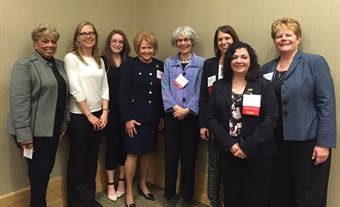
The conference was heralded by WTS International as “a gathering of insightful professionals, top government officials, and future transportation innovators and leaders to gain critical knowledge and elevate important discussions of current and developing multi-modal transportation topics relevant to the states of the region.”
Featuring 10 chapters from the Midwest, the conference was heralded by WTS International as “a gathering of insightful professionals, top government officials, and future transportation innovators and leaders to gain critical knowledge and elevate important discussions of current and developing multi-modal transportation topics relevant to the states of the region.”
WTS (Women’s Transportation Seminar) is an international organization of transportation professionals with more than 6,000 members represented in over 60 chapters throughout the U.S., Canada and the UK. Members include engineers, planners, administrators, marketing professionals, and other men and women from all ethnic backgrounds in public agencies and private firms working in a variety of transportation disciplines.
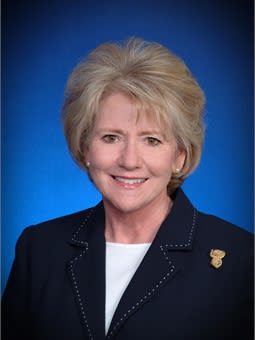
Former USDOT Secretary Mary Peters.
Both Levin and Crunican are WTS members and have served as past presidents of the international organization. Their commitment to its mission is reflected keenly in their book.
“The best thing I got out of [the discussion] was how the women dealt with being a woman in a male-dominated industry and the career advice they gave,” adds Sydni M. Pierce, an Indiana University (IU) MPA candidate in public finance. “I came away very inspired and motivated to reach a leadership position. Hearing about the leadership styles of the panelists gave me a lot of confidence to believe I could reach important positions. As an introvert and a woman in a male-dominated industry, I'd never considered the idea before.”
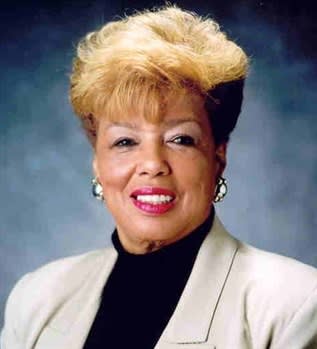
Former Houston Metro CEO Shirley DeLibero.
But it wasn’t only women who felt moved. “John O’Neill, a vice president and operations manager at Michael Baker International, asked what men like him — who lead an office and are committed to advancing women — can do to be helpful, I told him that men should be open to discussing these issues and to look around, to see who in their company is on their board and who is in the top positions," Levin explained. "If women are not represented well, see what can be done to change that.”
Levin and Crunican also counseled the group to examine the subtler signs of inequality, such as how long women are in their jobs. Often women are in positions longer than men before gaining promotion. They also cited the need for strong work/family policies that apply to both women and men. Both Crunican and Mary Peters emphasized how important supportive men can be, listing a number of men mentioned in the book that were pivotal to their careers.
“The one thing that I took from it was, that no matter what your position is in life, if you’re presented with an opportunity, go for it," said Kirsten Bowen, PE, WTS Central Region conference chair and associate VP at Michael Baker International, of the panel discussion.
Source: Alexandra Spencer Public Relations
More Management

METRO Opens Submissions for 2026 Motorcoach Awards
Nominations are now being accepted for METRO Magazine’s Operator of the Year and Innovative Operator of the Year awards.
Read More →
New York MTA Advances Final Contract for Second Avenue Subway Expansion
Contract Four is the largest in the Second Avenue Subway Phase 2 project and includes construction of station infrastructure, tracks, and signals for the subway expansion, MTA officials said. Work on Contract Four will begin in 2027.
Read More →
Transit Agencies Highlight Safety Gains at National Summit
Leaders from 15 major transit systems shared crime-reduction results and safety initiatives while discussing the role of continued federal support.
Read More →

NITA Names New Leadership, Expands Reduced-Fare Program at First Board Meeting
The new regional transit authority appointed its first board chair and interim executive director while extending reduced fares across CTA, Metra, and Pace for eligible riders.
Read More →
Beyond the Checklist: A Structured Approach to Transit Maintenance
Reliability-Centered Maintenance helps transit agencies move beyond routine checklists to focus limited resources on the assets and failures that have the greatest impact on safety, reliability, and service.
Read More →
APTA 2026 Nominating Committee Selects Leadership Slate, Names Chair and Vice Chair Nominees
Leadership changes will help shape the association’s priorities and its representation of the transportation industry during the 2026–2027 term.
Read More →
DART Launches Major Security, Fare Enforcement Initiative
The 90-day demonstration will deploy coordinated security teams at five light rail stations while testing controlled access and gathering data to guide future investments.
Read More →
Advancing Fare Collection Through Technology and Innovation
Learn about delivering 1300 gates at 91 stations while managing fare evasion. Explore the large scale deployment, solution customization and real-world results that affect the region. Prepare for deployment in your region now.
Read More →
Game Day in Motion: Moving Millions During the 2026 World Cup
Between packed transit stations and team motorcoaches, see how agencies and operators across North America tackled the transportation demands of the 2026 FIFA World Cup.
Read More →
Surface Transportation Extension Averts Shutdown, Leaves Transit Funding Gap
The stopgap keeps federal transportation programs moving, but missing advance funding could complicate the transit and rail projects agencies are planning next.
Read More →