



TTC considering random employee drug and alcohol testing
Revisiting a staff proposal from 2008 to amend its existing fitness for duty policy to include random alcohol and drug testing. Currently, the agency’s fitness for duty policy, which was fully implemented in October 2010, allows for alcohol and drug testing of those in safety-sensitive positions, specified management positions and designated executive positions.

The Toronto Transit Commission (TTC) is reviewing a staff report to amend its existing fitness for duty policy to include random alcohol and drug testing. The report can be found here.
While there have been public incidents recently that are cause for significant concern, in September 2008 the TTC approved a staff recommendation to implement a fitness for duty policy to reduce the risk of employees being impaired while at work. The agency, however, did not approve the staff recommendation to include random alcohol and drug testing. TTC staff indicated they would revisit the policy at a later date and ask the agency to reconsider this tool to further ensure the safety of its employees and the public.
Currently, the TTC’s fitness for duty policy, which was fully implemented in October 2010, allows for alcohol and drug testing of those in safety-sensitive positions, specified management positions and designated executive positions, under the following circumstances:
• pre-employment/certification
• reasonable cause
• post-incident
• post-violation
• post-treatment
The addition of random testing supports the TTC’s need for a comprehensive and effective fitness for duty policy, but also acts as a necessary deterrent for those who choose to risk their own safety, as well as the safety of others, according to the agency.
Random alcohol and drug testing involves a breathalyzer test for alcohol and an oral fluid test for drugs, as is the case for post-incident and reasonable cause testing. Random alcohol and drug testing is only used to detect impairment at the time of the test; it does not indicate if an individual is a recreational drug user, for example. Furthermore, test results for drugs only indicates a pass-fail based on the established threshold — the laboratory does not provide the TTC with the levels of a substance detected, if any.
In the U.S., random alcohol and drug testing in the transportation sector is the law. Every public transit agency must have random testing in its workplace. In Canada, for example, both Greyhound and Coach Canada bus operators are subject to random alcohol and drug testing. Windsor, Ontario is the only Canadian public transit operator with random testing in place, and only for those employees who operate routes that cross into the U.S.
According to the Federal Transit Administration’s latest statistical report, between 1995 and 2008, positive random alcohol tests declined from .25 percent to .15 percent. Similarly, positive random drug tests declined from 1.76 percent to .82 percent.
The TTC offers an employee-family assistance program for anyone who requires professional help with their alcohol or drug use. Employees are encouraged to get the help they need for their own health, as well for the well-being of those around them. A violation of the fitness for duty policy, aside from the significant safety risk such a violation poses, can result in termination of employment.
More Bus

Finding the ‘Happy Medium’: Optimizing Maintenance Without Sacrificing Reliability
The key to maintenance optimization isn’t doing less work—it’s doing the right work at the right time on the right assets.
Read More →
LA Metro, City of West Hollywood, and Partners Advance Smarter Bus Lane Enforcement
The award-winning partnership combines AI-powered detection with human oversight to improve bus reliability, accessibility, and enforcement efficiency.
Read More →
PSTA Modernizes Workforce Management with Digital Bidding System
The award-winning Workforce Transit Modernization project replaced paper bidding with a transparent digital platform, cutting administrative effort while improving access for operators.
Read More →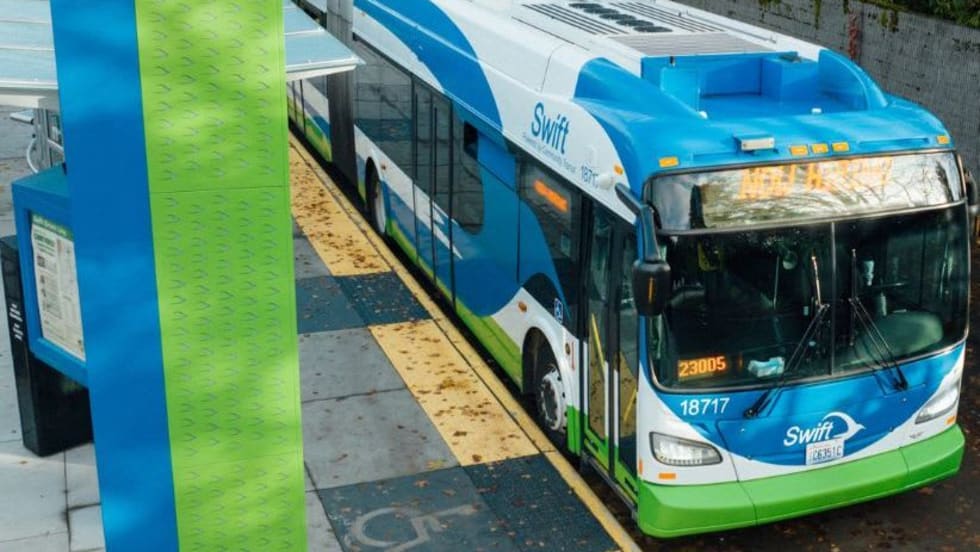
Washington's Community Transit Sets Six-Year Roadmap for Growth, Expansion
Approved TDP targets more bus service, new mobility options, Swift BRT expansion, and a potential Everett Transit annexation.
Read More →
DART Customer Satisfaction Reaches Six-Year High
Overall satisfaction rose to 74.9%, while the agency’s Net Promoter Score reached a record 33.7.
Read More →
How DART's GoPass Is Redefining Regional Mobility
Serving 14 transit agencies, GoPass simplifies multimodal travel by allowing riders to plan, pay for, and manage an entire trip through one app.
Read More →
Biz Briefs: OCTA Taps Clean Energy for Hydrogen Station, Stadler to Supply Via Rail Vehicles, and More
From manufacturers and suppliers to transit agencies and motorcoach operators, these updates offer a snapshot of the projects, partnerships and business moves driving the industry forward.
Read More →
METRO Magazine Announces 2026 Innovative Solutions Awards Winners
Projects Recognized for Advancing Mobility Through Technology, Accessibility, Workforce Innovation, and Operational Excellence
Read More →
Biz Briefs: STV teams with Amtrak, Motorcoach Operators Boost Fleet and Land Contracts, and More
From manufacturers and suppliers to transit agencies and motorcoach operators, these updates offer a snapshot of the projects, partnerships and business moves driving the industry forward.
Read More →
LA Metro Marks Banner Year, Sets Ambitious Goals for New Fiscal Year
Incoming LA Metro Board Chair and Los Angeles Mayor Karen Bass joined outgoing Board Chair Fernando Dutra and LA Metro CEO Stephanie Wiggins to review accomplishments from fiscal year 2026, which included the opening of new rail extensions, advancement of major transit projects, expanded safety programs, and new rider amenities.
Read More →