




RELATED: 2017 Consultant Roundtable
Two MBEs land historic $100M LA Metro contract
Historically, contracts of this size would go to larger companies, such as CH2M, which is known as a “traditional prime.” But in this case, CH2M will serve as a sub-contractor and mentor these smaller firms.
August 15, 2017

Through this contract, this team will supply skilled consultants who will serve as an extension of LA Metro staff, providing areas of expertise where needed to execute the projects and programs in Measure M.
2 min to read

Through this contract, this team will supply skilled consultants who will serve as an extension of LA Metro staff, providing areas of expertise where needed to execute the projects and programs in Measure M.
A new historic contract awarded by the Los Angeles County Metropolitan Transportation Authority (LA Metro) is being hailed as a model for both the private and public sectors. Earlier this summer, LA Metro awarded a contract of close to $100 million dollars to two small, minority-owned businesses.
The joint venture between Kal Krishnan Consulting Services (KKCS) and Triunity Engineering & Management is a partnership that promotes both small businesses and minority-owned firms. Historically, contracts of this size would go to larger companies, such as CH2M, which is known as a “traditional prime.” But in this case, CH2M will serve as a sub-contractor and mentor these smaller firms.
“Phil Washington is leading the way with this ground-breaking contract,” explained Gerard Orozco, a sr. VP and L.A. client executive at CH2M. “LA Metro is doing something that is truly a game changer.”
Through this contract, this team will supply skilled consultants who will serve as an extension of LA Metro staff, providing areas of expertise where needed to execute the projects and programs in Measure M, the sales tax measure approved by Los Angeles County voters last year, which is designed to create a world class transit system.
Through its new push for innovation, Metro has been actively encouraging businesses registered with its Disadvantaged Business Enterprise (DBE) program to use traditional primes as sub-contractors to help mentor and fulfill these large contracts.
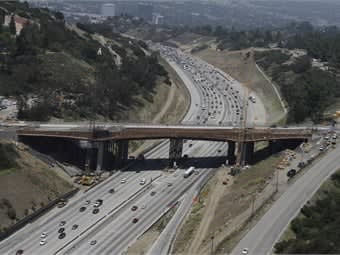
All photos courtesy LA Metro
“As an established DBE firm, this procurement represents an opportunity to continue to grow our firm,” explained, Dev Krishnan, president/CEO of KKCS. “Based on the firm’s many years of experience, including in the transit industry, we are well positioned to lead our joint venture team on this important Metro procurement.”
The KKCS/Triunity JV contract allows the consultants to scale support efforts up or down, depending on LA Metro’s transit, highway, regional rail, and other capital improvement needs. The contract is for five years (approximately $63.3 million), plus a two-year option for $27.5 million. It covers services as varied as project management, project control, and information support services.
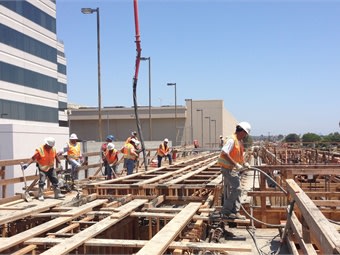
The KKCS/Triunity JV contract allows the consultants to scale support efforts up or down, depending on LA Metro’s transit, highway, regional rail, and other capital improvement needs.
It could change the way contracts are awarded in the future and give small businesses the opportunity to grow.
“Our dad had a ninth-grade education and our mom a fifth-grade education,” said Jonnie L. Thomas, co-founder/CEO of Triunity. “But, dad really prized education. When we were growing up, he taught us about the benefits of hard work. And, that’s what we prize.”
That hard work is what brought these two companies to the forefront of this joint venture. Other agencies are even discussing ways to set up similar programs to help small, minority-owned businesses thrive. In creating this type of historic deal, LA Metro is changing the landscape for the future.
More Management

METRO Opens Submissions for 2026 Motorcoach Awards
Nominations are now being accepted for METRO Magazine’s Operator of the Year and Innovative Operator of the Year awards.
Read More →
New York MTA Advances Final Contract for Second Avenue Subway Expansion
Contract Four is the largest in the Second Avenue Subway Phase 2 project and includes construction of station infrastructure, tracks, and signals for the subway expansion, MTA officials said. Work on Contract Four will begin in 2027.
Read More →
Transit Agencies Highlight Safety Gains at National Summit
Leaders from 15 major transit systems shared crime-reduction results and safety initiatives while discussing the role of continued federal support.
Read More →

NITA Names New Leadership, Expands Reduced-Fare Program at First Board Meeting
The new regional transit authority appointed its first board chair and interim executive director while extending reduced fares across CTA, Metra, and Pace for eligible riders.
Read More →
Beyond the Checklist: A Structured Approach to Transit Maintenance
Reliability-Centered Maintenance helps transit agencies move beyond routine checklists to focus limited resources on the assets and failures that have the greatest impact on safety, reliability, and service.
Read More →
APTA 2026 Nominating Committee Selects Leadership Slate, Names Chair and Vice Chair Nominees
Leadership changes will help shape the association’s priorities and its representation of the transportation industry during the 2026–2027 term.
Read More →
DART Launches Major Security, Fare Enforcement Initiative
The 90-day demonstration will deploy coordinated security teams at five light rail stations while testing controlled access and gathering data to guide future investments.
Read More →
Sponsored•September 9, 2026
Advancing Fare Collection Through Technology and Innovation
Learn about delivering 1300 gates at 91 stations while managing fare evasion. Explore the large scale deployment, solution customization and real-world results that affect the region. Prepare for deployment in your region now.
Read More →
Game Day in Motion: Moving Millions During the 2026 World Cup
Between packed transit stations and team motorcoaches, see how agencies and operators across North America tackled the transportation demands of the 2026 FIFA World Cup.
Read More →
Surface Transportation Extension Averts Shutdown, Leaves Transit Funding Gap
The stopgap keeps federal transportation programs moving, but missing advance funding could complicate the transit and rail projects agencies are planning next.
Read More →