




RELATED: Klepper named exec. director of Build America Bureau
U.S. DOT commits $1.5B to L.A. Metro Purple Line Extension
Coupled with Metro’s $747 million local match made possible by 2008’s Measure R sales tax, $2.4 billion is now secured to continue construction of one of L.A. County’s most critically needed public transit projects.
January 5, 2017
Visitor7
3 min to read
Visitor7
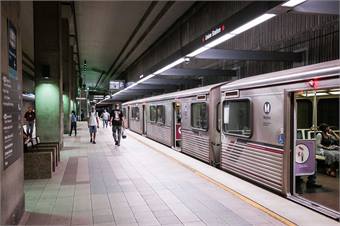
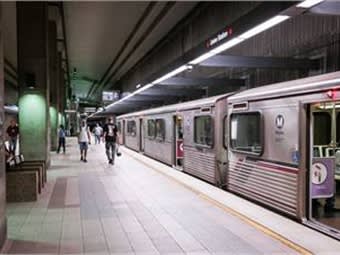
A federal grant and loan totaling nearly $1.5 billion to help build the second phase of the Metro Purple Line Extension to downtown Beverly Hills and Century City was announced on Wednesday by the U.S. Department of Transportation and the Los Angeles County Metropolitan Transportation Authority (Metro).
Metro received a construction grant agreement for $1.187 billion through the Federal Transit Administration’s (FTA) Capital Investment Grant program and a $307-million loan through the U.S. Department of Transportation’s TIFIA program to total $1.494 billion. The project will also receive $169 million in federal funding through the Congestion Mitigation and Air Quality program.
The TIFIA loan program is administered by the Build America Bureau (Bureau), which was launched by Secretary Foxx earlier this year as a “one-stop shop” to help streamline credit and grant opportunities for communities as they work to fund infrastructure improvements. The Bureau also provides technical assistance and encourages innovative approaches to project planning, financing, delivery, and monitoring.
Coupled with Metro’s $747 million local match made possible by 2008’s Measure R sales tax, $2.4 billion is now secured to continue construction of one of L.A. County’s most critically needed public transit projects — a subway primarily under Wilshire Boulevard that will finally connect downtown Los Angeles and Westwood with service en route to the Miracle Mile, Beverly Hills, and Century City.
Metro is now in the process of selecting a contractor to build the subway extension’s second section. The agency plans to recommend a contractor to the Metro Board later this month.
Metro is already building the first section of subway between the current subway terminus at Wilshire/Western and Wilshire/La Cienega with three new stations. The second section will add another 2.6 miles to the project and build two new stations at Wilshire/Rodeo in downtown Beverly Hills and Century City.
Pre-construction activities for the second section are already underway. Major construction is planned to begin in 2018. Completion of the second subway section is anticipated no later than 2026 per the FTA Full Funding Grant Agreement and Metro is aiming to possibly finish the project at an earlier date. A third and final section will extend the subway to the Westwood/VA Hospital. Construction on this last section is planned to begin as early as 2019.
“Angelenos and people across L.A. County have shown their commitment to creating a better-connected transportation system — and this investment echoes that commitment to giving people faster, more convenient connections to their jobs, to healthy recreation and fun attractions, and to the people they love," said Los Angeles Mayor Eric Garcetti. "We are moving quickly to create the world-class transit system our people deserve, and these federal funds for the Purple Line extension will accelerate progress along the region’s busiest transit corridor.”
Construction of the Purple Line Extension Section 2 will support over 20,500 jobs in Southern California during its construction, according to the Los Angeles County Economic Development Corporation.
The Purple Line Extension to the Westwood/VA Hospital station will garner about 49,300 daily weekday boardings at the seven new stations. There will be about 78,000 new daily trips on the full Metro Rail System as a result of opening this line.
A total of $3.1 billion in federal New Starts funding has now been secured for recent high priority Metro transportation projects.
More Rail

New York MTA Advances Final Contract for Second Avenue Subway Expansion
Contract Four is the largest in the Second Avenue Subway Phase 2 project and includes construction of station infrastructure, tracks, and signals for the subway expansion, MTA officials said. Work on Contract Four will begin in 2027.
Read More →
San Diego MTS Breaks Monthly Trolley Ridership Record
Agency officials said July’s ridership indicates MTS’s continued recovery from the pandemic.
Read More →
Report Examines NJ TRANSIT Reliability, Funding Challenges
The Garden State Initiative analysis examines the roles of Amtrak infrastructure, fleet management, and agency operations while recommending a more performance-based approach to improving reliability.
Read More →
Stadler, CapMetro Sign Long-Term Rail Fleet Support Agreement
Beginning in 2027, Stadler will provide on-site technical expertise, spare parts support, training, and obsolescence management to help extend the reliability and longevity of CapMetro’s GTW fleet.
Read More →
Biz Briefs: Alstom Lands Canadian Contract, LYT to Supply California TSP, and More
In METRO's latest installment, we take a look at recent news from Complete Coach Works, Beep, FlixBus, and more partnerships making headlines across the transportation sector.
Read More →
CATS Gold Line Marks 5 Years of Service, 2.8M Passenger Trips
With a six-mile expansion planned, the Charlotte streetcar is positioned to connect more neighborhoods and major transit hubs across the region.
Read More →
Why Simulating Pedestrian Movement Has Become Essential for Modern Rail Stations
Pedestrian microsimulation is helping rail planners identify bottlenecks, test station designs, and prepare complex transit hubs for growing passenger volumes.
Read More →
Amtrak Begins Major Construction at New York’s Sunnyside Yard
The new maintenance facility will support Amtrak’s Airo trainsets while improving maintenance efficiency and turnaround times in New York.
Read More →
Chicago Leaders Unveil Plans for O’Hare Airport Express Train
The privately developed project would offer a 15-minute trip between downtown and O’Hare’s Terminal 2, with trains operating every 15 minutes on a dedicated track. The service would use battery-electric trains and three existing freight rail rights-of-way.
Read More →
OCTA Maps Out 30-Year Strategy to Protect Coastal Rail Corridor
The draft feasibility report identifies strategies to protect the coastal rail line for decades as the agency continues near-term stabilization and sand placement efforts.
Read More →