



Universities to develop accessible transit options
An important area of research will be the design of access and interiors for buses.

Researchers at Carnegie Mellon University and the University at Buffalo (UB), State University of New York, are collaborating on a five-year, $4.7 million effort to advance public transportation for people with disabilities by bringing together computer science technology and the principles of universal design.
Their grant from the U.S. Department of Education's National Institute on Disability and Rehabilitation Research (NIDRR) is funding a new Rehabilitation Engineering Research Center (RERC) on accessible public transportation. The center will develop ways to empower consumers and transit service providers in the design and evaluation of accessible transportation equipment, information services and physical environments.
The center's principal investigator and co-director is Aaron Steinfeld, a systems scientist at Carnegie Mellon's Robotics Institute, who works on human-robot interaction and intelligent transportation systems in the university's Quality of Life Technology Engineering Research Center.
Steinfeld will be co-directing the new center with his father Edward Steinfeld, a professor of architecture at UB who heads the Center for Inclusive Design and Environmental Access (IDEA). The IDEA Center improves the design of environments and products by making them more usable, safe and appealing to people with a wide range of abilities.
The team also includes the United Spinal Association, an organization that focuses on improving the quality of life of Americans with spinal cord injuries and disorders, which will focus on developing transportation regulations and standards.
"We will be completing research that is extremely timely and needed by the industry," said Aaron Steinfeld. "We have business partners, including manufacturers and consumer advocacy organizations, that will help to implement research findings and disseminate information that directly improves transportation services, vehicles and facilities."
The Niagara Frontier Transportation Authority (NFTA) in Buffalo and the Port Authority of Allegheny County in Pittsburgh will assist the researchers as they develop new technologies and concepts. An important area of research will be the design of access and interiors for buses.
California-based Gillig Corp. will incorporate, at their own expense, the modifications designed by the RERC into a new NFTA bus. The bus will be a prototype containing new interior concepts that are ready for commercialization.
"One of the key aspects of the project is to get input from transit users," said Steinfeld. "We will be evaluating ways to enable transit users and providers to be citizen scientists to collect and utilize data about the transit experience."
The team will create a public Website where riders can report on their experiences and collaborate with transit providers on ways to improve the transportation system. The team also will use advances in machine learning to develop software that can assist riders in reaching their destinations.
For more information on the new RERC on Accessible Public Transportation, see http://www.rercapt.org/ .
More Paratransit
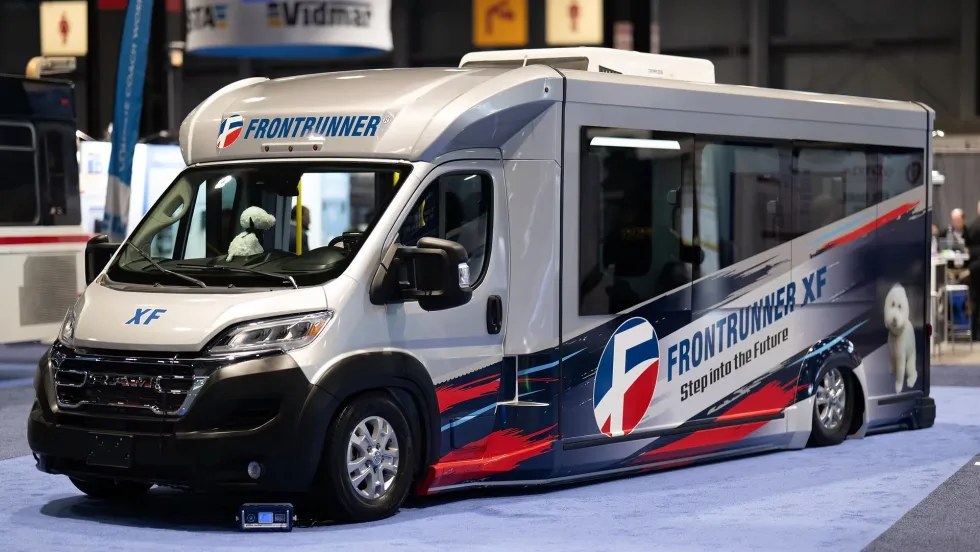
Frontrunner Bus Group Introduces XF Low-Floor Bus with Enhanced Accessibility
The new mid-sized bus features a full flat-floor design, eight-inch curbside step-in height, and zero-entry rear ramp to improve passenger access and operational flexibility.
Read More →
Scenes from APTA TRANSform & EXPO 2026
Transit leaders, manufacturers, and industry professionals gathered in Chicago to explore new technologies, share ideas, and discuss the future of public transportation.
Read More →
Indian River Transit’s Community-Focused Approach Earns National Recognition
Named APTA’s 2026 Outstanding Public Transportation System in its size category, Florida’s Indian River County transit system continues to grow ridership through fare-free service and a focus on evolving community needs.
Read More →
Everett Transit, Community Transit Outline Consolidation Agreement
The proposed agreement calls for a 50% increase in bus service in Everett, a new microtransit zone, continued paratransit service, and the transfer of Everett Transit operations to Community Transit.
Read More →
Driving Smarter Paratransit
John Hanlon shares how AlphaRoute is leveraging AI-powered technology to help paratransit providers optimize operations, support frontline staff, and enhance the rider experience.
Read More →
People Movement: Dan Dipert Coaches Adds Third-Generation Leader, Keolis Names New Valley Metro VP/GM, and More
In this edition, we also cover recent appointments and announcements at the Wabtec, SilverRide, HNTB, and more, showcasing the individuals helping to shape the future of transportation.
Read More →
Biz Briefs: RIPTA Unveils New Frontrunners, Clevland RTA Adds New Siemens, and More
In METRO's latest installment, we take a look at recent news from Siemens, Prevost, Dodge, and more partnerships making headlines across the transportation sector.
Read More →
King County Metro Makes ADA Paratransit Easier to Navigate
METRO's Innovative Solutions Award winner replaces complex service-area descriptions with an accessible, interactive map that puts paratransit information directly in customers’ hands.
Read More →
Jacksonville’s NAVI Project Charts a New Course for Autonomous Public Transportation
Through its NAVI program, JTA is showing how autonomous vehicles, intelligent infrastructure, and coordinated operations can work together to deliver everyday public transportation.
Read More →
Driving Smarter Paratransit
John Hanlon shares how AlphaRoute is leveraging AI-powered technology to help paratransit providers optimize operations, support frontline staff, and enhance the rider experience.
Read More →