



UT Survey: Advertising on buses a mixed bag
Some university transportation system operators we interviewed said they allow exterior bus advertising to bring in more revenue or to promote the university. Others say that being based in areas with small advertising markets means extra effort but not revenue.

With transit and school budgets as tight as ever, we wondered how many university transit systems have turned to allowing commercial advertising on their buses to bring in extra funds, and the benefits and drawbacks. We reached out to a few campus transportation carriers to find out. Here are their responses:
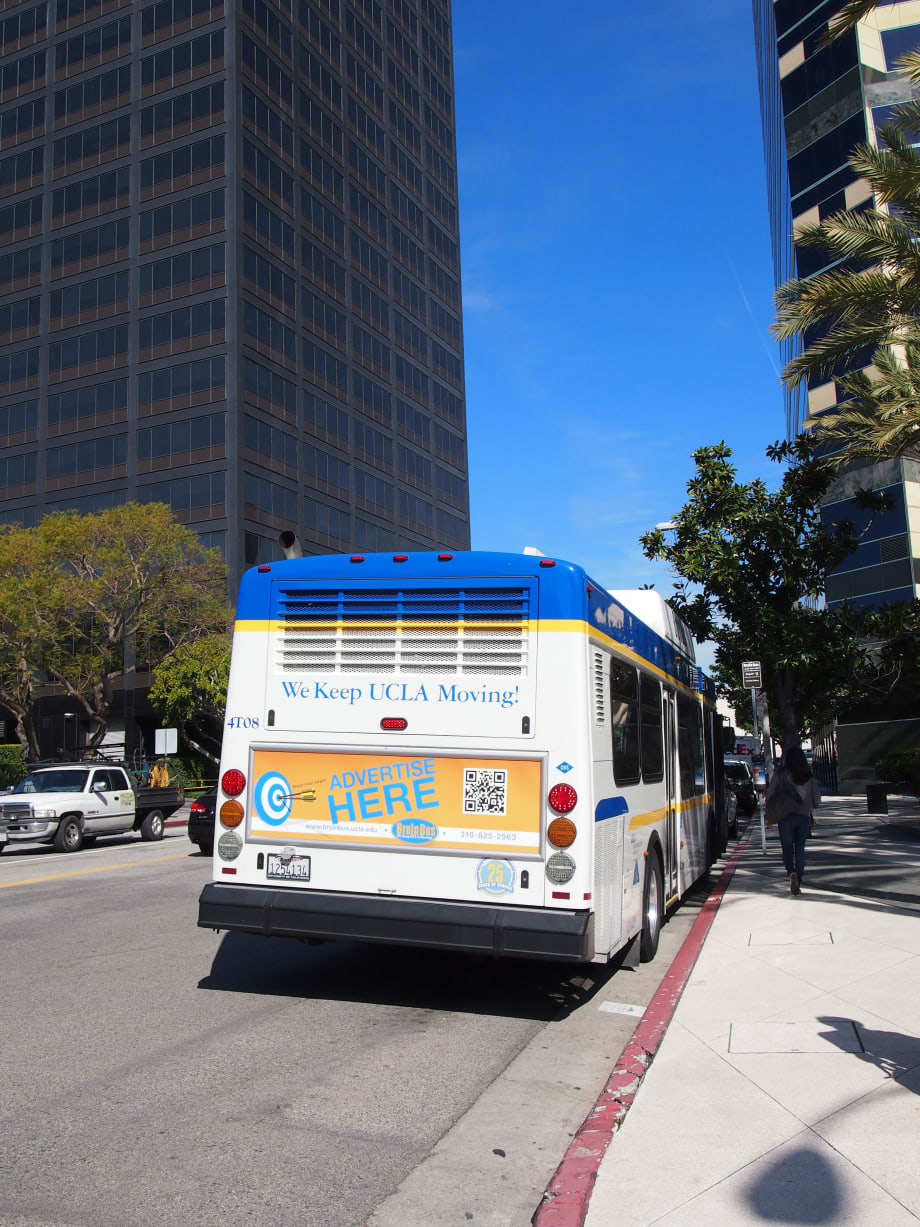
“The UCLA Transit Program, BruinBus, operates 13 buses on the fixed-route shuttle system, which have interior and exterior bus advertising for campus and university-associated programs only. In the past, the UCLA Development Office wrapped two buses for three years to promote notable UCLA graduates, which opened the door to allow exterior tail bus advertising. We have had interior bus advertising for over five years to advertise campus events, promotions and student services.”
Sherry Lewis, director, transportation-fleet and transit
University of California Los Angeles
Los Angeles
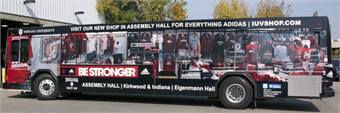
“IU campus bus service started to allow exterior bus advertising in 2006 from internal advertisers. There were two reasons to move to allowing advertising on the outside of the buses: revenue and partnerships. The additional revenue has been a plus for our budget, but just as important are the partnerships that have been developed with the advertisers. Over the years since 2006 we have had IU Radio and TV Services, IU Student Government, IU Student Union, IU Alumni Association, IU Health Center, the IU College of Arts and Sciences, and other departments and student organizations wrap buses with advertising to promote their programs and activities. The advertisers have featured ‘their’ bus in their other promotions and advertising. We do traditional bus advertising signs as well. In 2011 we were granted permission to start accepting advertising from external advertisers for the first time.”
Perry J. Maull, operations manager, campus bus service
Indiana University
Bloomington, Ind.
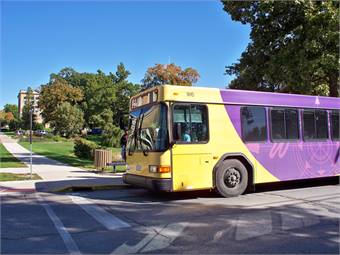
“We do not allow commercial advertising on the buses. We did at one time, but found it far more obtrusive to manage the program than the revenue gained from it benefited us. We are not currently considering it, but do keep the option open should we need the extra revenue in the future. We [also] like the colors and or logos on our buses unobstructed and didn’t want to put commercial advertising over them.”
Jude Kiah, director
Go West Transit (Serves Western Illinois U.)
Macomb, Ill.
“The ads in buses were present when I started as a student driver in 1972, I think. They were the responsibility of a student organization originating in the business school called Michigan Advertising Works. They took responsibility for our ad rails, several small billboards on campus, and some glass cases that promoted events and performances. The billboards are maybe four inches by two inches, with three faces on permanent mountings, like on a metal frame set in concrete to form a kiosk type of unit, but with three events advertised (no random postings permitted). This provided the organization with some experience managing turnarounds, customers and ad copy, since they created the content for customers sometimes. It was good practical experience for students in the Marketing/Advertising program. Now it is mostly student operated, but with a full-time staff member coordinating the activities of student staff and the reservation process for ad space (very competitive — they do a lottery for bus advertising time periods.) Typical ads are for group events and membership drives, like the Tango club, rock climbers, Greek organizations, etc.”
Bitsy Lamb, manager, transit services
University of Michigan
Ann Arbor, Mich.
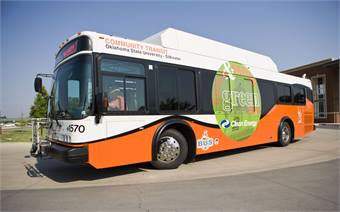
“OSU Transit does allow commercial advertising. Most of our advertising is local and/or University, very few national advertising programs are used. Due to the atmosphere at the university we are slowly growing this market into acceptance. When we began to install bus shelters the decision was made to allow marketing within our system (shelters and inside buses).”
Tom Duncan, manager, transit services
Oklahoma State University
Stillwater, Okla.
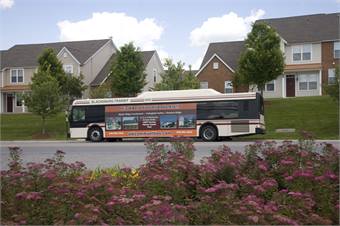
“Blacksburg Transit allows commercial advertising on our buses. Initially, this came about because of the 2000 Census — our area changed from rural to urban based on the population size. In changing our census classification our funding requirements also changed and we needed to find a way to offset this by generating incremental revenue. The advertising program was launched in 2005 and is managed ‘in-house’ by our marketing staff. Because we do not have a dedicated sales force we use direct mail and advertising displays on our vehicles to generate calls from customers to us regarding advertising. The program itself has been very successful with incremental revenue increasing each year. ”
Fiona Rhodes, marketing specialist
Blacksburg Transit
Blacksburg, Va.
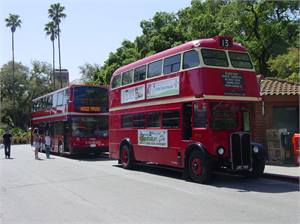
“We generally do not allow advertising on the exterior of Unitrans buses. The exception is our vintage London double decker buses do have advertising. That is because the ads on the vintage buses are consistent with their look from when they were used in London, including the traditional advertising frame. Using ad frames allows small advertisers to produce a printed ad at a local copy shop without having to print onto some type of special sticker. In addition, our ad program is coordinated entirely by a student working part-time and not an advertising firm.
Regarding the new buses, including our modern double deckers, Davis is a relatively small advertising market, and we have not felt that the potential additional income from exterior advertising would be worth the trouble. The trouble consists of the application, the content, the look, and the ad sales process.”
Anthony Palmere, GM
Unitrans
University of California, Davis
In case you missed it...
Check out METRO's previous UT survey, "Student government crucial to university transit systems" here.
More Bus

People Movement: Dan Dipert Coaches Adds Third-Generation Leader, Keolis Names New Valley Metro VP/GM, and More
In this edition, we also cover recent appointments and announcements at the Wabtec, SilverRide, HNTB, and more, showcasing the individuals helping to shape the future of transportation.
Read More →
New York MTA Plans Largest Bus Fleet Upgrade in More Than a Decade
The agency is seeking manufacturers for 650 new CNG buses to replace aging vehicles, improve reliability, and advance its broader fleet modernization strategy.
Read More →
Building a Flexible Path to Transit Electrification
John Hroncich discusses BAE Systems’ modular and scalable approach, lessons learned from decades of real-world operations, and how agencies can identify electrification strategies that fit their fleets.
Read More →
Bus Tech Talk: Keeping Transit Technicians Ahead of the Technology Curve
LA Metro’s Obed Mejia discusses technician training, evolving maintenance technology, fleet replacement, and strategies for getting the most out of today’s transit fleets.
Read More →
Biz Briefs: RIPTA Unveils New Frontrunners, Clevland RTA Adds New Siemens, and More
In METRO's latest installment, we take a look at recent news from Siemens, Prevost, Dodge, and more partnerships making headlines across the transportation sector.
Read More →
People Movement: Holly Arnold Joins Transdev and More
In this edition, we also cover recent appointments and announcements at Pace, CamTran, MCI, and more, showcasing the individuals helping to shape the future of transportation.
Read More →
The High Cost of Transit Buses: Industry Leaders Look to Procurement Reform
Transit leaders and policymakers examine how standardized bus designs, streamlined procurement, and predictable funding could help agencies stretch budgets and deliver better service.
Read More →
The Business Voice Behind Public Transportation
As chair of APTA’s Business Members Board of Governors, Ray Melleady explains how more than 850 business members are partnering with transit agencies to advance funding, innovation, and industry-wide collaboration.
Read More →
From Surviving to Thriving: Building Stronger Transportation Organizations
Bus Business Consultants founder Brian Dickson shares lessons on leadership, organizational health, and creating options for long-term success in a changing transportation industry.
Read More →
Finding the ‘Happy Medium’: Optimizing Maintenance Without Sacrificing Reliability
The key to maintenance optimization isn’t doing less work—it’s doing the right work at the right time on the right assets.
Read More →