



UT Survey: City, campus, housing partners crucial to university systems
Operators from Ohio, Maryland and Arizona tell us about the relationships that help them run their services.

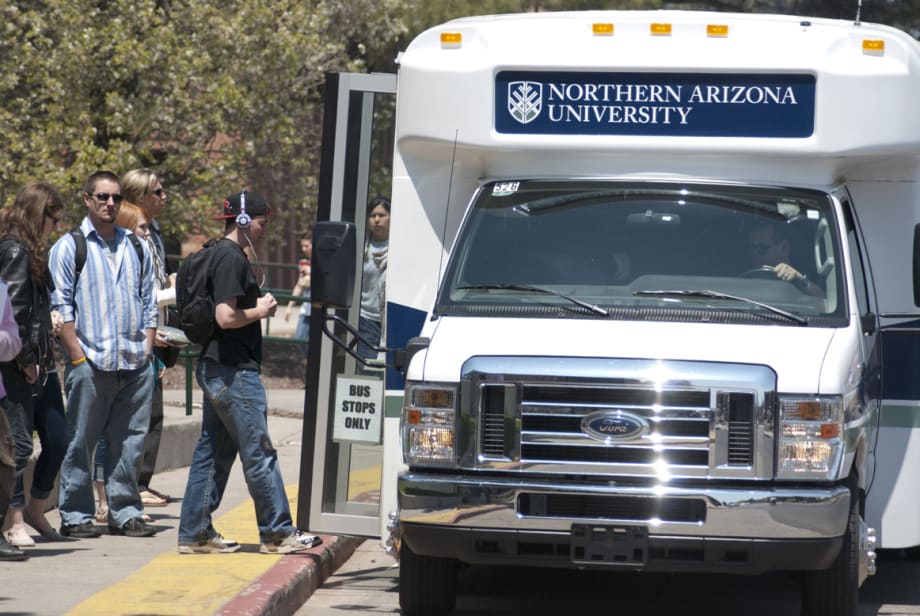
A university transit system is not just the buses and shuttles that bring students to and from class. Strategic partners contribute crucial elements to the process, such as the ability to gain funding or conduct the research for future projects. We asked some university transit operators to tell us about some of their partnerships and how they help the service run.
Here are their responses:
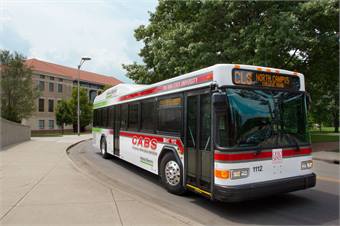
“[Ohio State University’s] Campus Transit Lab, a living research lab designed in partnership with the Department of Civil and Environmental Engineering and Geodetic Science and Transportation and Traffic Management, [enables] students and researchers are able to use [real-time bus] data to test transit route design efficiencies, traffic impacts on transit routes and develop creative methods to proactively educate customers on the variety of ways to utilize transit.
We also partner with the [university's] Department of City and Regional Planning to provide on-the-job research opportunities and training to a graduate research assistant regarding the design and implementation of complex transportation systems on campus. As part of this ongoing partnership with the department, an annual campus transit survey is designed and distributed to look for trends related to commuting habits of students, faculty and staff.”
Nicole Hernandez, assistant director of marketing and communications, office of administration and planning
Ohio State University
Columbus, Ohio
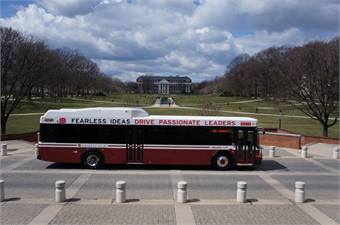
“At the University of Maryland College Park Department of Transportation Services we develop strategic partnerships with our local student housing developers. We write MOUs to provide bus services to each of these properties according to their positioning and strategy. In turn, we are able to reduce the number of single occupancy vehicles that come to campus and reduce our campus carbon footprint.”
Beverly Malone, assistant director, department of transportation services
University of Maryland
College Park, Md.
“We have a wonderfully successful partnership with our local public transportation provider, Northern Arizona Intergovernmental Public Transportation Authority (NAIPTA). A collaborative effort between the university, NAIPTA and the City of Flagstaff for a grant brought Mountain Links to our community. Our campus Shuttle Services provided transportation to over 1.2 million riders last year. Mountain Link made it possible to serve an additional 576,563 riders last year (in its first year.)”
Erin Suzanne Stam, director, parking services
Northern Arizona University
Flagstaff, Ariz.
RELATED ARTICLE: Check out, "UT Survey: Bus replacement tops university transit budget wish lists."
More Bus

Report: Transit Bus Manufacturing Supports 34,100 Jobs, $5.1B in GDP
The “Buses Mean Business” report examines the transit bus manufacturing industry’s economic footprint, supply chain, and rising demand for vehicle replacements.
Read More →
Biz Briefs: New Flyer Delivers in Columbus, Houston, Beep and Freebee Merge, and More
In this edition of Biz Briefs, we spotlight the latest developments shaping the future of mobility.
Read More →
People Movement: Dan Dipert Coaches Adds Third-Generation Leader, Keolis Names New Valley Metro VP/GM, and More
In this edition, we also cover recent appointments and announcements at the Wabtec, SilverRide, HNTB, and more, showcasing the individuals helping to shape the future of transportation.
Read More →
New York MTA Plans Largest Bus Fleet Upgrade in More Than a Decade
The agency is seeking manufacturers for 650 new CNG buses to replace aging vehicles, improve reliability, and advance its broader fleet modernization strategy.
Read More →
Building a Flexible Path to Transit Electrification
John Hroncich discusses BAE Systems’ modular and scalable approach, lessons learned from decades of real-world operations, and how agencies can identify electrification strategies that fit their fleets.
Read More →
Bus Tech Talk: Keeping Transit Technicians Ahead of the Technology Curve
LA Metro’s Obed Mejia discusses technician training, evolving maintenance technology, fleet replacement, and strategies for getting the most out of today’s transit fleets.
Read More →
Biz Briefs: RIPTA Unveils New Frontrunners, Clevland RTA Adds New Siemens, and More
In METRO's latest installment, we take a look at recent news from Siemens, Prevost, Dodge, and more partnerships making headlines across the transportation sector.
Read More →
People Movement: Holly Arnold Joins Transdev and More
In this edition, we also cover recent appointments and announcements at Pace, CamTran, MCI, and more, showcasing the individuals helping to shape the future of transportation.
Read More →
The High Cost of Transit Buses: Industry Leaders Look to Procurement Reform
Transit leaders and policymakers examine how standardized bus designs, streamlined procurement, and predictable funding could help agencies stretch budgets and deliver better service.
Read More →
The Business Voice Behind Public Transportation
As chair of APTA’s Business Members Board of Governors, Ray Melleady explains how more than 850 business members are partnering with transit agencies to advance funding, innovation, and industry-wide collaboration.
Read More →