



Virginia Commonwealth U. retrofits 70% of fleet to propane
The liquid propane conversion marks the first significant step VCU Parking and Transportation has taken in efforts to operate a more sustainable fleet. It puts the university one step closer to its goal of reducing its greenhouse gas emissions to 30% below business-as-usual emissions by 2025.

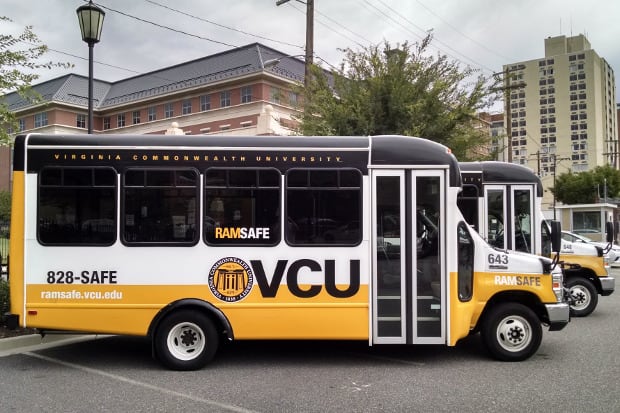
Virginia Commonwealth University (VCU) Parking and Transportation converted 70% of its RamSafe fleet to operate on liquid propane bi-fuel through a partnership with the Virginia Department of General Services; the Virginia Department of Mines, Minerals and Energy; Alliance AutoGas and Virginia Clean Cities. The conversion is projected to save the division more than $20,000 in annual fuel costs.
VCU Parking and Transportation operates RamSafe as a point-to-point evening transportation service for students, faculty and staff 365 days per year. Service is offered within defined boundaries on the Monroe Park and MCV campuses with the majority of the requested trips traveling to and from university-owned buildings and residential housing. Annually, the RamSafe fleet travels approximately 150,000 miles.
The liquid propane conversion marks the first significant step VCU Parking and Transportation has taken in efforts to operate a more sustainable fleet. It puts the university one step closer to its goal of reducing its greenhouse gas emissions to 30% below business-as-usual emissions by 2025.
“The decision to invest in a more sustainable fleet simply made a lot of sense,” said Craig Willingham, fleet manager at VCU. “VCU is a great setting to support alternate fuel usage. In addition to promoting a safer environment and cleaner burning fuels within the vehicle fleet, there are opportunities for cost savings.”
The requisition for the conversion was completed through a state contract with Alliance AutoGas, which also serves as the official propane provider.
Virginia Clean Cities, which assists in the improvement of the commonwealth’s air quality through the promotion of alternative fuel, also worked with VCU Parking and Transportation to identify incentives as part of the overall state transition to alternative fuel.
Reimbursement for conversion costs will be provided through a Congestion Mitigation and Air Quality grant offered by the Virginia Department of Mines, Minerals and Energy.
More Bus

New York MTA Plans Largest Bus Fleet Upgrade in More Than a Decade
The agency is seeking manufacturers for 650 new CNG buses to replace aging vehicles, improve reliability, and advance its broader fleet modernization strategy.
Read More →
Building a Flexible Path to Transit Electrification
John Hroncich discusses BAE Systems’ modular and scalable approach, lessons learned from decades of real-world operations, and how agencies can identify electrification strategies that fit their fleets.
Read More →
Bus Tech Talk: Keeping Transit Technicians Ahead of the Technology Curve
LA Metro’s Obed Mejia discusses technician training, evolving maintenance technology, fleet replacement, and strategies for getting the most out of today’s transit fleets.
Read More →
Biz Briefs: RIPTA Unveils New Frontrunners, Clevland RTA Adds New Siemens, and More
In METRO's latest installment, we take a look at recent news from Siemens, Prevost, Dodge, and more partnerships making headlines across the transportation sector.
Read More →
People Movement: Holly Arnold Joins Transdev and More
In this edition, we also cover recent appointments and announcements at Pace, CamTran, MCI, and more, showcasing the individuals helping to shape the future of transportation.
Read More →
The High Cost of Transit Buses: Industry Leaders Look to Procurement Reform
Transit leaders and policymakers examine how standardized bus designs, streamlined procurement, and predictable funding could help agencies stretch budgets and deliver better service.
Read More →
The Business Voice Behind Public Transportation
As chair of APTA’s Business Members Board of Governors, Ray Melleady explains how more than 850 business members are partnering with transit agencies to advance funding, innovation, and industry-wide collaboration.
Read More →
From Surviving to Thriving: Building Stronger Transportation Organizations
Bus Business Consultants founder Brian Dickson shares lessons on leadership, organizational health, and creating options for long-term success in a changing transportation industry.
Read More →
Finding the ‘Happy Medium’: Optimizing Maintenance Without Sacrificing Reliability
The key to maintenance optimization isn’t doing less work—it’s doing the right work at the right time on the right assets.
Read More →
LA Metro, City of West Hollywood, and Partners Advance Smarter Bus Lane Enforcement
The award-winning partnership combines AI-powered detection with human oversight to improve bus reliability, accessibility, and enforcement efficiency.
Read More →