



WSP USA designing BRT system for TriMet
The 14-mile Division Transit Project will provide an improved high-capacity connection between downtown Portland and the City of Gresham via Division Street.

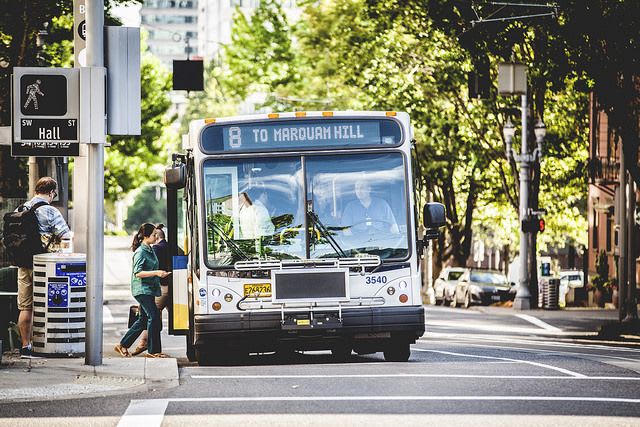
A TriMet Line 8 Jackson Park NE 15th bus with riders boarding. Photo: TriMet
A TriMet Line 8 Jackson Park NE 15th bus with riders boarding. Photo: TriMet
Portland, Ore.-based TriMet has awarded a contract to WSP USA for the design of a new bus rapid transit (BRT) system.
The Division Transit Project is an enhanced 14-mile high-capacity bus system that will provide an improved connection between downtown Portland and the City of Gresham via Division Street.
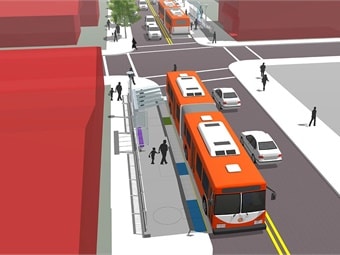
TriMet's Division Transit Project includes four station type proposals (Integrated station proposal rendering shown). Image: TriMet
Modeled from a BRT typology, and integrated into the existing street right-of-way, the project entails roughly 80 new platforms that are coupled to create 40 bus stations. Each platform will include a passenger shelter, furnishings, signage, and lighting components. New articulated buses will be used to provide level boarding for wheelchairs, space for bikes on board, and three-door loading for reduced dwell times. Improved transit performance will be achieved through in-lane stops, expedited loading and traffic signal prioritization at intersections.
A layover facility at the north end of the Portland Greyhound station will serve as the western terminus for the line. Downtown stops will be located along the transit mall, and will use existing bus stops. The project is intended to serve Portland State University and Oregon Health Sciences University via a route that includes Lincoln Street, the Harbor Structure, and the Tilikum Crossing.
Within the City of Portland, and beyond 60th Avenue, the station typology changes to accommodate a protected bike lane between the station platform and the sidewalk. This will help to ensure the safety of bicyclists along the active corridor. Several major arterial intersections will need to be expanded and rebuilt to allow for bus queue-jump lanes, bus pull outs, and bicycle protection. To complement the city’s efforts to create buffered bike lanes along this stretch of Division, the project is anticipating adding a protective element to the buffer zone to further enhance safety and greater separation between motorized vehicles and bicycles.
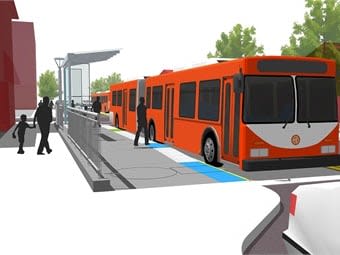
Each platform will include a passenger shelter, furnishings, signage, and lighting components. Image: TriMet
As the prime engineering consultant on the project, WSP is responsible for final design of all major project elements, including stations, traffic signals, and civil infrastructure improvements. In addition, WSP will provide design services during construction, which is scheduled for completion in the spring of 2021.
More Bus

New York MTA Plans Largest Bus Fleet Upgrade in More Than a Decade
The agency is seeking manufacturers for 650 new CNG buses to replace aging vehicles, improve reliability, and advance its broader fleet modernization strategy.
Read More →
Building a Flexible Path to Transit Electrification
John Hroncich discusses BAE Systems’ modular and scalable approach, lessons learned from decades of real-world operations, and how agencies can identify electrification strategies that fit their fleets.
Read More →
Bus Tech Talk: Keeping Transit Technicians Ahead of the Technology Curve
LA Metro’s Obed Mejia discusses technician training, evolving maintenance technology, fleet replacement, and strategies for getting the most out of today’s transit fleets.
Read More →
Biz Briefs: RIPTA Unveils New Frontrunners, Clevland RTA Adds New Siemens, and More
In METRO's latest installment, we take a look at recent news from Siemens, Prevost, Dodge, and more partnerships making headlines across the transportation sector.
Read More →
People Movement: Holly Arnold Joins Transdev and More
In this edition, we also cover recent appointments and announcements at Pace, CamTran, MCI, and more, showcasing the individuals helping to shape the future of transportation.
Read More →
The High Cost of Transit Buses: Industry Leaders Look to Procurement Reform
Transit leaders and policymakers examine how standardized bus designs, streamlined procurement, and predictable funding could help agencies stretch budgets and deliver better service.
Read More →
The Business Voice Behind Public Transportation
As chair of APTA’s Business Members Board of Governors, Ray Melleady explains how more than 850 business members are partnering with transit agencies to advance funding, innovation, and industry-wide collaboration.
Read More →
From Surviving to Thriving: Building Stronger Transportation Organizations
Bus Business Consultants founder Brian Dickson shares lessons on leadership, organizational health, and creating options for long-term success in a changing transportation industry.
Read More →
Finding the ‘Happy Medium’: Optimizing Maintenance Without Sacrificing Reliability
The key to maintenance optimization isn’t doing less work—it’s doing the right work at the right time on the right assets.
Read More →
LA Metro, City of West Hollywood, and Partners Advance Smarter Bus Lane Enforcement
The award-winning partnership combines AI-powered detection with human oversight to improve bus reliability, accessibility, and enforcement efficiency.
Read More →