



Keep Reading: How World Cup Mobility Put Transit and Motorcoaches to the Test
Game Day in Motion: Moving Millions During the 2026 World Cup
Moving millions of fans, teams, workers, and visitors during the 2026 FIFA World Cup required much more than adding a few extra buses and trains. Across host cities, transit agencies and motorcoach operators increased service, deployed frontline staff, coordinated connections, and adapted operations to meet extraordinary demand while keeping everyday service moving.
These photos offer a closer look at the people, vehicles, and transit systems behind the tournament. They also show the scale of the mobility challenge facing North America’s World Cup host cities.
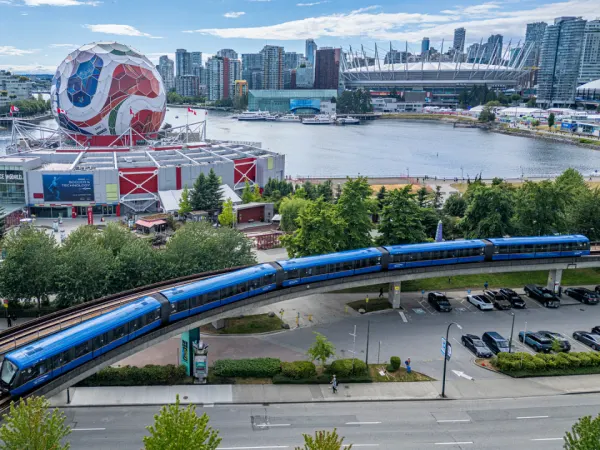
A TransLink SkyTrain passes Vancouver's waterfront during the World Cup. The agency added service across bus, SkyTrain, SeaBus, and West Coast Express to accommodate hundreds of thousands of additional transit boardings during the city's seven match days.
Credit:
TransLink
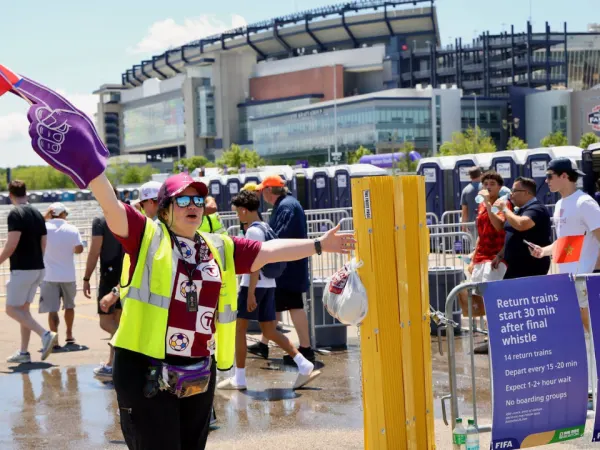
A transit employee directs World Cup fans outside a Boston-area venue. Frontline staff played a critical role across host cities by managing crowds, giving directions, and helping visitors get between transit and tournament venues.
Credit:
Massachusetts Bay Transportation Authority
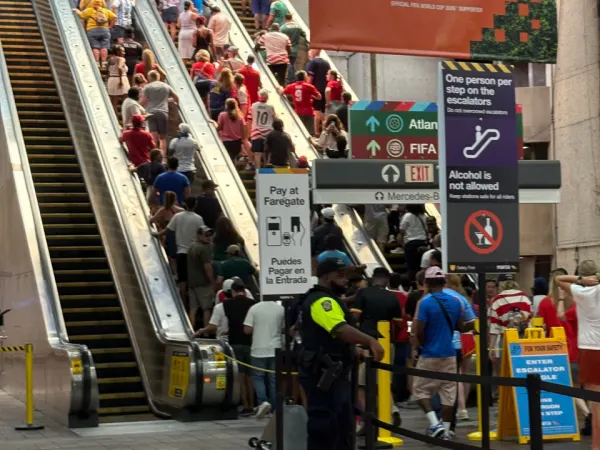
World Cup crowds move through MARTA's Five Points Station in Atlanta. The agency recorded 4.7 million rail passenger trips during a 35-day period that included World Cup matches and other major events.
Credit:
Metropolitan Atlanta Rapid Transit Authority
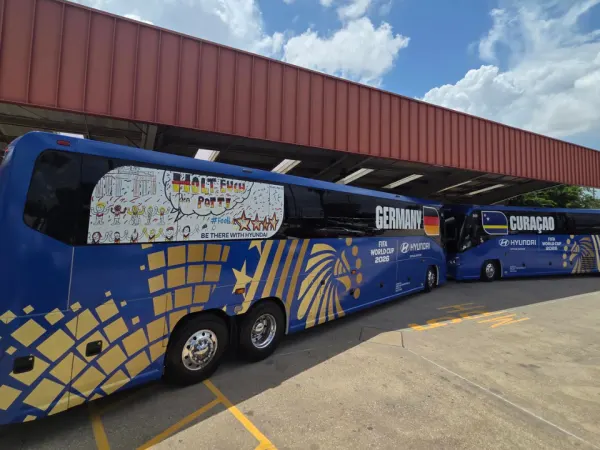
World Cup-wrapped First Class Transportation motorcoaches for Germany and Curaçao sit staged during the tournament. The Houston-based operator supported team movements, base camps, media trips, international fan groups, and other transportation needs.
Credit:
First Class Transportation
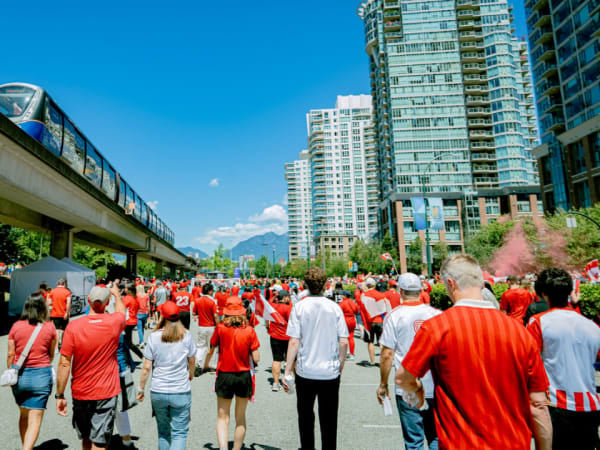
World Cup fans gather beneath a TransLink SkyTrain line in Vancouver. Preliminary figures showed an average of 87,000 additional transit boardings on each of the city's seven match days.
Credit:
TransLink
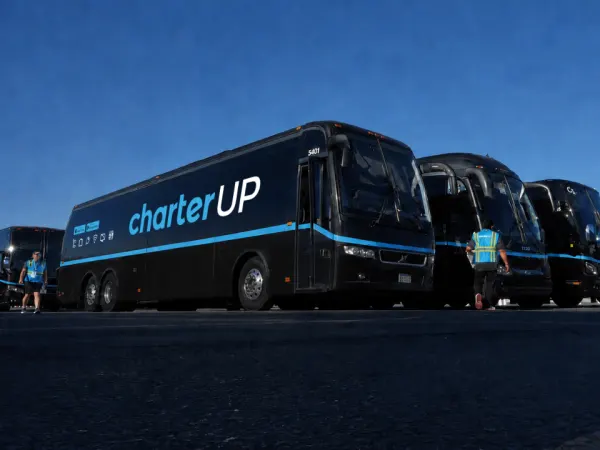
CharterUP helped bridge gaps between fixed-route transit and tournament destinations by supporting first- and last-mile connections, park-and-rides, hotel shuttles, and other transportation needs.
Credit:
CharterUP
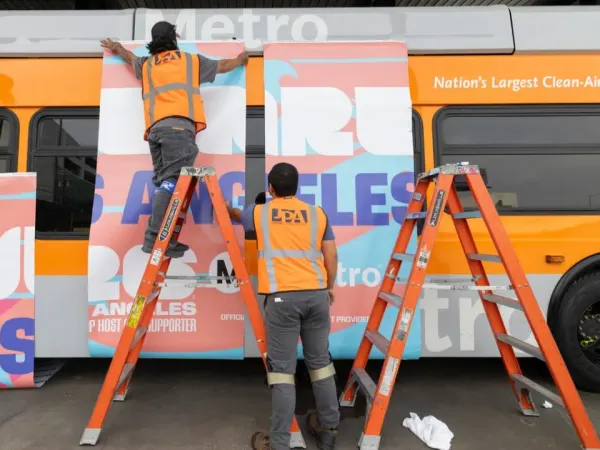
Can't forget the behind-the-scenes folks! The crew pictured applied World Cup branding to a Los Angeles Metro bus as the region welcomed tournament visitors. Los Angeles' World Cup experience also offered an opportunity to gather lessons ahead of the 2028 Olympic and Paralympic Games.
Credit:
Aurelia Ventura/Los Angeles Metro
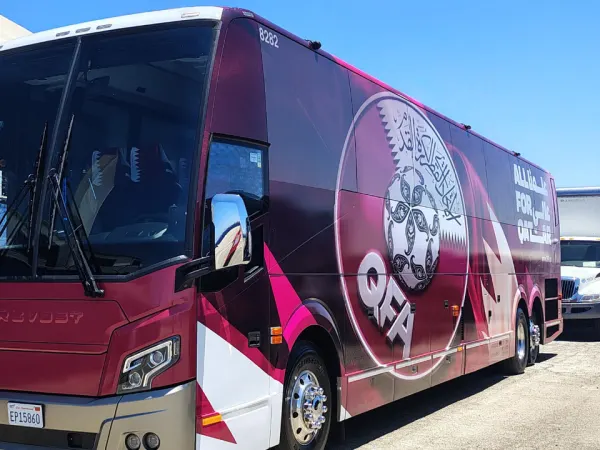
Lux Bus America provided dedicated transportation for national teams, base camps, media and broadcast personnel, FIFA workers, and other tournament stakeholders, like this Qatar team motorcoach.
Credit:
Lux Bus America
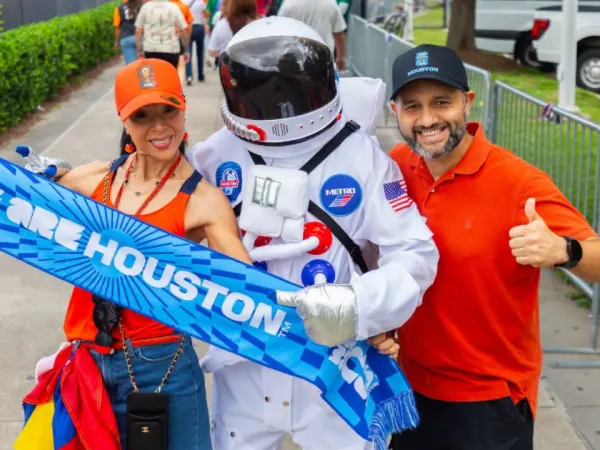
"One small step aboard, and one giant leap to your destination." World Cup fans pose with a METROnaut ambassador in Houston. Transit agencies relied on frontline employees and ambassadors to help visitors navigate unfamiliar transportation systems throughout the tournament.
Credit:
Houston Metro
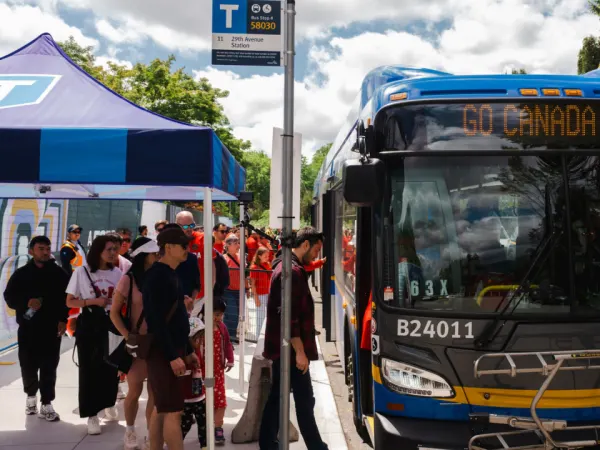
Fans board a TransLink bus displaying a “Go Canada Go” message during the World Cup. To handle tournament demand, TransLink added 600 daily bus trips, introduced two new routes, and increased service across multiple modes.
Credit:
TransLink