
Metro Magazine

 MENU
 SEARCHMENUSEARCH
Loading data...

Projects were selected on a competitive basis using evaluation criteria outlined in the Notice of Funding Opportunity, such as community needs, project benefits, and local technical and financial capacity.
Read More →



Mary Marois brings more than 40 years of community and organizational experience with her to BATA, most recently retiring as director of the Grand Traverse/Leelanau Department of Human Services in 2008.
Read More →Supply chain issues continue to vex the expansion and transition of zero-emission buses in American cities. So, what can be done to help solve the problem?
Read More →CTA’s existing bus fleet is housed at seven bus garages across the service region and serviced at a heavy maintenance facility on Chicago’s Far South Side — all of which will need to be substantially upgraded and retrofitted with charging infrastructure required to operate electric buses.
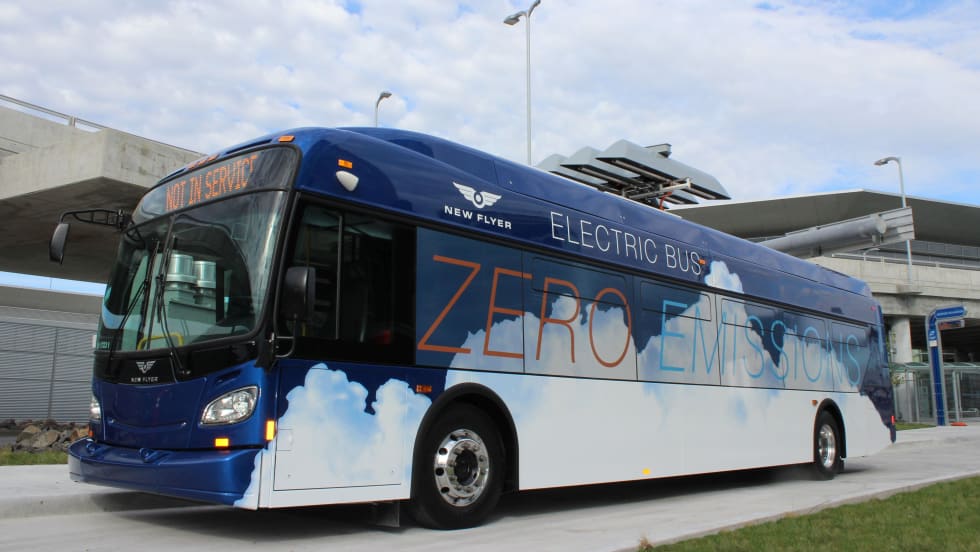
Read More →Will work with two Canadian transit vehicle manufacturers (New Flyer Industries and Nova Bus) and two charging station manufacturers (ABB Group and Siemens Canada) to deploy up to 10 electric buses and four overhead electric charging stations that plug into an open protocol known as the OppCharge protocol.
Read More →Executive-level professionals are retiring in greater numbers. Industry organizations and agencies are putting training and mentoring programs in place to instill leadership skills and attract and advance more women and young people. Young employees say more work is needed to raise the industry’s visibility to bring in talent.
Read More →Has accepted the position of executive director for Transportation California and plans to leave the agency in February 2013.
Read More →METRO recently spoke with CALSTART’s National Transit Bus Program Manager about this year’s report as well as the state of zero-emission buses overall, including how both the U.S. and Canada will continue to grow their ZEB fleets thanks to strong federal funding, the reasons for hydrogen’s growth, and much more.
Read More →Six XCEL 102 buses were received by two agencies.
Read More →The agency needs to fill more than 210 vacant positions for bus operators, train operators and station managers. A hiring freeze, stricter standards and retiring operators are behind the majority of staff losses.
Read More →