
Metro Magazine

 MENU
 SEARCHMENUSEARCH
Loading data...

The 9.4 mile Green Line on the North Corridor will feature direct, high-frequency service; 18 branded stations; complimentary Wi-Fi, a Park-n-Ride lot, and real-time bus arrival information.
Read More →



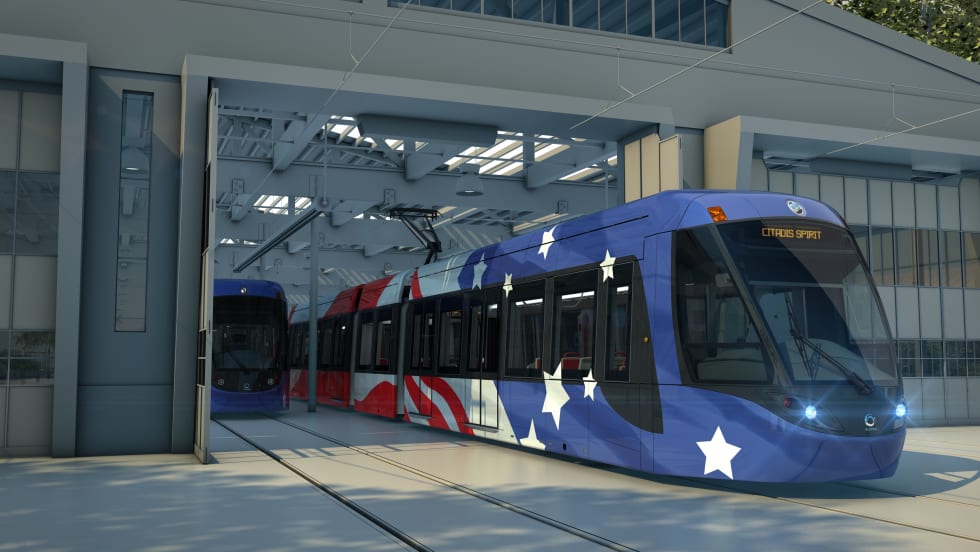

Several projects are in the planning stages, many of them on the West Coast. Although funding is once again a common hurdle, with financial support hinging on tight application deadlines, transit agencies are pushing ahead.
Read More →The Sahara Express will be another addition to the RTC’s expanding network of rapid transit services. The project will feature solar powered transit shelters, ticket vending machines, elevated station platforms, and improvements to traffic signals that will improve travel for both cars and transit operations.
Read More →In addition to testing SAE Level 4 autonomy, the project will also test automated docking to improve accessibility and platooning to increase vehicle efficiencies.
Read More →Award given annually to a city that uses transport innovations to increase mobility for all residents, while reducing transportation greenhouse and air pollution emissions and increasing cyclist and pedestrian safety and access.
Read More →Mayor Rahm Emanuel’s administration awarded a $3.5 million contract. Chicago Transit Authority President Forrest Claypool said the lanes will be used as an incubator for a broader program.
Read More →The 2.3-mile BRT line will provide fast, frequent, reliable, and safe public transportation along Madison Street, improving connections between key destinations in downtown Seattle and densely populated neighborhoods in the surrounding area.
Read More →The 6.75-mile “JAZZ” service will introduce new technologies that include queue jump lanes, transit signal priority, and increased stop spacing to streamline bus traffic along the corridor and reduce travel times by up to 25 percent.
Read More →The study concluded that over a 30-year lifetime, a tramway system emits about 50 percent of the CO2 as a BRT system operated with diesel buses, and about 30 percent less CO2 than a BRT system operated with hybrid buses.
Read More →The $54 million system for the City of Fresno's will feature a total of 27 stops, and will serve major shopping centers, hospitals, and other significant destinations.
Read More →