



Fla.'s JTA sets launch date for new BRT service
The 9.4 mile Green Line on the North Corridor will feature direct, high-frequency service; 18 branded stations; complimentary Wi-Fi, a Park-n-Ride lot, and real-time bus arrival information.

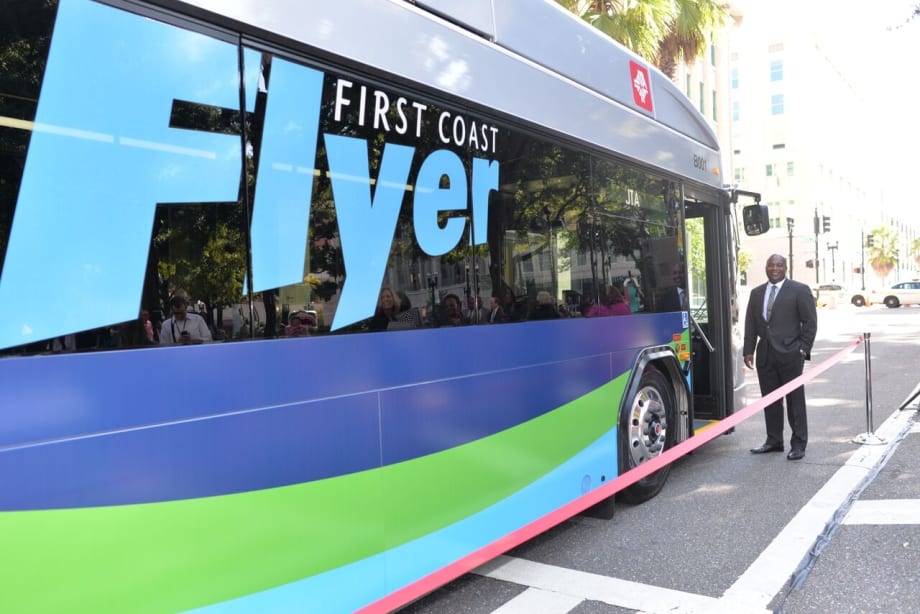
Fla.’s Jacksonville Transportation Authority (JTA) is gearing up to launch the First Coast Flyer™ bus rapid transit (BRT) “Green Line” on Dec. 7. The Green Line will operate between Rosa Parks Transit Station and Interstate 295 along Lem Turner with stops at major destinations to include FSCJ, VA Clinic, UF Health and Gateway Town Center.
The Flyer will connect customers to jobs, education, healthcare and more with features as unique at the region it serves. A mobile ticketing application (mobile app) called MyJTA will also launch along with the new service.
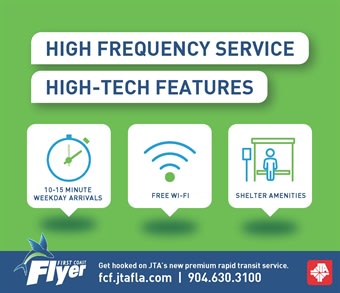
The 9.4 mile Green Line on the North Corridor will feature direct, high-frequency service; 18 branded stations; complimentary Wi-Fi, a Park-n-Ride lot, and real-time bus arrival information. It will take customers longer distances more quickly, make fewer stops, and offer 10-minute frequency during weekday peak hours and 15-minute frequency in weekday off peak hours.
The $33.2 million project is funded by the Federal Transit Administration, Florida Department of Transportation and the JTA.
“The First Coast Flyer™ will have a direct and positive impact on the quality of life for our customers,” said JTA CEO Nathaniel P. Ford Sr. “Our community deserves a world class transportation system. The Flyer is the latest initiative in the process of transforming transportation in Northeast Florida.”
The First Coast Flyer is planned in five-phases and serves as the backbone to the regional transit system. When completed in 2019, the Flyer system will cover 57 miles of destination travel, and will be the largest BRT system of its kind in the Southeast.
The branded Gillig compressed natural gas buses serving this corridor have a sleek, aerodynamic design that incorporates a raised, raked-back front cap blended into a full length, contoured roofline. Its modern profile makes a distinguished statement. The flying fish embodies the “Flyer” part of the name. Like the flying fish, the vehicles in the First Coast Flyer system will move smoothly along, gliding to their destinations.
More Bus

People Movement: Dan Dipert Coaches Adds Third-Generation Leader, Keolis Names New Valley Metro VP/GM, and More
In this edition, we also cover recent appointments and announcements at the Wabtec, SilverRide, HNTB, and more, showcasing the individuals helping to shape the future of transportation.
Read More →
New York MTA Plans Largest Bus Fleet Upgrade in More Than a Decade
The agency is seeking manufacturers for 650 new CNG buses to replace aging vehicles, improve reliability, and advance its broader fleet modernization strategy.
Read More →
Building a Flexible Path to Transit Electrification
John Hroncich discusses BAE Systems’ modular and scalable approach, lessons learned from decades of real-world operations, and how agencies can identify electrification strategies that fit their fleets.
Read More →
Bus Tech Talk: Keeping Transit Technicians Ahead of the Technology Curve
LA Metro’s Obed Mejia discusses technician training, evolving maintenance technology, fleet replacement, and strategies for getting the most out of today’s transit fleets.
Read More →
Biz Briefs: RIPTA Unveils New Frontrunners, Clevland RTA Adds New Siemens, and More
In METRO's latest installment, we take a look at recent news from Siemens, Prevost, Dodge, and more partnerships making headlines across the transportation sector.
Read More →
People Movement: Holly Arnold Joins Transdev and More
In this edition, we also cover recent appointments and announcements at Pace, CamTran, MCI, and more, showcasing the individuals helping to shape the future of transportation.
Read More →
The High Cost of Transit Buses: Industry Leaders Look to Procurement Reform
Transit leaders and policymakers examine how standardized bus designs, streamlined procurement, and predictable funding could help agencies stretch budgets and deliver better service.
Read More →
The Business Voice Behind Public Transportation
As chair of APTA’s Business Members Board of Governors, Ray Melleady explains how more than 850 business members are partnering with transit agencies to advance funding, innovation, and industry-wide collaboration.
Read More →
From Surviving to Thriving: Building Stronger Transportation Organizations
Bus Business Consultants founder Brian Dickson shares lessons on leadership, organizational health, and creating options for long-term success in a changing transportation industry.
Read More →
Finding the ‘Happy Medium’: Optimizing Maintenance Without Sacrificing Reliability
The key to maintenance optimization isn’t doing less work—it’s doing the right work at the right time on the right assets.
Read More →