



Exclusive: How cities around the globe approach 'new mobility'
What four cities are doing to enhance quality of life for their citizens in a manner that integrates society, governance, and infrastructure.
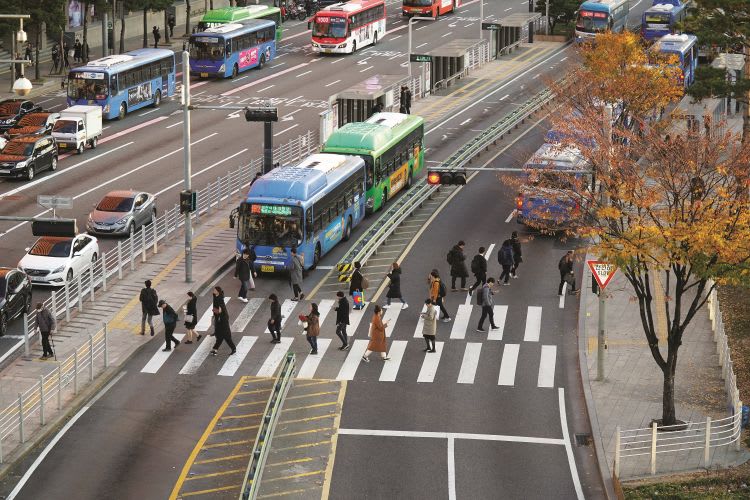
Seoul instituted comprehensive bus reforms that aimed to reduce the need to move about the city center by car.
Jerom Theunissen
Seoul instituted comprehensive bus reforms that aimed to reduce the need to move about the city center by car.
Jerom Theunissen
Transportation has been a very sleepy field for the last fifty years. “Old mobility,” a system that operates in modal silos, has seen a worsening return on investment, especially here in the U.S. The mobility challenges raised over the past few decades have prompted urban planners, transportation engineers, and policy makers alike to rethink what city streets are about and who they are for. “New mobility” prompts a different approach: the need to provide people with ample travel choices simultaneously with policies for congestion management. These provisions enhance flexible mobility in a rapidly changing urban environment.
From a young age, I became interested in studying how mobility can shape a city’s form through the built environment. As a Dutch and American national born in Bangkok, Thailand, I have been exposed to unique mobility systems in the countries I grew up in. My most profound experience was studying in Copenhagen, where I experienced the city’s bottom-up approach that focuses on the evaluation of both the physics and human factors of mobility. On physics, urban designers and engineers are primarily concerned with the physical aspects of urban infrastructure: network capacity, roadway alignments, and traffic operations. Human factors are equally, if not more important, to understanding the choices and preferences dictating how people get around. By testing and trying out solutions over the years, cities that have taken this incremental approach have shown that this method can be applied to enhance livability in any city.
To build on my interest in transportation, I was given the opportunity to study the topic in a global context through a fellowship from Vanderbilt University. My proposal sought to discover local solutions to a universal urban problem: getting from A to B in your city. I visited 48 cities across Africa, Asia, Europe, South America, and North America that either struggle or excel in their quest to improve quality of life with innovative mobility solutions in their cities.
How society, governance, and infrastructure shape urban transport services around the world
The interdisciplinary nature of transportation planning calls for a comprehensive study approach. I conducted field research for the fellowship by considering interventions in three main areas: infrastructure, governance, and society.
Infrastructure, or the “hardware” supporting a city’s transportation system, enables a diversity of uses and demand for transportation in a city and creates a built environment that fundamentally shapes how people move from A to B.
Transport governance is likewise important; it is the “software” that provides a framework for stakeholders at different levels of government to come together and allocate finite resources for transportation.
The third, and arguably the most important, perspective for transport planning and livability, is based on society, where mobility is a right afforded to all, no matter their income, race, gender, ability, or socioeconomic status.
In this framework, I hoped to tap into a diverse range of perspectives, including city officials, transportation engineers, non-profits, private businesses, urban planners, community advocacy organizations, and international forum. Along the way, I investigated how transportation is being shaped by new business models, technology, and financing mechanisms that promise to make transport more equitable, sustainable, and seamless for citizens. Here are a few unique examples of what I found cities were doing to enhance quality of life for its citizens in a manner that integrates society, governance, and infrastructure:
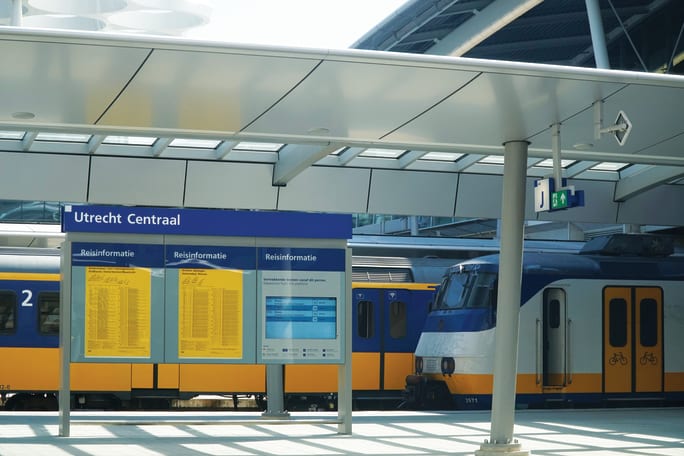
Rail provider, Nederlandse Spoorwegen led the effort to offer a single smartcard for all public transport and related services in the Netherlands, back in 2005. Jerom Theunissen
Utrecht, the Netherlands - Nederlandse Spoorwegen “Door to door” travel
My first stop in my native country of the Netherlands began with interviewing the nation’s rail provider, Nederlandse Spoorwegen (NS). Over the years, NS has been implementing solutions that enable the “complete trip.” This concept synthesizes aspects of a traveler’s trip from the time they plan their journey until they arrive at their destination. As one of the nation’s largest public transportation providers, NS led the effort to offer the “OV-chipkaart,” a single smartcard for all public transport and related services in the country, back in 2005. The technology is being managed by a joint-venture between NL’s largest public transport providers, coming together to offer a seamless transfer between public transportation modes for their customers.
Another effort by NS has revolved around services at stations that serve the quintessential mode of transport in the Netherlands: the bicycle. NS found that some 45% of people go to stations by train. This has led to the development of world-class cycling infrastructure and services at rail stations. I visited the world’s largest cycle parking garage in Utrecht, which has a capacity of 12,500 bikes. These garages, operated by NS, feature a 24-hour free parking policy, which uses the OV-chipkaart to check-in and check-out bicycles. For users who do not have a bike for the last leg of their journey, NS offers OV-fiets. The service allows users to rent a bicycle at over 300 locations in the Netherlands to cover the last miles of their journey. Following registration with their OV-chipkaart, people can rent a bicycle for a maximum of 24 hours for approximately €3 ($3 US). It is also possible to return the bicycle at a different rental point, ensuring flexibility in case users want to return the bike to a different train station within the same city. In 2016, over 2.4 million journeys were made by OV-fiets.
Meetings with stakeholders at NS underscored the need to pursue a collaborative approach between government (national, provincial, and local), public transport operators, and travelers alike. A deep understanding of the customer’s needs allowed NS to design services that deliver seamless door-to-door mobility that improves the lives of thousands of travelers daily.

The restored Cheonggyecheon stream is a five-mile-long public space that brought vibrancy back to downtown Seoul. Jerom Theunissen
Seoul, South Korea - Cheonggyecheon Stream
While several cities are addressing rising traffic congestion and other urban transport crises by investing millions of dollars into road and highway construction, Seoul took a completely different approach. Instead of building its way out of congestion, Seoul pursued a new urban transport paradigm that demolished a 30-year-old, five-mile-long elevated expressway and replaced it with a park that opened in 2005. Using the concept of reduced demand, the Cheonggyecheon Stream that once passed through the heart of Seoul was restored. At the same time, Seoul instituted comprehensive bus reforms that aimed to reduce the need to move about the city center by car.
By several measures, the restoration of the Cheonggyecheon river into a park was a success. Studies conducted by the Seoul Metropolitan Government show the project contributed to a 15.1% increase in bus ridership and 3.3% in subway ridership in the city between 2003-2008, and led to a decrease of automobiles in the area by 43% in 2006. From an environmental perspective, the temperature surrounding the restored stream decreased 3.6 °C due to the removal of concrete causing a heat island effect. Although it was criticized during construction for its $900 million cost, it was lauded by the public after inauguration, and has since become a place for Seoulites and tourists to gather and enjoy a long green belt in the heart of the city.
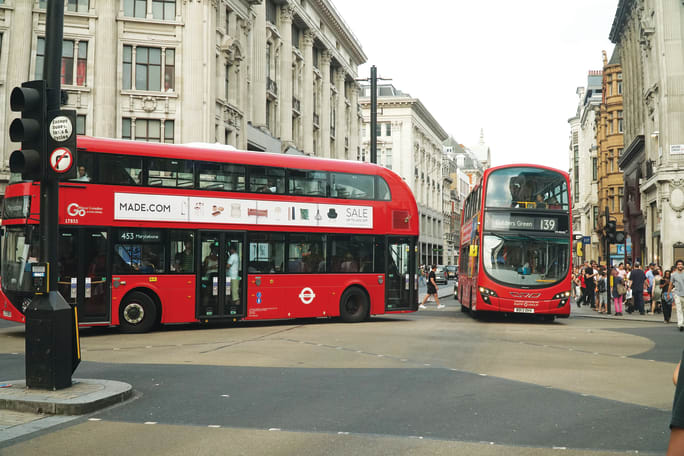
Unlike most transport authorities in the U.S, Transport for London also manages the main roads and streets in London, overseeing cycling, taxi and mini cab regulation, buses, traffic signaling, and congestion charging. Jerom Theunissen
London, United Kingdom – Transport for London, comprehensive mobility authority
In 2000, as part of the Greater London Authority (GLA) Act, Transport for London (TfL) was created to give the mayor of London a “general duty to develop and apply policies to promote and encourage safe, integrated, efficient and economic transport facilities and services to, from and within London.” Unlike most transport authorities in the U.S., TfL also manages the main roads and streets in London, overseeing cycling, taxi and mini cab regulation, buses, traffic signaling, and congestion charging. As such, London’s transport governance structure creates a comprehensive “mobility authority.”
TfL’s case offers a significant paradigm shift to public transport authorities of today, where providers are focused on operational matters rather than strategic initiatives that improve mobility for citizens. The reforms in 2000 allowed TfL to implement quality-incentive contracting for bus operations, creating strong yet simple performance standards and incentives that kept costs low and rider satisfaction high.
These reforms allowed TfL to focus on new strategic directions, which include advancement of “Healthy Streets,” improving air quality, and investment in transport to support the creation of new homes and jobs. At the helm of these initiatives is the mayor of London, who chairs TfL’s board. The Mayor’s Transport Strategy sets the agenda in terms of policies and proposals to shape transport in London over the short, medium, and long term, and is aligned with other strategies including health, education, and housing. With London’s comprehensive approach to mobility, TfL is enabled to be more responsive to the needs of citizens.
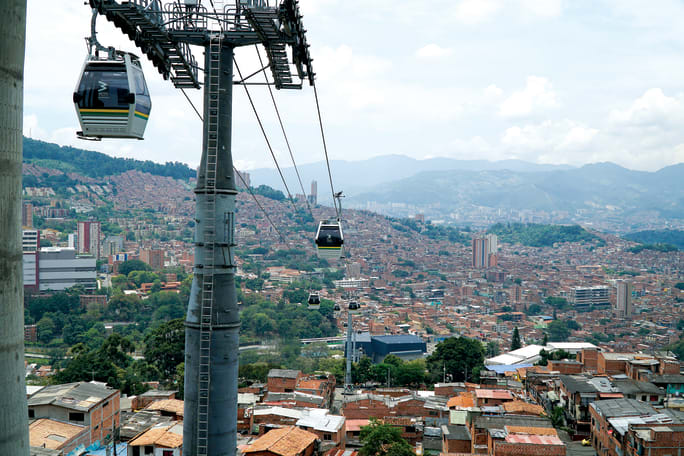
The city of Medellín repurposed gondolas typically used in Swiss ski resorts to connect "communas" — settlements of marginalized populations — with the metro rail lines in the valley. Jerom Theunissen
Medellín, Colombia – Social Urbanism
Medellín is a city that shows how people-centered development can make for radical urban transformation and improvements in quality of life. Since the days of violence during drug trafficker Pablo Escobar’s reign, the city has become an example of effective urban investment in education, mobility, public enterprise, and social integration. With the principles of inclusive development, the city sought to directly address wealth division, lack of equity and opportunity to improve quality of life. To address multiple urban challenges like violence, insecurity, poor education, and lack of mobility, the government’s interventions needed to be creative and intersectional.
The deeply rooted problems of spatial and economic inequality were tackled by “social urbanism,” an approach that blends traditional infrastructure investment with social programs to lift some of the city’s poorest communities. The term was initiated and executed by Mayors Luis Perez and Sergio Fajardo, who were elected in 2000 and 2004, respectively. They focused their efforts on marginalized populations in the “communas,” informal settlements that crept up the Aburra Valley’s hillsides. These communas represent about half of Medellín’s population, which are physically disconnected from Medellín’s city center. Medellín’s data-driven approach saw low Human Development Index (HDI) scores in these communas, which were utilized by the city to calibrate public investments in the areas that needed them most. They based their interventions in the framework of “integral urban projects” (PUIs), projects that incorporate multiple programs simultaneously. The model seeks to achieve physical, social, and institutional impacts that involve the community, generate employment, and strengthen economic activities of intervention areas. With this approach, interventions are more lasting due to widespread buy-in by the public and institutions involved.
In the area of mobility, the city repurposed gondolas typically used in Swiss ski resorts to connect communas with the metro rail lines in the valley. Elsewhere, escalators were built in Communa 13 to alleviate the need to traverse 28 stories up a hill. All these transportation interventions engaged citizens in a manner that advances the “Cultura Metro,” a phenomenon described to me by locals as “a collective feeling of responsibility towards the common good.” It only took one ride on the Metro and a walk around the city to perceive how the program’s consciousness-raising effort has permeated the boundaries of the public transportation services and translated into a way of behaving.
A Path Forward
The examples above show what some cities around the world are doing to innovate and improve connectivity for people. All the above have strived to improve quality of life for their residents with rigorous mobility solutions. Enabled by nimble transportation governance, strategic application of infrastructure, technology and business models, stakeholders have more opportunity than ever to design interventions that can make cities more livable. As societal needs shift, transportation stakeholders can begin down the path of new mobility by taking the following steps to advance sustainable mobility:
1. Integration of public-sector transportation services should be explored to create a unified mobility offering for customers of all abilities. New sources of transportation supply can be harnessed by leveraging private sector players and aligning goals with public sector needs.
2. Advancements in IoT technology will enable data-driven mobility management, enabling decision-makers to better understand origin/destination and demographic trends while simultaneously offering personalized trip information for travelers.
3. Funding and financing of transportation will become more strategic and sustainable, leveraging a blend of public and private money supported by innovative road charging, taxation, and value capture schemes.
4. The role of the government should transform from a regulator/operator to a catalyst/strategist for new mobility solutions. What’s more, local governments should set open and shared data standards that protect privacy, improve participation, and ensure high-quality service delivery. As transportation stakeholders prepare for an uncertain future, these are the basics that ensure that our mobility systems stay ahead of the exciting urban future that is to come. One of the most valuable things I learned from this year of mobility exploration is that solutions are out there, it’s just up to us to find and act on them.
Jerom Theunissen is a Project Associate for the National Center for Mobility Management, Easterseals.
More New Mobility

From Hardware to Digital Partner: Luminator Charts Its Next Chapter
CEO Magnus Friberg discusses Luminator’s shift toward becoming a digital partner, the growing importance of software and interoperability, and how AI can help agencies improve operations and passenger experience.
Read More →
Biz Briefs: Alstom Lands Canadian Contract, LYT to Supply California TSP, and More
In METRO's latest installment, we take a look at recent news from Complete Coach Works, Beep, FlixBus, and more partnerships making headlines across the transportation sector.
Read More →
CharterUP’s Armir Harris on Technology, AI, and the Future of Group Mobility
In a recent episode of METROspectives, CharterUP Founder/CEO Armir Harris discussed the company’s evolution from an online charter bus marketplace into a technology platform supporting public- and private-sector mobility and much more.
Read More →
Jacksonville’s NAVI Project Charts a New Course for Autonomous Public Transportation
Through its NAVI program, JTA is showing how autonomous vehicles, intelligent infrastructure, and coordinated operations can work together to deliver everyday public transportation.
Read More →
Biz Briefs: Luminator Marks Milestone and More
From manufacturers and suppliers to transit agencies and motorcoach operators, these updates offer a snapshot of the projects, partnerships and business moves driving the industry forward.
Read More →
New Tricks for Old Bureaucracies: Joshua Schank on Making Transit Innovation Stick
Former LA Metro Chief Innovation Officer Joshua Schank discusses why good ideas aren't enough, how transit agencies can overcome resistance to change, and why today's challenges demand more innovation.
Read More →
How DART's GoPass Is Redefining Regional Mobility
Serving 14 transit agencies, GoPass simplifies multimodal travel by allowing riders to plan, pay for, and manage an entire trip through one app.
Read More →
Biz Briefs: OCTA Taps Clean Energy for Hydrogen Station, Stadler to Supply Via Rail Vehicles, and More
From manufacturers and suppliers to transit agencies and motorcoach operators, these updates offer a snapshot of the projects, partnerships and business moves driving the industry forward.
Read More →CharterUP Expands Into New Mobility and Autonomous Transportation
Vice President of New Mobility Stephen Joos discusses how CharterUP is leveraging its nationwide transportation network, technology platform, and autonomous vehicle partnerships to expand into workforce mobility, campus shuttles, and transit solutions.
Read More →
METRO Magazine Announces 2026 Innovative Solutions Awards Winners
Projects Recognized for Advancing Mobility Through Technology, Accessibility, Workforce Innovation, and Operational Excellence
Read More →