



RELATED: INIT modernizes Portland-Vancouver area electronic fare payment system
Trip-planning app uses augmented reality to offer live passenger info
INIT, Innovations in Transportation Inc.'s DEPARTURESlive is a multimodal trip-planning mobile app that uses augmented reality to provide the user with not only live views of all the stops nearest to them, but also with live departure information, arrival and departure alerts, pedestrian navigation, and more.
by METRO Staff
August 18, 2017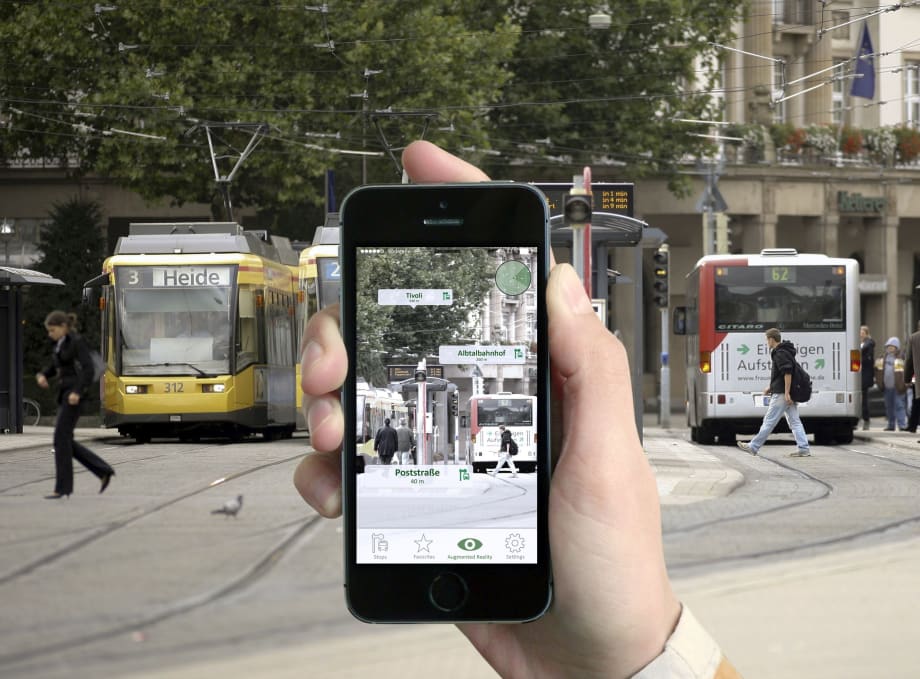
5 min to read
Infrequent riders of public transit can become easily overwhelmed by the thought of taking a bus or train, and are therefore hesitant about switching to public transit. Usually, there are questions about the maps and schedules, along with other unknowns: “which is the best route to my destination…?”, “where’s my stop located…?”, “how long will it take…”? and, “is this the right bus...?”
INIT, Innovations in Transportation Inc.'s DEPARTURESlive is a multimodal trip-planning mobile app that uses augmented reality to provide the user with not only live views of all the stops nearest to them, but also with live departure information, arrival and departure alerts, pedestrian navigation, and more. Available on IoS and Android, the app answers questions for riders so they can travel with ease of mind.
Upon opening the app, the Stops Nearby feature displays the closest stops to the rider’s current location, with the nearest stops at the top of the list. When the rider chooses a stop, a list of departures taking place are displayed. If more stops or further information are needed, a simple click shows all of the departures that are taking place from that stop within the next hour. By selecting the desired departure time, all details regarding the selected trip will be displayed answering the first question, “Which is the best route to take?” simply and conveniently.
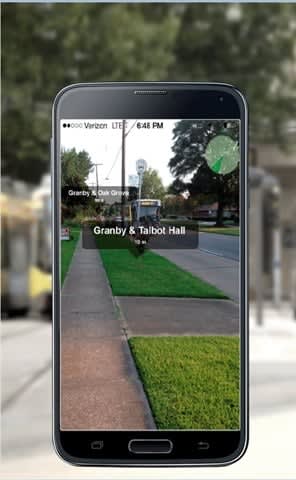
Another innovative tool to help riders see their closest stop is the Augmented Reality feature. Using the device’s camera, live stops are displayed where the user is pointing their phone. As the phone is rotated 360 degrees, the rider sees the stops and how far away they are, as well as the direction of travel. Since millennials are choosing public transit more and more today, the augmented reality feature is ideal for appealing to this growing demographic of riders.
For more novice users, those not as familiar with the positions of the stops, the Pedestrian Navigation feature can be activated. Once the feature is clicked, Google Maps opens and provides step by step directions to the stop so riders can catch the bus on time. Google Maps are also used for views of the layout of the land as an added feature to the augmented reality experience. Pedestrian navigation completes the questions about where the stop is located and how to get there.
One last way users can access their stops speedily is through the Favorites feature. By marking their most used stops as favorites, they can access them quickly to view their departure information at a glance. Departure times with the actual position of the vehicle arriving are displayed using a green bar.
As an added highlight, Arrival & Departure Alarms within the app allows riders to set an alarm reminding them that their departure is minutes away. The user can also indicate how many minutes are needed to get to the stop before the bus departs.
This works even if the app is closed. When the app is closed, access to the departure time can be viewed by swiping down from the top of the phone to see the information. By clicking on the notification, DEPARTURESlive opens to the trip that the rider is interested in.
The function of the app not only knows when your riders board and alight their vehicles, it also gives the agency insight as to where they have been before they begin their trip and after they depart.
The goal is to provide the user with departure and arrival information in a manner that improves the rider experience and provides the right gen for knowing which is the right bus and when is it arriving.
Widgets can also be used as a way to access a part of the app without opening it. Widgets can be added on any home screen to allow users to pull up data when the screen is on and provide them with quick information about the departure at the next stop - without having to open the app. All relevant information displays; the route, the direction and the departure time.
Last Bus is an especially appealing feature of the app. As mentioned, more millennials are now living in cities, taking public transit and using bike and car share services. In order to know when the last bus departs — say, if the rider is at a bar with friends and wants to enjoy the evening longer — the Last Bus feature allows him to request a push alert when the last vehicle scheduled for his trip is about to depart. He will then be able to catch the last bus home.
Agencies benefit from DEPARTURESlive through Origin/Destination reporting. This function of the app not only knows when your riders board and alight their vehicles, it also gives the agency insight as to where they have been before they begin their trip and after they depart. For instance, if riders are using public transit for part of their journey and their car for the other part, where they park their vehicles must be convenient to where they catch their bus or train. Origin Destination reporting allows agencies to see if a bus stop needs to be added or relocated to service those riders.
Service improvement info
Because INIT is the app developer, they are able to offer an API to allow agencies to get information, not only from DEPARTURESlive, but also from other mobile app developers and potential partners. Rider location information can be fed via their users’ GPS information so INIT can provide origin/destination data from all the official and third party apps that participate.
Agencies can post .pdf or .jpg files that contain route maps, schedules, rider instructions or any other information the rider wants access to. Service bulletins provide riders with messages such as stop closures, services changes or other pertinent information the agency feels would benefit the rider.
Feedback provides the agency with direct feedback from riders such as, “This driver is really nice,” “This bus needs cleaning,” or “Stop 45382 has damage.”
Subscribe to Our Newsletter
More Technology

From Hardware to Digital Partner: Luminator Charts Its Next Chapter
CEO Magnus Freiberg discusses Luminator’s shift toward becoming a digital partner, the growing importance of software and interoperability, and how AI can help agencies improve operations and passenger experience.
Read More →
Beyond the Checklist: A Structured Approach to Transit Maintenance
Reliability-Centered Maintenance helps transit agencies move beyond routine checklists to focus limited resources on the assets and failures that have the greatest impact on safety, reliability, and service.
Read More →
NJ TRANSIT Advances Bus Technology Upgrades Across Statewide Fleet
More than 1,500 buses now feature upgraded technology designed to improve arrival predictions and provide free Wi-Fi, with deployment expected to reach nearly 2,000 buses by the end of 2026.
Read More →

Building a Flexible Path to Transit Electrification
John Hroncich discusses BAE Systems’ modular and scalable approach, lessons learned from decades of real-world operations, and how agencies can identify electrification strategies that fit their fleets.
Read More →
Biz Briefs: Alstom Lands Canadian Contract, LYT to Supply California TSP, and More
In METRO's latest installment, we take a look at recent news from Complete Coach Works, Beep, FlixBus, and more partnerships making headlines across the transportation sector.
Read More →
Sponsored•September 8, 2026
From Legacy Silos to Conversational Intelligence
What if transit leaders could ask any operational question and get a trusted answer in seconds? Conversational AI is transforming how agencies use their data.
Read More →
USDOT Announces Rail Vehicle Replacement Grants, Chattanooga AV Shuttle Funding
More than $191 million in federal funding will help three transit agencies replace aging rail vehicles and support a new autonomous shuttle service in Chattanooga.
Read More →
Bus Tech Talk: Keeping Transit Technicians Ahead of the Technology Curve
LA Metro’s Obed Mejia discusses technician training, evolving maintenance technology, fleet replacement, and strategies for getting the most out of today’s transit fleets.
Read More →
Biz Briefs: RIPTA Unveils New Frontrunners, Clevland RTA Adds New Siemens, and More
In METRO's latest installment, we take a look at recent news from Siemens, Prevost, Dodge, and more partnerships making headlines across the transportation sector.
Read More →
Why Simulating Pedestrian Movement Has Become Essential for Modern Rail Stations
Pedestrian microsimulation is helping rail planners identify bottlenecks, test station designs, and prepare complex transit hubs for growing passenger volumes.
Read More →