



European Cities Respond to Growing Demand for Urban Transport
In a relatively buoyant economy in much of the continent, improving urban transport and creating additional capacity has become a pressing concern over the last decade.

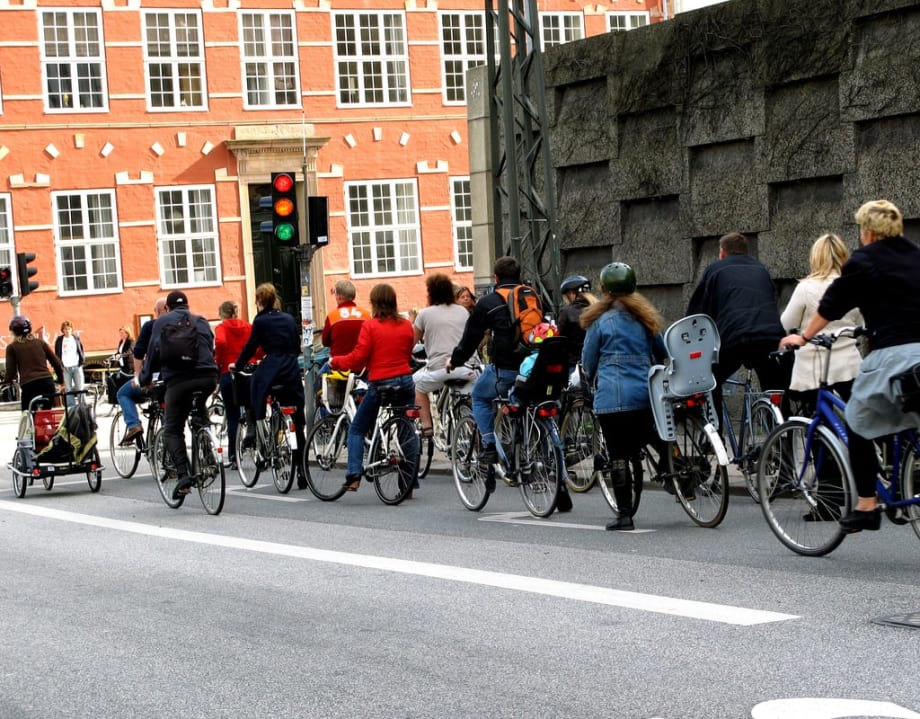
Denmark has a strong cycling culture, with 30% of daily trips in Copenhagen made by bicycle – even in the northern winter.
Photo: Giles Bailey
Three quarters of the population in Europe lives in cities. The proportion is increasing, and like many areas of the western world, we are seeing a return to living in and around our largest cities. European cities are becoming ever more politically and economically dominant, including London, Paris, Madrid, and Berlin, as well as the Randstad in The Netherlands.
Our cities are also strangely both very old as well as very new. Historic city centers can visibly trace back their roots from 500 to 1,000, or even more years. This history continues to impact lifestyles, perceptions, road networks, and services. However, many of our cities are ringed with modern motorways and high rise residential and office accommodations. An increasing trend is seeing the increasing development of modern high rise business clusters, such as Canary Wharf in London, La Defense in Paris, or Amsterdam South.
In a relatively buoyant economy in much of the continent, particularly in the north, improving urban transport and creating additional capacity has become a pressing concern over the last decade. Many schemes are in development, construction, or recently completed, which will allow a range of cities to cope with their newly reinforced regional and global roles.
The rest of the article comments on a few of the leading examples of capacity increases that are underway in Europe and some of the issues being faced.
London
My home city of London has faced a steadily growing population and central area employment over the last decade. Billions of pounds have been spent over the last 20 years in a concentrated program of improvements to the previously poorly maintained existing systems. This has increased reliability, ambience, as well as capacity via improved stations, signaling, and trains.
This work is still ongoing, for example the signaling improvements on the sub-surface/district lines or the recently announced new trains and signaling for the Piccadilly line.
Nevertheless, a long term plan that had been debated over decades was the Crossrail (1) scheme. This was finally approved for construction in 2009 and has seen substantial and quite disruptive work occur across Central London and at Canary Wharf and Stratford in East London over the last decade. While originally planned to open in stages starting in December 2018, the opening date for a variety of reasons has now moved to 2021.
This huge (73 miles and approximately $18 billion) and transformative scheme will add circa 10% to the existing capacity of the rest of the London rail network into the central area, bring a step change in rail capacity to the Canary Wharf business district, and vastly improve rail access to Heathrow airport. It is expected to be almost immediately upon opening a busy and core part of the transport system and relieve crowding on other rail lines and spur further development.
The complexity, scale, cost, and length of time in planning is illustrative of the challenges in meeting the public transport demands of a global city, such as London, while maintaining its global competitiveness. A further mega-transport-scheme known as Crossrail (2) is already in planning.
However, the ability or desirability of London to continue to absorb such large proportions of the “national transport budget” versus other UK cities is being debated and a pause seems somewhat inevitable in these London-centered large rail schemes.
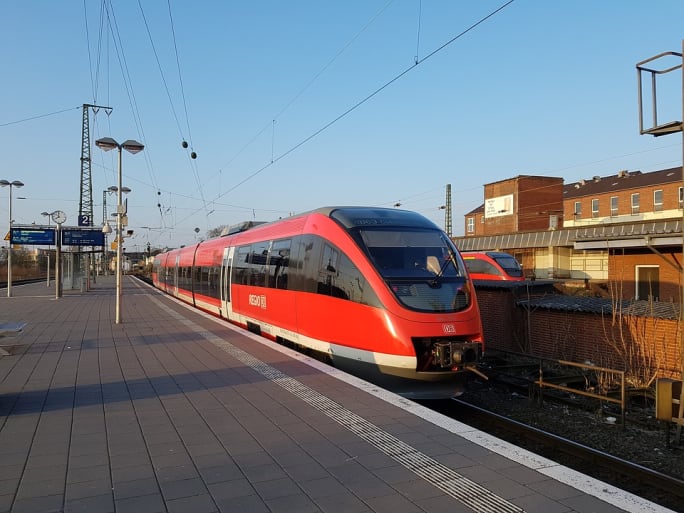
Deutsche Bahn largely operates Germany's interurban rail system.
Photo: Deutsche Bahn
Paris
The Greater Paris area (Ile-de-France) has already developed the pan-urban, through rail services that London’s Crossrail will deliver via the currently over 300-mile RER network, which began operation in the late 1970s. Expansions continue to the RER network via new lines as well as modernization of the older routes. However, the Ile de France area is also growing strongly and is ambitious in its aims for global competitiveness.
Paris has taken the view that the growing metropolitan area needs a whole scale expansion in the coverage of high capacity rail service that links growing suburbs with each other and provides connectedness around, as well as through, the central city.
The new Grand Paris Express network will be built relatively rapidly and change the whole nature of the public transport offerings in the Paris region — to the extent seen in the earlier RER intervention. Initial phases of the scheme will be launched in the next two years, and the whole 125 mile approximately $28 billion scheme is scheduled to be completed by about 2030.
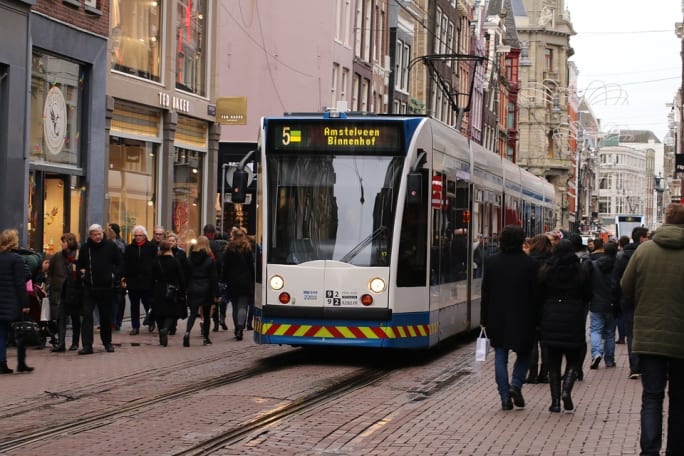
While the Dutch rail network is extensive, it is focused on key rail nodes and intercity mobility – even if the neighboring cities are quite close.
Photo: Giles Bailey
The Netherlands
Amsterdam is a relatively smaller European city, but part of one of the most densely populated areas on the continent in the Randstad conurbation (over eight million people) in The Netherlands and generally the northwest corner of the continental mainland including Belgium.
The Amsterdam region is seeing fast economic and population growth and this spreads far beyond the core historic cities to new business parks and office clusters. The city is well serviced by a tram network, and cycling remains a core part of the transport mix in most Dutch cities. However, such an important city has up to now had a very limited urban rail network first developed in the late 1970s, covering only parts of the city and with very limited coverage in the center. While the Dutch rail network is extensive, it is focused on key rail nodes and intercity mobility – even if the neighboring cities are quite close.
Thus, Amsterdam has focused on developing the regional offerings that an improved metro service could deliver. In particular, connecting newly developing areas on the north shore of the River IJ with the city center and a major new office cluster to the south of the historic city at the Amsterdam South/World Trade Centre office district. However, even this intervention has proved to be very complex, expensive, and time consuming.
The city is well-known for being at, or below, sea level, and thus, has a very high water table. It is also largely built on a deep layer of sand. The new 6.2 mile North–South Metro line opened in 2018, seven years late, and at a cost of about $3.3 billion, which is twice the originally expected cost. It is a key project in the city, and region, and will allow substantial business and housing growth, but highlights the cost and complexity of delivering new transport infrastructure in this historic, highly attractive, popular, and dynamic urban area.
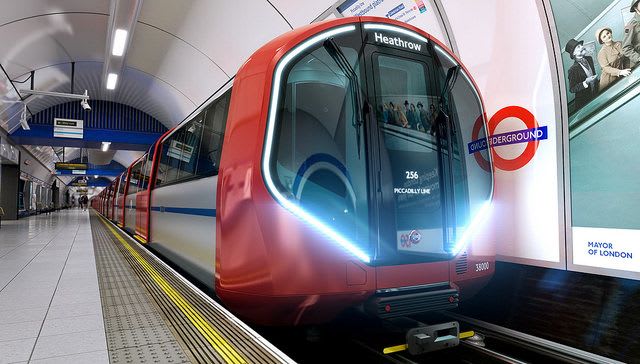
Piccadilly line
Photo: Transport For London
Germany
One of the responses to rising demand for public transport, but also for competitive services versus the car, as well as a tool of economic development and urban realm improvements, are the numerous light rail extensions and new build schemes being rolled out across the continent, particularly in France.
These schemes have been progressively rolled out in cities from populations as small as 250,000 in Besancon, France, up to metropolitan centers such as Paris, as well as in Berlin. Notable examples include Bordeaux and Montpellier.
Munich, in Bavaria in southern Germany, is another case of a dynamic and growing regional economy based on automobile manufacturing, technology, and education. It is a rapidly growing urban area of approximately three million people. To support this economy regional transport infrastructure improvements are felt to be needed.
Munich is served by a public transport system composed of trams, buses, a regional rail system (S-Bahn) opened in the early 1970s at the time of the Summer Olympic Games, as well as national rail services in the metropolitan area.
In particular, S-Bahn services use a central area tunnel between the main station and eastern station with a few intermediate central area stations. This is the main travel corridor in the city. The otherwise successful public transport network is now heavily congested, and in particular, the central city corridor, which is served by over 30 S-Bahn trains per hour per direction.
Minor interventions do not seem capable of dealing with the capacity deficit in the rapidly growing city, and thus, a major investment is planned, which will effectively twin the existing rail corridor with a nearby and parallel tunneled service. It is interesting in this case that rather than service a new area of the city, Munich needs to provide simply more service to the existing core route through a parallel route. The new extensions to the S-Bahn are expected to cost about $4.5 billion and be completed by 2026. Significant extensions to the more local U-Bahn network are also underway.
The Munich situation is typical of what is being seen across much of Germany, where significant investment is being deployed to increase capacity in urban transport — including in Hamburg, Stuttgart, The Ruhr, and Berlin — as well as improve the competitiveness of interurban rail, largely operated by Deutsche Bahn (DB). Also, the last decade has seen the reconstruction and expansion of the public transport networks in what was formerly East Germany.
While many eastern cities are slowly growing or even declining in population and economically, Leipzig, Dresden, and Berlin, are now growing. In the case of Leipzig and Dresden, partially as overspill from rapidly expanding Berlin. The earlier investment in public transport can be seen as a wise long-term investment.
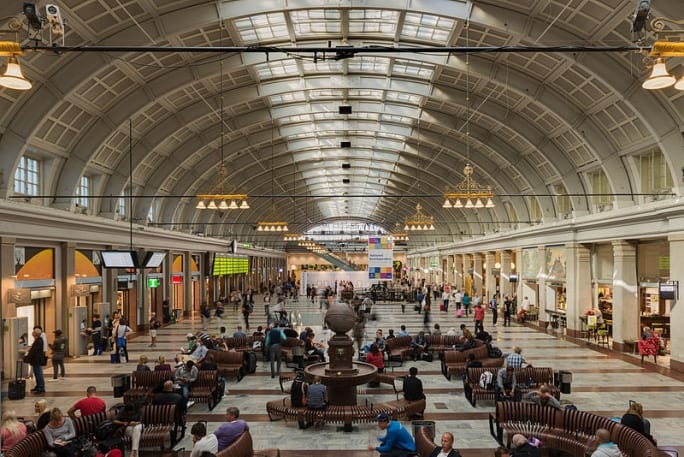
Stockholm Central Station
Photo: Arild Vågen
Copenhagen
Copenhagen is also an interesting example of a growing metropolitan area that has always had a strong public, and sustainable, transport culture but is now significantly expanding rail transport offerings. Like The Netherlands, Denmark has a strong cycling culture, with 30% of daily trips in Copenhagen made by bicycle — even in the northern winter.
Copenhagen has, since the construction of the Oresund Bridge/Tunnel to neighboring Malmo, Sweden in 2000, developed employment and residential markets across the regional economy with many residents of southwestern Sweden working in the stronger employment market of eastern Denmark.
Copenhagen is in the midst of a multi-billion euro upgrade and expansion of its public transport systems. Even though the city is already well catered for, a new largely underground Metro system, using AnsaldoBreda’s driverless metro vehicles, has been built. The first phase was opened in 2002, and extensions have continued, including new phases due for operation in 2024. In addition to the Metro, the city is implementing an orbital tram scheme, as well as upgrading regional trains in the eastern Denmark area.
Sustainability is a core feature of Danish life and how Danes see themselves in the wider world. Having not just a good, but an excellent sustainable transport network fits within this view, and the various regional and national governments are providing the funding to make this a reality to support the growing prosperity of the regional economy in a dynamic region of Europe.
Stockholm, Sweden is also growing strongly and expanding public transport capacity. More will be written on the transport situation in this city later in 2019 around the time of the UITP Global Congress in June 2019.
Increased Mobility Options
All of these schemes should be considered in the context of the growth in walking and cycling as means of travel across the continent and sustained investment in most European cities in infrastructure for these modes — often from very low bases. However, with the exception of The Netherlands, Denmark and a few other cities, cycling remains a topical, but not dominant mode of travel.
Ride-sharing is also a growing means of travel across the continent, albeit with some significant regulatory barriers that lead to it having a marginal impact in selected markets, such as Madrid and Barcelona. In some markets, classic taxis remain the main car based public transport alternative to the personal car. In a European context, any car-based transport system will remain severely limited by the on-street capacity of historic road networks, and this constraint is not going to change.
In conclusion, many of the cities across Europe are growing due to the popularity of urban living, generally increasing populations in certain parts of the continent and strong regional economies. City authorities want to place public transport at the center of urban mobility and deliver on an agenda of wider sustainability.
While all cities are exploring other complementary modes, and in some cases for example cycling is deemed to have a major mobility role, rail systems remain at the core of the transport effort across the continent. Intercity and intra-city heavy rail schemes, as well as light rail schemes, are being improved and developed across the continent in cities large and small.
Many of these schemes are reshaping the entire transport offering in cities such as Crossrail in London and Paris Grand Express.
However, even with strong stakeholder support, including funding, managing cost and local construction impacts remains an ongoing issue, as well as providing the overall compelling sustainable transport system that a modern European city demands.
About the Author: Giles K. Bailey is a director at Stratageeb Ltd., a London-based consultancy assisting businesses think about their strategic vision and innovation.
More Rail

New York MTA Advances Final Contract for Second Avenue Subway Expansion
Contract Four is the largest in the Second Avenue Subway Phase 2 project and includes construction of station infrastructure, tracks, and signals for the subway expansion, MTA officials said. Work on Contract Four will begin in 2027.
Read More →
San Diego MTS Breaks Monthly Trolley Ridership Record
Agency officials said July’s ridership indicates MTS’s continued recovery from the pandemic.
Read More →
Report Examines NJ TRANSIT Reliability, Funding Challenges
The Garden State Initiative analysis examines the roles of Amtrak infrastructure, fleet management, and agency operations while recommending a more performance-based approach to improving reliability.
Read More →
Stadler, CapMetro Sign Long-Term Rail Fleet Support Agreement
Beginning in 2027, Stadler will provide on-site technical expertise, spare parts support, training, and obsolescence management to help extend the reliability and longevity of CapMetro’s GTW fleet.
Read More →
Biz Briefs: Alstom Lands Canadian Contract, LYT to Supply California TSP, and More
In METRO's latest installment, we take a look at recent news from Complete Coach Works, Beep, FlixBus, and more partnerships making headlines across the transportation sector.
Read More →
CATS Gold Line Marks 5 Years of Service, 2.8M Passenger Trips
With a six-mile expansion planned, the Charlotte streetcar is positioned to connect more neighborhoods and major transit hubs across the region.
Read More →
Why Simulating Pedestrian Movement Has Become Essential for Modern Rail Stations
Pedestrian microsimulation is helping rail planners identify bottlenecks, test station designs, and prepare complex transit hubs for growing passenger volumes.
Read More →
Amtrak Begins Major Construction at New York’s Sunnyside Yard
The new maintenance facility will support Amtrak’s Airo trainsets while improving maintenance efficiency and turnaround times in New York.
Read More →
Chicago Leaders Unveil Plans for O’Hare Airport Express Train
The privately developed project would offer a 15-minute trip between downtown and O’Hare’s Terminal 2, with trains operating every 15 minutes on a dedicated track. The service would use battery-electric trains and three existing freight rail rights-of-way.
Read More →
OCTA Maps Out 30-Year Strategy to Protect Coastal Rail Corridor
The draft feasibility report identifies strategies to protect the coastal rail line for decades as the agency continues near-term stabilization and sand placement efforts.
Read More →