



N.Y.'s RTS deploys Conduent Transportation's fleet management tech.
Enhancements will include a new driver-assist system to help keep buses on schedule, ultimately providing better service.

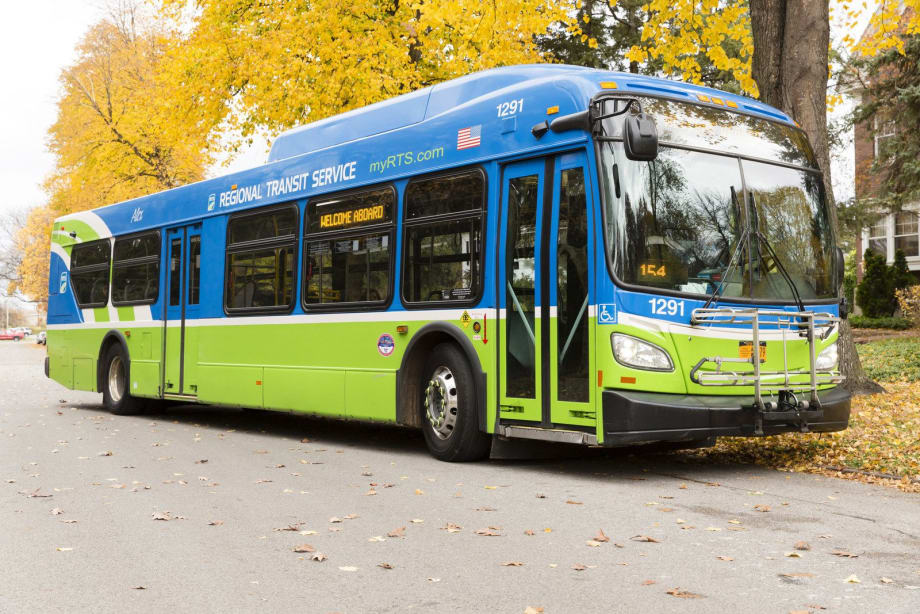
Rochester, N.Y.’s Regional Transit Service will upgrade its fleet’s onboard hardware and software with technology from Conduent Transportation. Photo: Conduent Transportation
Rochester, N.Y.’s Regional Transit Service will upgrade its fleet’s onboard hardware and software with technology from Conduent Transportation. Photo: Conduent Transportation
In an ongoing effort to make public transportation more efficient and attractive to riders, Regional Transit Service (RTS) in Rochester, N.Y. is upgrading its fleet's onboard hardware and software with technology from Conduent Transportation. The enhancements will include a new driver-assist system to help keep buses on schedule, ultimately providing better service to passengers.
Conduent Transportation installed the original computer-aided dispatch/automatic vehicle location (CAD/AVL) system in 2001. The system connects vehicles to back-office scheduling and dispatching software, allowing transit operations to run smoothly.
As the current system reached the end of its useful life, the company proposed an upgrade to the existing CAD/AVL system, including replacing aging hardware and updating software. Following a successful pilot, RTS and Conduent reached an agreement to proceed with the full fleet implementation, which will extend the system's lifespan and save RTS approximately $8.5 million.
The upgrade includes the Conduent Fleet Management System and Service, which consolidates and simplifies vehicle operations, allowing more integration, expandability and connectivity with communications on the bus and across the entire system.
The integrated onboard vehicle processor is a durable open platform designed for the public transit industry. It provides the computing power needed to receive various data streams on vehicle performance and deliver them to a dashboard monitored in real-time by dispatchers, drivers, mechanics and supervisors.
For example, RTS supervisors will have immediate access to data for buses on the road. This way, if there is an incident with a bus, like an accident or breakdown, supervisors can respond quicker, helping ensure overall on-time performance.
"Upgrading RTS' transportation system will also give customers more options when planning routes via a highly accurate GPS system they can access through the RTS "Where's My Bus?" app and website," said Don Hubicki, GM, Conduent, Transportation. "By knowing in advance about roadway restrictions or delays, riders can make instant travel decisions to ensure they get where they need to be on time."
A total of 214 buses will be upgraded with these and other new features throughout spring and summer 2018. Other key system upgrades include:
Conduent's enhanced vehicle inspection tool, which allows RTS operators to easily and efficiently record bus inspection results at the start and end of their shifts to enhance safety and optimize maintenance activities.
Improved mapping features to give dispatchers greater visibility and control of operations.
Enhanced detour management features, enabling RTS to quickly and efficiently notify drivers and passengers of route changes.
More Management

Bringing Austin’s First Light Rail System to Life
Austin Transit Partnership CEO Greg Canally discusses the city's nearly 10-mile light rail project, its collaborative approach to project delivery, the importance of community engagement, and the milestones ahead as construction approaches in 2027.
Read More →
ETA CEO John Maglio on Transit Technology, Innovation, and Building Agency Trust
ETA founder and CEO John Maglio explores the evolution of transit technology, the importance of reliable systems, and how stronger partnerships can help agencies improve operations and the passenger experience.
Read More →
Metra Draft Plan Outlines Costs, Service Improvements for Regional Rail
The Systemwide Network Plan identifies infrastructure needs and potential investments to expand all-day, bidirectional rail service across the Chicago region.
Read More →
New Orleans RTA Names Augustine III as New CEO
In this edition, we also spotlight recent personnel moves at HDR, PATH, STV, and more, highlighting the people taking on new roles across the transportation industry.
Read More →
How Transit Agencies Are Using Free Rides to Improve Voting Access
Transit agencies are using fare-free service, trip-planning tools, and targeted rides to improve voting access. See what other agencies can learn from these efforts.
Read More →
Caltrain’s Electrification Drives a New Era of Ridership Growth
The railroad’s shift to electric service has brought more frequent trains, stronger customer satisfaction, and increased ridership, earning it APTA’s Outstanding Public Transportation System award.
Read More →
Chicago, Charlotte Transit Agencies Expand Rider Support Programs
CTA launched crisis intervention teams as CATS prepares to deploy fare ambassadors, expanding customer assistance and security efforts across both systems.
Read More →
New York MTA Launches Historic $1.9B Signal, Track Modernization Project
Funded in part by congestion pricing revenue, the project will replace nearly century-old signals along the A and C lines in Brooklyn and Queens.
Read More →
Brian Dickson on Building Stronger, More Resilient Transportation Organizations
Bus Business Consultants Founder Brian Dickson discusses the leadership principles, operational discipline, and strategic planning that separate transportation companies positioned for long-term success from those stuck in survival mode.
Read More →
LA Metro Breaks Ground on Vermont BRT Project
The 12.4-mile corridor is projected to serve 66,200 daily riders, reduce travel times by up to 24%, and create the nation's busiest bus rapid transit corridor.
Read More →