



United Safety CEO Discusses COVID-19, Manufacturing PPE Gear
President/CEO Joseph Mirabile talks about the decision to begin manufacturing the critically needed gear and how the community was coming together pack and distribute it to frontline workers.
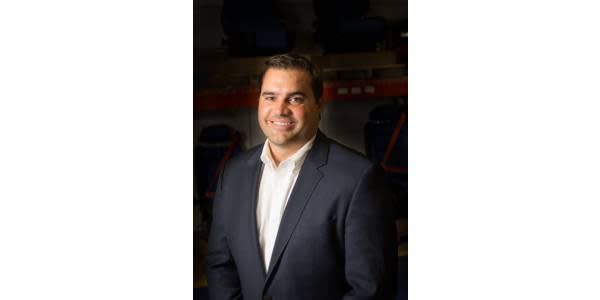
Joseph Mirabile, President/CEO
United Safety,
formerly USSC Group
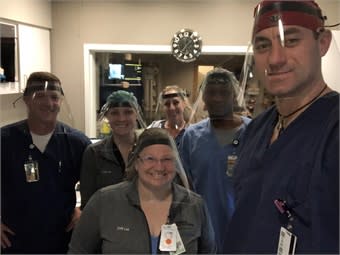
In response to COVID-19, United Safety has steadily increased production of PPE and delivering it to those on the frontline that desperately need it.
United Safety
Based in Exton, Pa., United Safety, formerly USSC Group, provides seating products for commercial buses, railcars, motorcoaches, locomotives, fire trucks, ambulances, and military vehicles. In response to the critically low supply of face masks and other personal protective equipment (PPE) during the COVID-19 pandemic, the company took it upon themselves to begin manufacturing the gear and distributing it to those in need.
METRO’s Managing Editor spoke to United Safety President/CEO Joseph Mirabile about how COVID-19 was impacting his company, the decision to begin manufacturing the critically needed gear, and how the community was coming together to help pack and distribute masks and other protective equipment to those people who are on the frontlines during the pandemic.
How has the COVID-19 pandemic impacted United Safety?
The company really responded well to this crisis. We have an incredibly mission-driven team that is focused on serving our clients who range from public transportation to first responders to fire truck and EMT to our military members. From the beginning of the pandemic here in Pennsylvania, we’ve been qualified as an essential business, a life-sustaining business, and we are also on the Homeland Security list of critical infrastructure businesses. We take these designations extraordinarily seriously as a major part of our mission is to allow those different members of the government to be able to do their jobs safely and continue to support the country during this time.
As far as the workforce goes, is the majority working from home?
Everybody who can work from home is working from home effectively, which is something that we haven’t had to do at this type of scale before. We always have had a very flexible work from home policy when needed, but in this case, we’re having all workforce that can work from home, work remotely. And then obviously, we manufacture things and manufacturing is unable to be done from home. Our team has really responded dramatically, to continue to come to work every day to fulfill the mission of getting products to our customers. We’ve put in place several initiatives on hand sanitizing, we have multiple new policies in place to follow all CDC recommendations with social distancing, and we’ve done several things to continue to protect our employees and allow them to be safe while they’re supporting our customers.
Did United Safety already have a policy in place that enabled the company to work from home on a larger scale?
We were able to prepare by seeing what was going on with some of our overseas customers. We were also able to do a couple of dry runs before best practices mandated that our people had to work from home, which gave us a chance to test all our systems and technology beforehand. Through doing those dry runs of work from home days, we were able to point out some areas of the system where we had to create a more robust structure for them to be effective. And, we were able to do that prior to needing to have everybody in the office work from home.
United Safety is now producing mask and other PPE as well. Can you discuss how that came about?
Sure. We have a tremendous engineering team here, and our team, in general, is always focused on how we can save and impact lives in the different markets we serve. We were able to prototype, quite rapidly, a facial mask because we got word from many family members of people who work in the area as doctors, nurses, frontline health care workers, and EMTs that they did not have access to the PPE gear they needed. After hearing that, we looked at ways we could help, and were quickly able to ramp up one of our assembly lines to begin making face shields that are being widely utilized by the frontline. We were able to put together the prototype, repurpose some of our machinery, and repurpose some of our production lines and personnel here. People volunteered their spare time, and we were able to put together many shields and get them out to the people who needed them most. We’re looking to ramp up to about 5,000 shields a day to start, with about a week lead-time. In two weeks we plan to do 10,000 a day. We are also working on N95 alternatives. The team has really been able to respond dramatically to fill this critical shortage.
I’ve seen that some companies are using three-dimensional printers, is that how the masks are being produced?
Yes, we are also using 3-D printing, as well as Gerber cutters, freeform foam, and plastic adhesives. We’re doing several different models of the shield to get out as many as we possibly can.
And the materials…did United Safety have everything you needed on hand, or are you also working with other suppliers?
It is a combination of both. Our sourcing team really stepped up and was able to get us additional materials that we don’t usually use, and then we were able to use certain materials that we use for our products, such as cloth and foam, which are being repurposed to make the shields. We’re also looking at repurposing additional capacity into making gowns and additional PPE gear that we hear there’s also a shortage of.
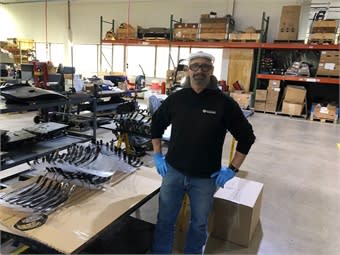
As of press time, United Safety was ramping up production of the facial masks, as well as other PPE gear that is needed by frontline workers.
United Safety
How are you getting the PPE gear you’re manufacturing to the people who are most in need of it?
We’re being contacted by people who need masks and other equipment every day, and we’re donating that gear to them as quickly as we can possibly get it out. We also have other people who have been graciously putting in donations for people who need them, and then we have larger agencies and hospitals that need them who are contacting us and procuring the gear directly from us. So, it’s been a combination of all the above, and we’re providing this equipment at our cost and not for profit.
How is United Safety coming onto people’s radar, is it through existing relationships you have, or are you working with city officials to distribute the gear?
It’s been mostly through word of mouth, LinkedIn, and social media where a couple of our posts kind of went viral. Quite honestly, we’ve been getting contacted by people far and wide who have this severe shortage or have family or loved ones that need this equipment immediately.
How important is it to give back to the community at a time like this?
Our organization has always felt strongly about giving back to the community in as many ways as we possibly can. In this case, we’re uniquely positioned to be able to provide life-saving protection equipment to people that we all are looking at as our heroes right now, and that is something our people here are taking very seriously. And, we’re going to continue to do the best we can to be able to provide more equipment to the frontline medical workers who are taking care of our friends, family, and other people directly impacted by this crisis.
And how has United Safety’s employees responded to these efforts?
The team is stepping up and doing this largely in their spare time, bringing in resources, as well as other members of the community who do not work for the company but have volunteered to assemble or help any other way they can. There are a lot of ways to help during this crisis besides just through financial donations and it’s been an incredible thing to see the community response here. I think it’s something that both defines our country and our company to see people coming together to help when and how they can.
To find out more about United Safety's program, or to donate, click here.
More Security and Safety

Transit Agencies Highlight Safety Gains at National Summit
Leaders from 15 major transit systems shared crime-reduction results and safety initiatives while discussing the role of continued federal support.
Read More →
DART Launches Major Security, Fare Enforcement Initiative
The 90-day demonstration will deploy coordinated security teams at five light rail stations while testing controlled access and gathering data to guide future investments.
Read More →
RTD Launches NextRide App to Consolidate Trip Planning, Fares, Security Reporting
The app expands on RTD’s existing NextRide web application and allows customers to view real-time vehicle locations and service alerts, purchase and store digital fares, and access customer support.
Read More →

TAPTCO Updates OSHA Compliance Training for Transit Maintenance Operations
The revamped program addresses 26 OSHA standards for maintenance facilities, with TAPTCO pointing to training, documentation, and everyday shop hazards as continuing challenges for transit operations.
Read More →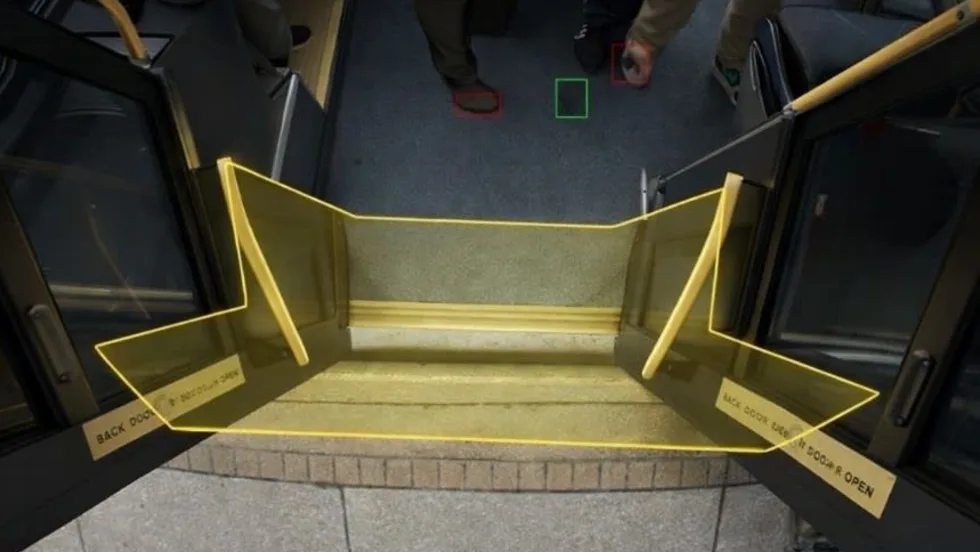
How VaporVision Adds Value to Transit Door Systems
Wabtec engineers explain how the system improves doorway detection, strengthens diagnostics and gives transit agencies and OEMs greater operating flexibility.
Read More →
FRA Announces $5.3B in Rail Investments, Including $2B for Amtrak
Funding will support grade-crossing improvements, infrastructure upgrades, and new Amtrak equipment in 23 states.
Read More →
Chicago, Maryland Expand Non-Law-Enforcement Safety, Rider Support
The CTA and MTA are launching new programs aimed at de-escalation, crisis response, rider assistance, and greater transparency.
Read More →
LA Metro, City of West Hollywood, and Partners Advance Smarter Bus Lane Enforcement
The award-winning partnership combines AI-powered detection with human oversight to improve bus reliability, accessibility, and enforcement efficiency.
Read More →
LA Metro Reports 57% Decline in Homelessness on Transit System Since 2024
The agency's latest homelessness count offers new data on how care-based services and cross-sector partnerships can complement traditional transit security strategies.
Read More →
FTA Launches 'Transit Moves America' Dashboard to Highlight Agency Safety and Performance
The online dashboard transforms National Transit Database information into a public-facing resource that allows users to compare transit agencies on key operational and safety metrics.
Read More →