



MTA, teams with urgent care network to test employees for COVID-19
The new partnership with the state’s largest healthcare provider marks the latest in a series of aggressive health and safety measures taken by the MTA to protect its vital frontline workforce.

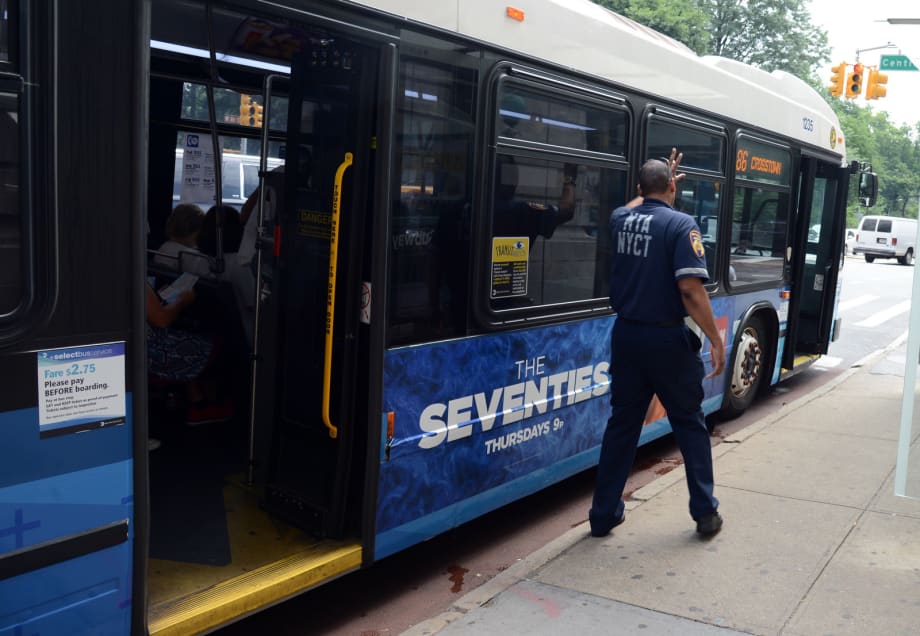
The agreement expands the range of options available to MTA employees, who are still able to go to their primary care physician or other medical provider at no cost to the employee.
Marc A. Hermann
The agreement expands the range of options available to MTA employees, who are still able to go to their primary care physician or other medical provider at no cost to the employee. Marc A.Hermann
New York’s Metropolitan Transportation Authority (MTA) joined forces with Northwell Health-GoHealth Urgent Care to provide prioritized COVID-19 testing to symptomatic frontline MTA workers at its urgent care facilities throughout the New York metropolitan region. The new partnership with the state’s largest healthcare provider marks the latest in a series of aggressive health and safety measures taken by the MTA to protect its vital frontline workforce and limit the spread of the COVID-19 at no cost to MTA employees.
Under the new partnership, Northwell Health-GoHealth Urgent Care will provide priority testing to symptomatic transportation workers a rate of up to 50 tests per day or 350 per week. The partnership between the MTA and Northwell Health-GoHealth Urgent Care is like the partnership the organization has with the NYPD and FDNY. The agreement expands the range of options available to MTA employees, who are still able to go to their primary care physician or other medical provider at no cost to the employee.
Northwell Health-GoHealth Urgent Care centers throughout the city, Long Island, and Westchester County began testing vital first responders from city agencies last week. Northwell Health-GoHealth will be reaching out to MTA workers who have identified themselves as symptomatic to the MTA COVID-19 hotline and arranging appointments for a range of comprehensive medical exams and diagnostic tests, including testing for COVID-19.
The MTA has taken aggressive action to battle the COVID-19 pandemic since the early days of its arrival in New York. The organization has distributed millions of pieces of personal protective equipment, including 2.7 million pairs of gloves and nearly 750,000 masks, since March 1. To protect employees, the MTA also disregarded federal guidance and began handing out masks to all employees before the Centers for Disease Control and Prevention later issued new guidance recommending all Americans wear masks. The MTA continues its comprehensive disinfecting efforts systemwide with trains and buses being disinfected nightly, with the entire fleets for all agencies — more than 8,000 train cars and 5,000 buses – completed every 72 hours or less, since March 2.
The MTA has also implemented rear-door boarding and eliminated cash transactions to prevent person-to-person contact to ensure the safety of operating employees. The MTA launched the nation-leading “Temperature Brigade” on March 24 and later expanded the force to 22 locations testing tens of thousands of employees across New York City Transit, Metro-North, and Long Island Rail Road. The agency is also working to install plexiglass barriers at work locations across all 28 bus depots to further protect employees.
More Management

METRO Opens Submissions for 2026 Motorcoach Awards
Nominations are now being accepted for METRO Magazine’s Operator of the Year and Innovative Operator of the Year awards.
Read More →
New York MTA Advances Final Contract for Second Avenue Subway Expansion
Contract Four is the largest in the Second Avenue Subway Phase 2 project and includes construction of station infrastructure, tracks, and signals for the subway expansion, MTA officials said. Work on Contract Four will begin in 2027.
Read More →
Transit Agencies Highlight Safety Gains at National Summit
Leaders from 15 major transit systems shared crime-reduction results and safety initiatives while discussing the role of continued federal support.
Read More →

NITA Names New Leadership, Expands Reduced-Fare Program at First Board Meeting
The new regional transit authority appointed its first board chair and interim executive director while extending reduced fares across CTA, Metra, and Pace for eligible riders.
Read More →
Beyond the Checklist: A Structured Approach to Transit Maintenance
Reliability-Centered Maintenance helps transit agencies move beyond routine checklists to focus limited resources on the assets and failures that have the greatest impact on safety, reliability, and service.
Read More →
APTA 2026 Nominating Committee Selects Leadership Slate, Names Chair and Vice Chair Nominees
Leadership changes will help shape the association’s priorities and its representation of the transportation industry during the 2026–2027 term.
Read More →
DART Launches Major Security, Fare Enforcement Initiative
The 90-day demonstration will deploy coordinated security teams at five light rail stations while testing controlled access and gathering data to guide future investments.
Read More →
Advancing Fare Collection Through Technology and Innovation
Learn about delivering 1300 gates at 91 stations while managing fare evasion. Explore the large scale deployment, solution customization and real-world results that affect the region. Prepare for deployment in your region now.
Read More →
Game Day in Motion: Moving Millions During the 2026 World Cup
Between packed transit stations and team motorcoaches, see how agencies and operators across North America tackled the transportation demands of the 2026 FIFA World Cup.
Read More →
Surface Transportation Extension Averts Shutdown, Leaves Transit Funding Gap
The stopgap keeps federal transportation programs moving, but missing advance funding could complicate the transit and rail projects agencies are planning next.
Read More →