



New Report Proposes Public, Private Investments for Infrastructure
The report, “Public Equity to Match Private Investment in Infrastructure,” explores the details of whether private-sector funding could bridge the financial gap to fund these projects.
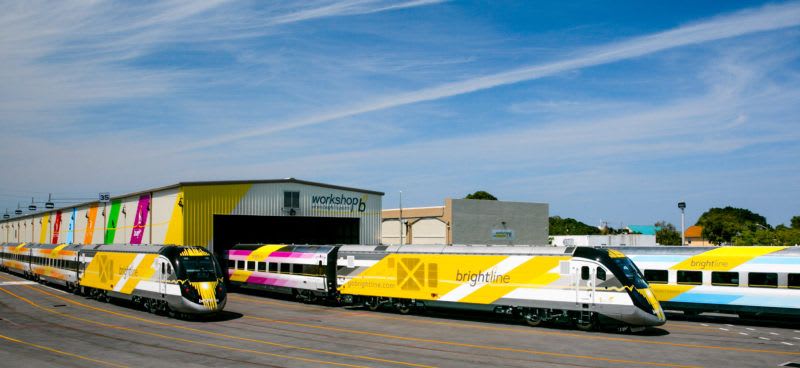
The report states that private sector advocates point to the vast economic resources available and to successful projects such as the Brightline high-speed rail in Florida.
Brightline
A new Mineta Transportation Institute (MTI) perspective proposes a federal grant program to match private infrastructure investment in major projects, including passenger rail, highways, bridges, and ports.
The report, “Public Equity to Match Private Investment in Infrastructure,” explores the details of whether private-sector funding could bridge the financial gap to these projects and how to potentially balance public-private partnerships.
The perspective states that the ongoing debate over American infrastructure frequently passes the responsibility between the public and private sectors. Private sector advocates point to the vast economic resources available and to successful projects such as the Brightline high-speed rail in Florida. Others, however, argue that private control of public infrastructure could lead to high user costs and possibly even poor construction for the sake of maximizing profits.
According to Karen Hedlund, the perspective’s author, a balance between public and private partners could be achieved with public sponsors setting minimum construction and operating standards and developers evaluating proposals based on costs from private investment. Hedlund believes this proposed method could enable the funding of critical projects such as:
The new Gateway rail tunnels under the Hudson River to replace the 100-year old North River Tunnels.
California High-Speed Rail Project from the Central Valley to Los Angeles and San Francisco.
High speed train from Seattle to Vancouver, British Columbia and Portland.
Extending XpressWest’s proposed line from Las Vegas to Los Angeles.
Advancing express rail connectors from city centers to international airports.
“Neither the public nor the private sector can do it alone,” Hedlund explains in the report. “Instead, together they can build new and modern infrastructure and revive America’s old highways, ports, rail, and transit to bring the nation’s transportation systems into the 21st century."
More Management

METRO Opens Submissions for 2026 Motorcoach Awards
Nominations are now being accepted for METRO Magazine’s Operator of the Year and Innovative Operator of the Year awards.
Read More →
New York MTA Advances Final Contract for Second Avenue Subway Expansion
Contract Four is the largest in the Second Avenue Subway Phase 2 project and includes construction of station infrastructure, tracks, and signals for the subway expansion, MTA officials said. Work on Contract Four will begin in 2027.
Read More →
Transit Agencies Highlight Safety Gains at National Summit
Leaders from 15 major transit systems shared crime-reduction results and safety initiatives while discussing the role of continued federal support.
Read More →

NITA Names New Leadership, Expands Reduced-Fare Program at First Board Meeting
The new regional transit authority appointed its first board chair and interim executive director while extending reduced fares across CTA, Metra, and Pace for eligible riders.
Read More →
Beyond the Checklist: A Structured Approach to Transit Maintenance
Reliability-Centered Maintenance helps transit agencies move beyond routine checklists to focus limited resources on the assets and failures that have the greatest impact on safety, reliability, and service.
Read More →
APTA 2026 Nominating Committee Selects Leadership Slate, Names Chair and Vice Chair Nominees
Leadership changes will help shape the association’s priorities and its representation of the transportation industry during the 2026–2027 term.
Read More →
DART Launches Major Security, Fare Enforcement Initiative
The 90-day demonstration will deploy coordinated security teams at five light rail stations while testing controlled access and gathering data to guide future investments.
Read More →
Advancing Fare Collection Through Technology and Innovation
Learn about delivering 1300 gates at 91 stations while managing fare evasion. Explore the large scale deployment, solution customization and real-world results that affect the region. Prepare for deployment in your region now.
Read More →
Game Day in Motion: Moving Millions During the 2026 World Cup
Between packed transit stations and team motorcoaches, see how agencies and operators across North America tackled the transportation demands of the 2026 FIFA World Cup.
Read More →
Surface Transportation Extension Averts Shutdown, Leaves Transit Funding Gap
The stopgap keeps federal transportation programs moving, but missing advance funding could complicate the transit and rail projects agencies are planning next.
Read More →