



Related: Long Beach Transit, Moovit Partner for Trip Planning App
Moovit, Lime Partner in Largest Micromobility Integration
Based on the number of cities, this partnership is the largest micromobility integration to date.
by Staff
July 28, 2021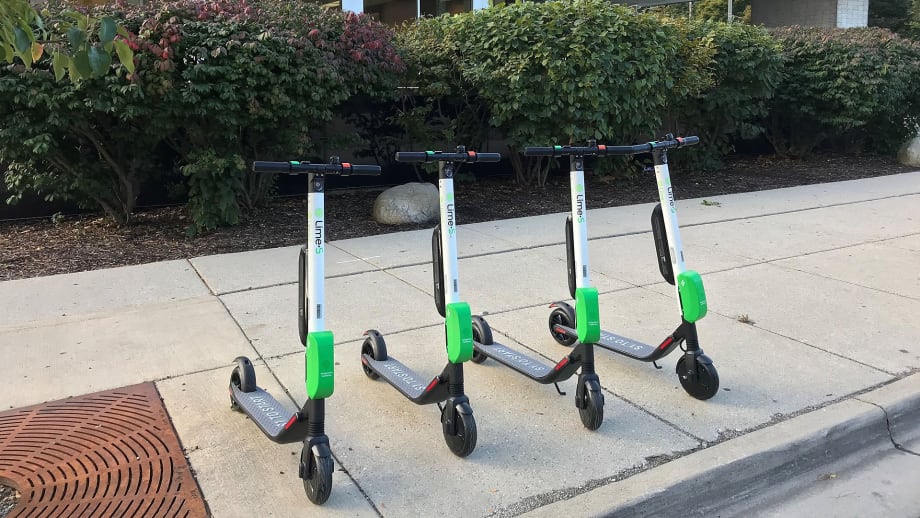
Lime vehicles will be added to the Moovit app in 117 cities across 20 countries starting next week.
Photo: Lime
3 min to read
Lime and Moovit announced a global partnership to integrate Lime electric scooters, bikes, and mopeds into the Moovit app.
Lime vehicles will be added to the Moovit app in 117 cities across 20 countries starting next week, with forty more to come in the following months.
Based on the number of cities, this partnership is the largest micromobility integration to date.
“This partnership signifies that mobility companies recognize the need to collaborate together to offer riders more convenient modes of public and shared transportation as they return,” said Nir Erez, Moovit co-founder and CEO. “Offering more alternative options that can easily get people to their destinations is a critical component of a MaaS platform, especially in some of the most congested cities in the world. From Buenos Aires to Berlin, we are excited to partner with Lime and offer riders more ways of getting around town that can easily combine with public transit.”
Moovit’s COVID-19 mobility report shows public transit ridership is returning in cities such as New York, London, and Paris. An average of 41% of Lime scooter rides were taken during peak commuting hours — between 7:00 a.m. and 10:00 a.m. or 4:00 p.m. and 7:00 p.m. — to get to and from work or school.
However, people are still driving private cars to connect to main transportation hubs for the first or last segment of their journey or for the entire trip.
The integration between Lime and Moovit will encourage riders to go car-free, take multi-modal trips by enabling Moovit users with Lime scooters, bikes or mopeds. Moovit will be able to show its users where a Lime vehicle is available nearby in real-time.
Users can plan a trip by typing in their destination on the “Directions” screen in the Moovit app. They can also use the “Stations” screen to view a map of where they currently are and locate nearby Lime vehicles.
Users will see Lime as a transportation option either for the entire trip or as part of a multimodal journey.
Once a user taps on the Lime icon, they will be directed to the Lime app which will show the specific vehicle the rider selected in Moovit, and they can then unlock the vehicle.
“In addition to being the largest micromobility integration to date, our partnership with Moovit is a major step towards our goal of expanding access to shared, affordable and carbon-free transportation to more users around the world.” said Wayne Ting, Lime CEO. “As cities begin to reopen and commuters head back to offices, we want to make it as easy as possible for riders to locate a Lime electric bike, scooter or moped, and with the Moovit app, they’ll be able to use them seamlessly in tandem with public transit.”
Here is a list of the countries Moovit users can experience the new Lime offering:
Austria
Australia
Belgium
Brazil
Canada
Denmark
Finland
France
Germany
Greece
Israel
Netherlands
New Zealand
Norway
Poland
Spain
Sweden
Switzerland
United Kingdom
United States
More Technology

From Hardware to Digital Partner: Luminator Charts Its Next Chapter
CEO Magnus Friberg discusses Luminator’s shift toward becoming a digital partner, the growing importance of software and interoperability, and how AI can help agencies improve operations and passenger experience.
Read More →
Beyond the Checklist: A Structured Approach to Transit Maintenance
Reliability-Centered Maintenance helps transit agencies move beyond routine checklists to focus limited resources on the assets and failures that have the greatest impact on safety, reliability, and service.
Read More →
NJ TRANSIT Advances Bus Technology Upgrades Across Statewide Fleet
More than 1,500 buses now feature upgraded technology designed to improve arrival predictions and provide free Wi-Fi, with deployment expected to reach nearly 2,000 buses by the end of 2026.
Read More →

Building a Flexible Path to Transit Electrification
John Hroncich discusses BAE Systems’ modular and scalable approach, lessons learned from decades of real-world operations, and how agencies can identify electrification strategies that fit their fleets.
Read More →
Biz Briefs: Alstom Lands Canadian Contract, LYT to Supply California TSP, and More
In METRO's latest installment, we take a look at recent news from Complete Coach Works, Beep, FlixBus, and more partnerships making headlines across the transportation sector.
Read More →
Sponsored•September 8, 2026
From Legacy Silos to Conversational Intelligence
What if transit leaders could ask any operational question and get a trusted answer in seconds? Conversational AI is transforming how agencies use their data.
Read More →
USDOT Announces Rail Vehicle Replacement Grants, Chattanooga AV Shuttle Funding
More than $191 million in federal funding will help three transit agencies replace aging rail vehicles and support a new autonomous shuttle service in Chattanooga.
Read More →
Bus Tech Talk: Keeping Transit Technicians Ahead of the Technology Curve
LA Metro’s Obed Mejia discusses technician training, evolving maintenance technology, fleet replacement, and strategies for getting the most out of today’s transit fleets.
Read More →
Biz Briefs: RIPTA Unveils New Frontrunners, Clevland RTA Adds New Siemens, and More
In METRO's latest installment, we take a look at recent news from Siemens, Prevost, Dodge, and more partnerships making headlines across the transportation sector.
Read More →
Why Simulating Pedestrian Movement Has Become Essential for Modern Rail Stations
Pedestrian microsimulation is helping rail planners identify bottlenecks, test station designs, and prepare complex transit hubs for growing passenger volumes.
Read More →