



WMATA Begins Repressing Wheels on 7000-Series Railcars to Improved Standard
Under the new process, with concurrence from the Washington Metrorail Safety Commission, WMATA will increase the fit and press tonnage used to mount the wheels to the axles on the railcar.

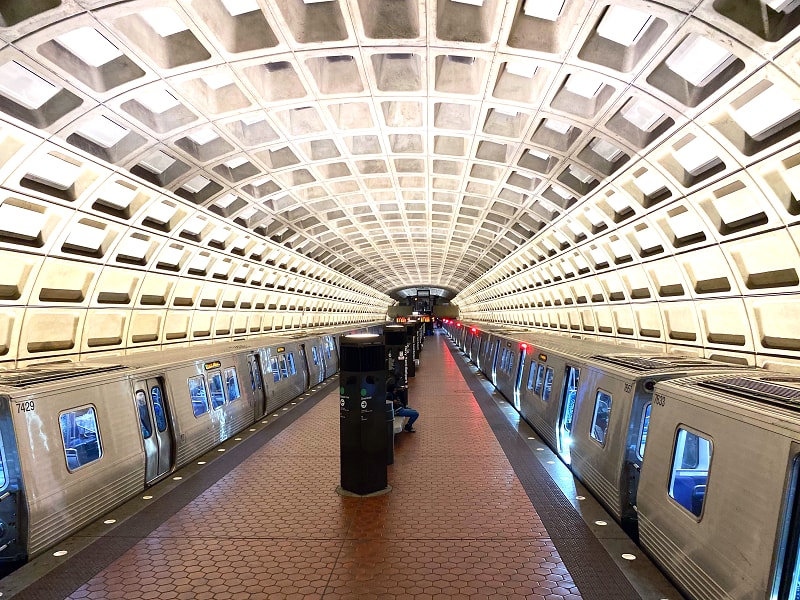
Under the current return to service plan, WMATA continues to inspect 7000-series railcars at 30-day intervals, limiting the number of 7K’s that can operate due to the frequency of inspections.
Photo: WMATA/Larry Levine
The Washington Metropolitan Area Transit Authority (WMATA) began replacing the wheels on all 7000-series railcars under new, higher standards that will allow the agency to resume regular maintenance intervals and gradually add more 7K railcars to service, with the first railcars going into passenger service this week.
Under the new process, with concurrence from the Washington Metrorail Safety Commission (WMSC), WMATA will increase the fit and press tonnage used to mount the wheels to the axles on the railcar.
After 20, 000 miles in passenger service, the agency will perform additional inspections, wheel measurements, and engineering analysis on the railcars before the 7K’s return to the standard periodic inspection intervals.
“We appreciate the tireless efforts of our safety and maintenance teams to develop this process to ensure we can safely return more 7000-series railcars to service, which are the newest and most reliable in our railcar fleet,” said WMATA GM/CEO Randy Clarke. “It will take an extensive amount of work over the next few years, but as we begin to have more 7K’s available, customers will begin to see even more improvements in reliability and service.”
Addressing The 7K Railcar Issue
Due to the 7K shortage, WMATA continues to utilize its oldest, least reliable railcars in the legacy fleet. As more 7000-series railcars are completed, tested, and able to run longer between inspection intervals, the agency will gradually be able to increase the number of 7Ks in service providing customers with more reliability and comfort.
The move will enable WMATA eventually remove the older, legacy railcar fleet placed into service.
Pressing the wheels is an exhaustive process that requires 72 hours of work for each pair of railcars. Unlike changing the tires on a car, the entire wheel assembly or truck, including the axle, frame, and two wheels must be removed from the railcar, similar to removing the entire front end of a vehicle. The wheels must be disassembled from the truck and new wheels with a tighter fit installed at an increased force onto the axle before being reassembled onto the railcar.
The work requires specialized equipment, customized and calibrated to WMATA-specific production requirements and involves significant training to perform. After the wheels are pressed, the railcars undergo up to 30 hours of detailed inspections before going into passenger service. During the follow-up engineering analysis, the wheelsets must be removed from the railcars and taken apart for additional inspection and testing.
Returning 7Ks Back into Service
Under the current return to service plan, the agency continues to inspect 7000-series railcars at 30-day intervals, limiting the number of 7K’s that can operate due to the frequency of inspections.
Once the wheel pressing process and training ramps up, WMATA expects to complete approximately 20 cars a month. With 748 railcars, including 5,984 wheels on 2,992 axles, it is expected to take several years to return the entire fleet to normal service at an estimated cost of $55 million.
The agency developed the plan to press wheels on the 7000-series fleet at a higher standard following extensive engineering and data analysis and based on a technical report issued by the National Transportation Safety Board citing engineering experts who identified a technical issue — microslip due to reduction in contact pressure — as a factor in the 7K wheel migration issue.
More Rail

New York MTA Advances Final Contract for Second Avenue Subway Expansion
Contract Four is the largest in the Second Avenue Subway Phase 2 project and includes construction of station infrastructure, tracks, and signals for the subway expansion, MTA officials said. Work on Contract Four will begin in 2027.
Read More →
San Diego MTS Breaks Monthly Trolley Ridership Record
Agency officials said July’s ridership indicates MTS’s continued recovery from the pandemic.
Read More →
Report Examines NJ TRANSIT Reliability, Funding Challenges
The Garden State Initiative analysis examines the roles of Amtrak infrastructure, fleet management, and agency operations while recommending a more performance-based approach to improving reliability.
Read More →
Stadler, CapMetro Sign Long-Term Rail Fleet Support Agreement
Beginning in 2027, Stadler will provide on-site technical expertise, spare parts support, training, and obsolescence management to help extend the reliability and longevity of CapMetro’s GTW fleet.
Read More →
Biz Briefs: Alstom Lands Canadian Contract, LYT to Supply California TSP, and More
In METRO's latest installment, we take a look at recent news from Complete Coach Works, Beep, FlixBus, and more partnerships making headlines across the transportation sector.
Read More →
CATS Gold Line Marks 5 Years of Service, 2.8M Passenger Trips
With a six-mile expansion planned, the Charlotte streetcar is positioned to connect more neighborhoods and major transit hubs across the region.
Read More →
Why Simulating Pedestrian Movement Has Become Essential for Modern Rail Stations
Pedestrian microsimulation is helping rail planners identify bottlenecks, test station designs, and prepare complex transit hubs for growing passenger volumes.
Read More →
Amtrak Begins Major Construction at New York’s Sunnyside Yard
The new maintenance facility will support Amtrak’s Airo trainsets while improving maintenance efficiency and turnaround times in New York.
Read More →
Chicago Leaders Unveil Plans for O’Hare Airport Express Train
The privately developed project would offer a 15-minute trip between downtown and O’Hare’s Terminal 2, with trains operating every 15 minutes on a dedicated track. The service would use battery-electric trains and three existing freight rail rights-of-way.
Read More →
OCTA Maps Out 30-Year Strategy to Protect Coastal Rail Corridor
The draft feasibility report identifies strategies to protect the coastal rail line for decades as the agency continues near-term stabilization and sand placement efforts.
Read More →