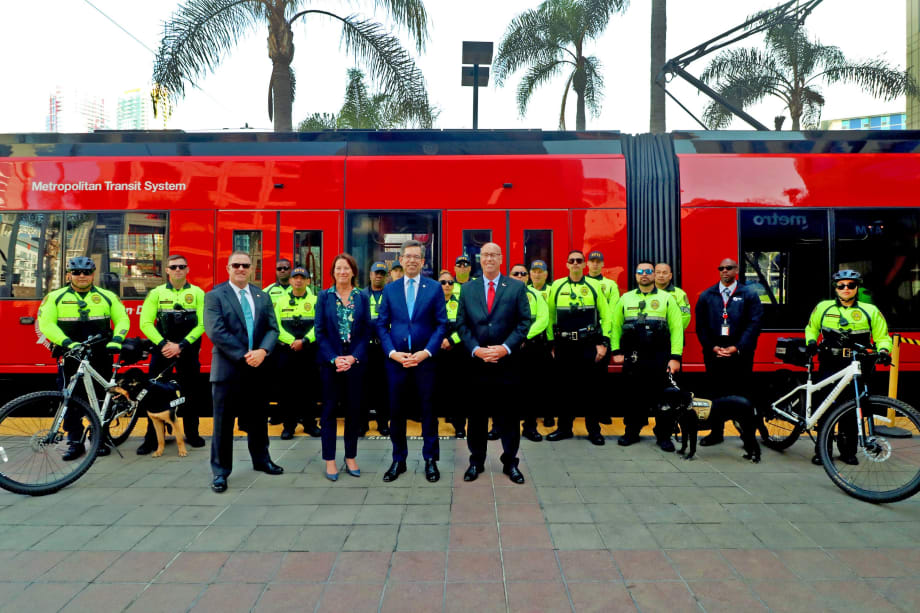
Based on the survey’s findings, last year the MTS board approved a $4.2 million increase to the security budget to add more Code Compliance Inspectors. This will result in a 60% increase in the number of security officers in the MTS system.
Photo: San Diego MTS
2 min to read
A recent passenger satisfaction survey San Diego’s Metropolitan Transit System (MTS) carried out uncovered that riders want to see a larger security presence on the transit system. In response, MTS unveiled plans to improve security on its Trolley light rail and bus systems.
Security initiatives the agency is taking include increasing the number of officers, as well as improving visibility and response times.
Ad Loading...
“We want to show MTS riders our appreciation by letting them know we are listening to their recommendations to improve their riding experience on our system,” said Stephen Whitburn, MTS board chair. “Riders want to feel safe and seeing an increased security presence during their trip does just that.”
Responding to Customer Feedback
Based on the survey’s findings, last year the MTS board approved a $4.2 million increase to the security budget to add more Code Compliance Inspectors. This will result in a 60% increase in the number of security officers in the MTS system.
Additionally, MTS will increase security officer teams and riders can expect to see officers more frequently during their trip, improving response time.
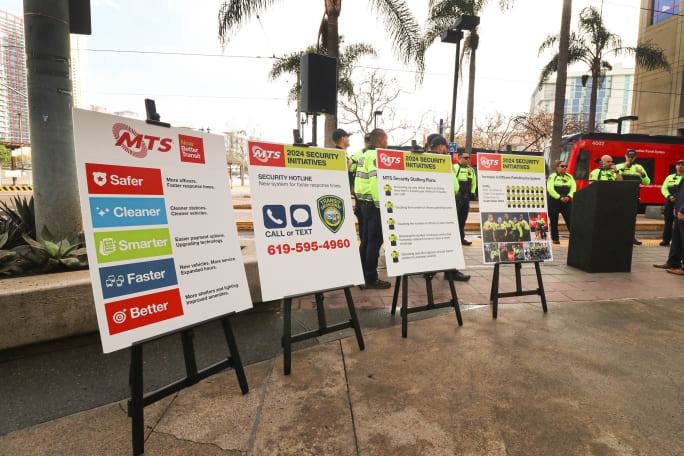
In addition to staffing plans, MTS consolidated its 24/7 security hotline to one number, which aims to improve response times. Riders will now be able to call or text one number to report incidents on the system.
Photo: San Diego MTS
Increased MTS Security Measures
To increase security officers’ visible presence on both the Trolley lines and buses, MTS will:
Increase security officer “train” teams on Trolley lines from five to six teams per shift to eight to 10 teams per shift.
Double the number of officers patrolling buses.
Double the number of officers in plain-clothes.
Boost the number of officers conducting homeless outreach to seven-days-a-week coverage.
Operate security outposts at busy transit centers to increase visibility.
Ad Loading...
Additional Measures Coming Soon
In addition to staffing plans, MTS consolidated its 24/7 security hotline to one number, which aims to improve response times. Riders will now be able to call or text one number to report incidents on the system.
MTS officials also announced more initiatives coming up this year to make the system better. The service improvements include:
24-hour bus service between the border at downtown.
All-day, every day 15-minute service on all three Trolley lines.
Increasing the span of service on many popular routes.
MTS riders can also expect the launch of a new payment technology in April, allowing them to just tap a credit or debit card on a validator to pay a fare, bypassing the ticket machine altogether.
Lastly, MTS announced improvements to its stops and stations to keep them safer and cleaner. This includes improved shade and lighting and modernizing the trash collection process.
The 90-day demonstration will deploy coordinated security teams at five light rail stations while testing controlled access and gathering data to guide future investments.
The app expands on RTD’s existing NextRide web application and allows customers to view real-time vehicle locations and service alerts, purchase and store digital fares, and access customer support.
The revamped program addresses 26 OSHA standards for maintenance facilities, with TAPTCO pointing to training, documentation, and everyday shop hazards as continuing challenges for transit operations.
Wabtec engineers explain how the system improves doorway detection, strengthens diagnostics and gives transit agencies and OEMs greater operating flexibility.
The award-winning partnership combines AI-powered detection with human oversight to improve bus reliability, accessibility, and enforcement efficiency.
The agency's latest homelessness count offers new data on how care-based services and cross-sector partnerships can complement traditional transit security strategies.
The online dashboard transforms National Transit Database information into a public-facing resource that allows users to compare transit agencies on key operational and safety metrics.