



Latinos In Transit Names 2024 Academy Participants
This year, LITLA's group is divided into four different development tracks: Making of An Executive, Leading in Middle Management, Transit Board Leadership, and New Careers in Transit.


The 35 participants for LIT's Leadership Academy selected represent the public and private sector from across the country.
Photo: LIT
Latinos In Transit (LIT) selected the participants for its 2024 Leadership Academy — a program that allows transit professionals to learn about management practices, finance, procurement, labor relations, and regulatory compliance.
This year, LIT’s Leadership Academy (LITLA) is divided into four different development tracks: Making of An Executive, Leading in Middle Management, Transit Board Leadership, and New Careers in Transit.
The 35 participants selected represent the public and private sector from across the country.
"We eagerly extend our warmest welcome to the 35 LITLA participants embarking on their journey through the 2024 academy,” said Christina Villarreal, executive director, LIT and LITLA program coordinator. “Embracing diversity in transportation, we anticipate their transformative growth during this immersive experience. With great anticipation, we await the unveiling of their impactful capstone projects at the 2024 Leadership Summit in Portland, Oregon.”
Selections for Each Track
The 2024 LITLA Class participants for each track are:
New Careers in Transit track participants include Karla Martinez Gallardo, TriMet; Madeline Saldana, Lane Transit District; Meliton Chaidez, DILAX Systems US; and Melissa Martinez, Washington Metropolitan Area Transit Authority.
Leading in Middle Management participants for 2024 include Francis Rodriguez, Houston-Galveston Area Council; Marcela Moreno, Massachusetts Bay Transportation Authority; Brian Ramirez, WeDriveU; Lourdes Melissa Gomez, Sound Transit; Dioselyn Ayala-Moreno, SunLine Transit Agency; Cristobal Villegas, Jr., Utah Transit Authority; Nelson Valle, Transdev; Gaston Eugenio Kelly, Uber Technologies; Yanior Concepcion, Transdev; Matthew Nakano, Foothill Transit;
Elizabeth Zambrano, Access Services; Maria Cristina Hallner, National Express Transit Corp.; Rick Ramirez Diaz, Keolis; Ruben Ledesma, WeDriveU; Sanskrit Singh, WSP; Jocelin Padilla, Long Beach Transit; Edith Hernandez, SunLine Transit Agency; Eva Esquivel, HNTB Corp.; Lourdes L. Alvarez, Foothill Transit; Arantxa Contreras, Keolis; and Jessica Leon, SunLine Transit Agency.
Participants in the Making of an Executive group include Juan R. Guillermo, MeVa Transit; Jonathan Javier, Keolis; Daniela Waltersdorfer, HNTB; Hector Vargas, MV Transportation; Jesse Soto, Santa Clara Valley Transportation Authority; Juan A Lopez, MV Transportation; Ruben E Mendoza, MV Transportation; and Luefras Robinson, WSP.
Finally, Transit Board Leadership participants include Ramiro Navarro, Salem Area Mass Transit District d/ba Cherriots, and Michael Guzman, Denver Regional Transit District.
Leadership Academy Curriculum
Each track consists of five modules, with each module occurring once a month for five months starting in April 2024. Modules will be taught virtually by industry leaders.
Participants must complete a team project and presentation to graduate from the academy. Presentations will be made at the 2024 Leadership Summit in Portland, Ore., on Friday, Sept. 13.
LIT encourages anyone who is interested to attend the ceremony. Registration opens Monday, February 26.
Now in its third year, the LITLA Committee plans to implement new strategies to catapult the success of the program to expand its opportunities for Latinos and other minorities in the transit sector.
More Management

Bringing Austin’s First Light Rail System to Life
Austin Transit Partnership CEO Greg Canally discusses the city's nearly 10-mile light rail project, its collaborative approach to project delivery, the importance of community engagement, and the milestones ahead as construction approaches in 2027.
Read More →
ETA CEO John Maglio on Transit Technology, Innovation, and Building Agency Trust
ETA founder and CEO John Maglio explores the evolution of transit technology, the importance of reliable systems, and how stronger partnerships can help agencies improve operations and the passenger experience.
Read More →
Metra Draft Plan Outlines Costs, Service Improvements for Regional Rail
The Systemwide Network Plan identifies infrastructure needs and potential investments to expand all-day, bidirectional rail service across the Chicago region.
Read More →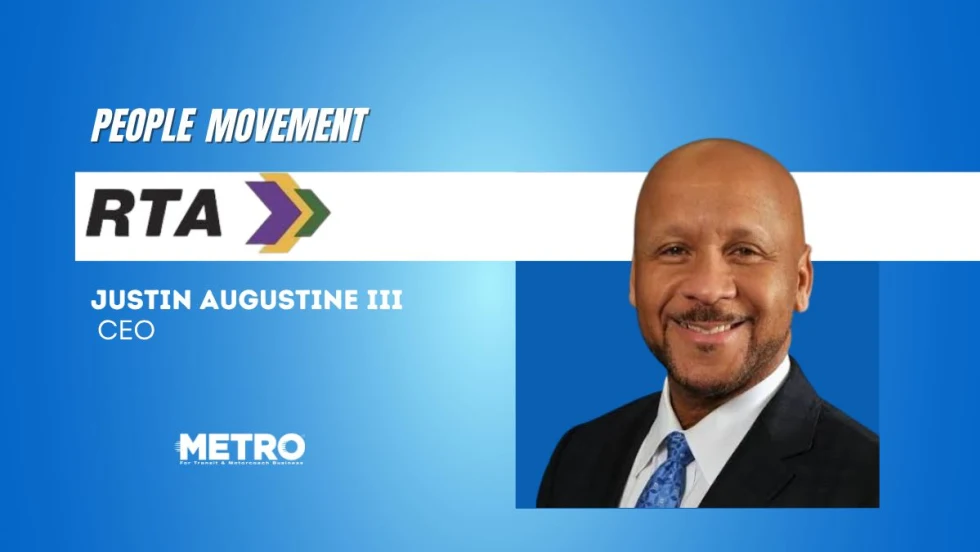
New Orleans RTA Names Augustine III as New CEO
In this edition, we also spotlight recent personnel moves at HDR, PATH, STV, and more, highlighting the people taking on new roles across the transportation industry.
Read More →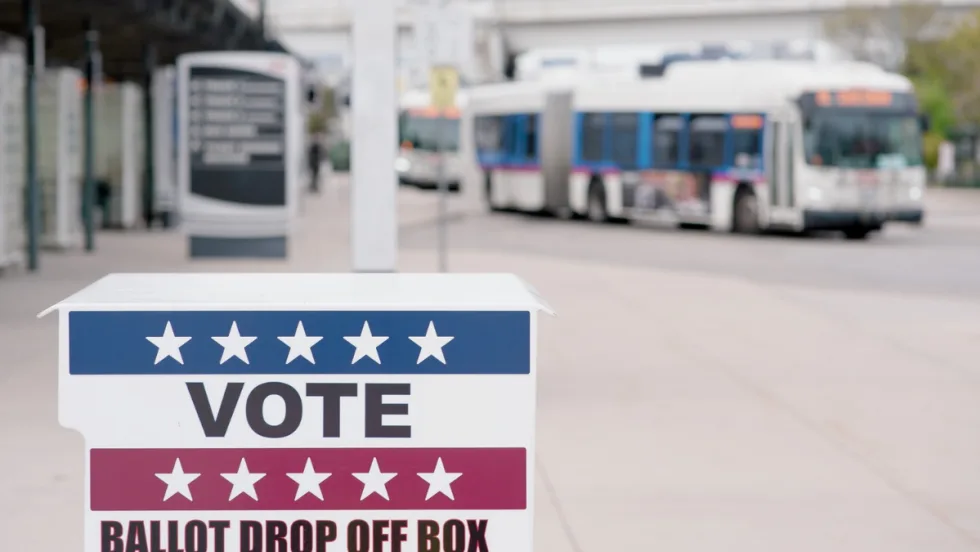
How Transit Agencies Are Using Free Rides to Improve Voting Access
Transit agencies are using fare-free service, trip-planning tools, and targeted rides to improve voting access. See what other agencies can learn from these efforts.
Read More →
Caltrain’s Electrification Drives a New Era of Ridership Growth
The railroad’s shift to electric service has brought more frequent trains, stronger customer satisfaction, and increased ridership, earning it APTA’s Outstanding Public Transportation System award.
Read More →
Chicago, Charlotte Transit Agencies Expand Rider Support Programs
CTA launched crisis intervention teams as CATS prepares to deploy fare ambassadors, expanding customer assistance and security efforts across both systems.
Read More →
New York MTA Launches Historic $1.9B Signal, Track Modernization Project
Funded in part by congestion pricing revenue, the project will replace nearly century-old signals along the A and C lines in Brooklyn and Queens.
Read More →
Brian Dickson on Building Stronger, More Resilient Transportation Organizations
Bus Business Consultants Founder Brian Dickson discusses the leadership principles, operational discipline, and strategic planning that separate transportation companies positioned for long-term success from those stuck in survival mode.
Read More →
LA Metro Breaks Ground on Vermont BRT Project
The 12.4-mile corridor is projected to serve 66,200 daily riders, reduce travel times by up to 24%, and create the nation's busiest bus rapid transit corridor.
Read More →