



Boston's MBTA Graduates Large Group of Heavy Rail Operators
The milestone achievement is a significant step forward in the MBTA's ongoing efforts to maintain reliability and provide consistent Red, Orange, and Blue Line service.

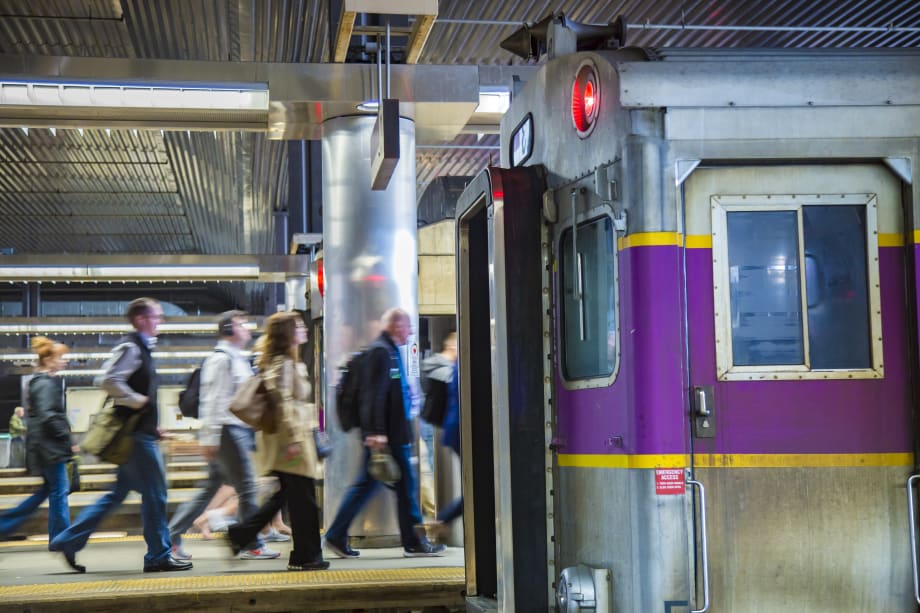
Hands-on training equipped motorperson graduates with the skills necessary for safe and efficient operation, which included yard familiarization training where they learned how to interpret track signals and maneuver rail vehicles safely.
Photo: MBTA
Boston’s MBTA announced the graduation of another large class of heavy rail motorpersons, continuing the momentum of previous efforts to increase graduating class sizes from the MBTA’s Training School.
The milestone achievement is a significant step forward in the MBTA's ongoing efforts to maintain reliability and provide consistent Red, Orange, and Blue Line service.
“The skills and expertise that these motorpersons have gained at the Training School will contribute to the MBTA’s mission of providing safe and reliable service. We can see from their enthusiasm that they embrace public service and they’re excited to be part of our team,” said MBTA GM/CEO Phillip Eng. “From Day One, the Healey-Driscoll Administration has made rebuilding our workforce a priority, and thanks to the Governor’s leadership, we are more competitive and the results are telling. We’re attracting talented individuals like these graduates who are now providing quality service to our riders.”
Training MBTA Motorpersons
The MBTA has made great strides in increasing the class size of motorpersons in training and is now graduating the largest number of graduates in 18 years.
A class size of 23 is now the standard at the Training School. Of the 23 motorpersons recently hired, as of March 27, 20 in total will have graduated from the MBTA’s Training School. This class of graduates joins a cohort of 23 motorpersons in training in October 2023 that resulted in 19 new heavy rail motorpersons.
The graduating class of highly trained professionals successfully completed the Training School’s rigorous program that prepared them to operate the MBTA's heavy rail system — consisting of Red, Orange, and Blue Line vehicles — safely and efficiently.
The comprehensive training included classroom instruction, hands-on experience, and extensive safety protocols, ensuring that each graduate is well-equipped to handle the demands of the job.
Hands-on training equipped motorperson graduates with the skills necessary for safe and efficient operation, which included yard familiarization training where they learned how to interpret track signals and maneuver rail vehicles safely.
Additionally, trainees toured the carhouse and maintenance facility to gain a comprehensive understanding of train movement within the yard and how maintenance facilities prepare vehicles for passenger service.
With the MBTA’s commitment to safety, this approach to training ensures that new motorpersons have the knowledge and practical skills necessary to operate trains safely and efficiently, ultimately contributing to a smoother and more reliable experience for riders, according to the agency.
Growing MBTA’s Workforce
The MBTA’s overall efforts to continue to rebuild its workforce are focused on diversity, recruitment, retention, skills training, and leadership development to cultivate the workforce needed to operate and maintain a modern transportation system.
The MBTA has invested in restructuring the senior leadership team; improving frontline teams, safety protocols, engineering, and planning; and workforce development and training to ensure employees can effectively fulfill their responsibilities.
The MBTA has exceeded hiring over 1,400 employees in 2023, surpassing a goal set by the Healey-Driscoll Administration, whose investment of $20 million in the supplemental budget also supported the Local 589 Agreement critical to the MBTA hiring efforts.
More Rail

New York MTA Advances Final Contract for Second Avenue Subway Expansion
Contract Four is the largest in the Second Avenue Subway Phase 2 project and includes construction of station infrastructure, tracks, and signals for the subway expansion, MTA officials said. Work on Contract Four will begin in 2027.
Read More →
San Diego MTS Breaks Monthly Trolley Ridership Record
Agency officials said July’s ridership indicates MTS’s continued recovery from the pandemic.
Read More →
Report Examines NJ TRANSIT Reliability, Funding Challenges
The Garden State Initiative analysis examines the roles of Amtrak infrastructure, fleet management, and agency operations while recommending a more performance-based approach to improving reliability.
Read More →
Stadler, CapMetro Sign Long-Term Rail Fleet Support Agreement
Beginning in 2027, Stadler will provide on-site technical expertise, spare parts support, training, and obsolescence management to help extend the reliability and longevity of CapMetro’s GTW fleet.
Read More →
Biz Briefs: Alstom Lands Canadian Contract, LYT to Supply California TSP, and More
In METRO's latest installment, we take a look at recent news from Complete Coach Works, Beep, FlixBus, and more partnerships making headlines across the transportation sector.
Read More →
CATS Gold Line Marks 5 Years of Service, 2.8M Passenger Trips
With a six-mile expansion planned, the Charlotte streetcar is positioned to connect more neighborhoods and major transit hubs across the region.
Read More →
Why Simulating Pedestrian Movement Has Become Essential for Modern Rail Stations
Pedestrian microsimulation is helping rail planners identify bottlenecks, test station designs, and prepare complex transit hubs for growing passenger volumes.
Read More →
Amtrak Begins Major Construction at New York’s Sunnyside Yard
The new maintenance facility will support Amtrak’s Airo trainsets while improving maintenance efficiency and turnaround times in New York.
Read More →
Chicago Leaders Unveil Plans for O’Hare Airport Express Train
The privately developed project would offer a 15-minute trip between downtown and O’Hare’s Terminal 2, with trains operating every 15 minutes on a dedicated track. The service would use battery-electric trains and three existing freight rail rights-of-way.
Read More →
OCTA Maps Out 30-Year Strategy to Protect Coastal Rail Corridor
The draft feasibility report identifies strategies to protect the coastal rail line for decades as the agency continues near-term stabilization and sand placement efforts.
Read More →