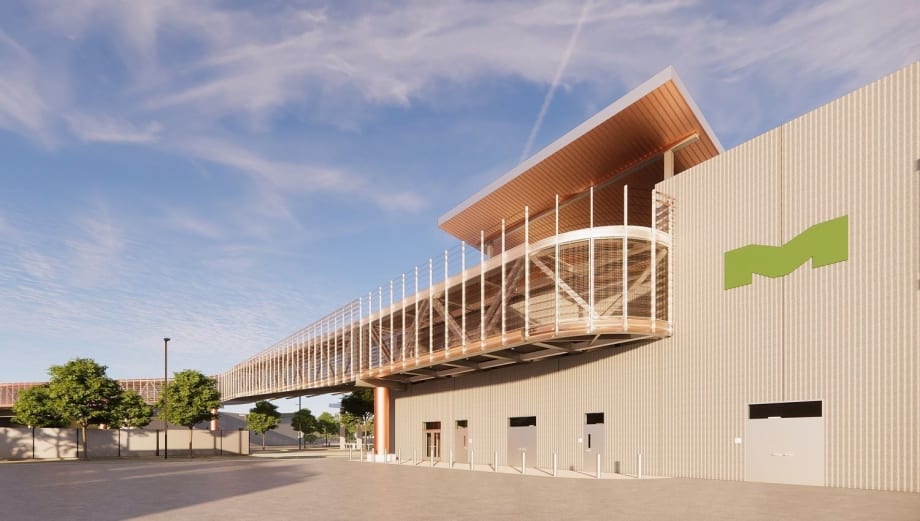
The SDTOC is the first of its kind in the U.S., as it is the first all-electric facility and the first to accommodate up to 100 articulated, zero emission BEBs.
The facility’s design also boasts many green energy features, including solar power, rapid charging stations with related infrastructure, xeriscape landscaping, and a reclaimed water system for environmentally friendly bus washing.
Photo: WSP
2 min to read
The Miami-Dade County Department of Transportation and Public Works (DTPW) began construction on a state-of-the-art Transit Operations Center (TOC) that will charge, service, operate, maintain, and house its new sustainable fleet of battery electric buses (BEB).
The SDTOC is the first of its kind in the U.S., as it is the first all-electric facility and the first to accommodate up to 100 articulated, zero emission BEBs.
Ad Loading...
Miami’s Transit Operations Center
The locally funded project, which was officially launched at a groundbreaking event, is being built on a 20-acre, county-owned site in South Dade.
“This groundbreaking is a proud moment for DTPW,” said Angel André Chavarria, sr. VP and alternative delivery project director at WSP. “Planning, design, and construction for this one-of-a-kind facility is a testament to the determination and forward-thinking project team working to address future climate conditions.”
WSP is providing innovative design and construction services for the project, which will serve as a key component of the county’s climate action strategy to operate a cleaner, more sustainable transit system.
The new facility also brings jobs and will better serve the mobility needs of the county’s fastest-growing area, which stretches from Homestead and Dadeland to Florida City.
“The new TOC will anchor Miami-Dade’s future transit operations and serve as a model for other communities seeking more sustainable transit systems,” Chavarria said.
Ad Loading...
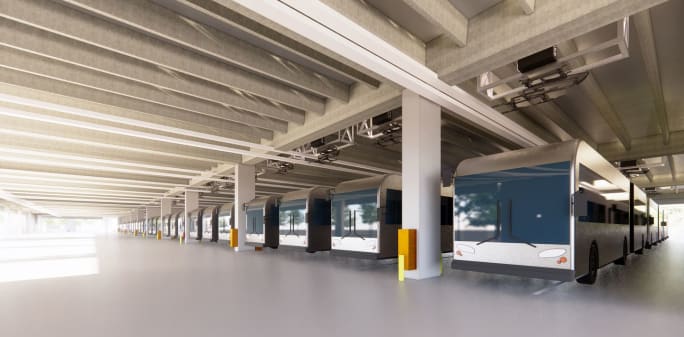
One of the design innovations is the retractable platform to reach the bus rooftops, where batteries are charged, which allows maintenance staff to step directly onto and off of the roof.
Photo: WSP
Design Innovations
Among the design innovations to be built are retractable platforms installed to reach bus rooftops, where batteries are charged.
“When a bus backs in, maintenance staff can step directly onto and off of the roof, making their work safer and more efficient,” Chavarria said.
The facility’s design also boasts many green energy features, including solar power, rapid charging stations with related infrastructure, xeriscape landscaping, and a reclaimed water system for environmentally friendly bus washing.
Additionally, in a major storm or crisis, the facility can be used as an emergency command center for DTPW bus operations.
While the project is to be delivered in two phases, the new TOC is expected to be completed in Summer 2026.
See how three Gillig battery-electric buses powered festival stages while the agency’s new Park & Ride service carried approximately 1,000 attendees, demonstrating another potential use for transit agencies’ electric fleets.
The new name represents a renewed vision for the nonprofit focused on advancing clean, equitable, and affordable transportation solutions that move people and goods.
John Hroncich discusses BAE Systems’ modular and scalable approach, lessons learned from decades of real-world operations, and how agencies can identify electrification strategies that fit their fleets.
UB, transportation solutions provider WeDriveU, and fleet electrification specialist Zenobē marked the deployment in the presence of students, university administrators, and local officials.
From manufacturers and suppliers to transit agencies and motorcoach operators, these updates offer a snapshot of the projects, partnerships and business moves driving the industry forward.
The agency’s maintenance chief discusses leadership, workforce development, zero-emission technology, and preparing technicians for the future of public transportation.
The firm will work with CTDOT and RVT to define the facility layout, operational requirements, and long-term flexibility for RVT’s growing electric fleet.
The fast-charging infrastructure will help extend electric bus range, improve fleet utilization, and support DASH's goal of transitioning to a fully zero-emission fleet.