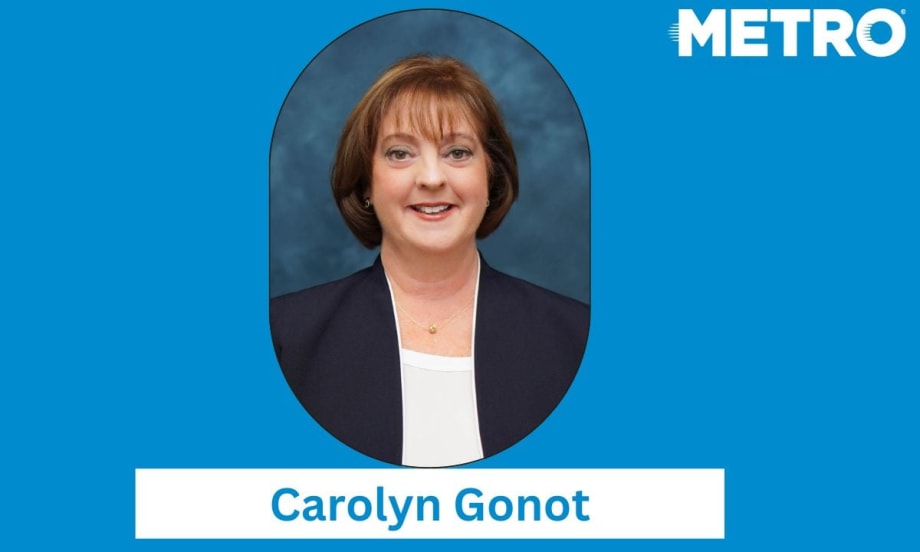
Carolyn Gonot's Path Paved with Experience, Inclusiveness
As part of METRO's Women in Transportation series, Santa Clara VTA's Carolyn Gonot talks her private sector experience, listening to feedback to build consensus, and much more.
by Staff
November 14, 2024
Carolyn Gonot, GM/CEO of VTA, has been working in the transportation industry her entire career and received the Woman of the Year Award in 2013 among other awards and recognitions.
Photo: VTA
4 min to read
Carolyn Gonot took an interest in transportation early on, riding transit as a child and through school.
Eventually she went into civil engineering with a focus on transportation, and since 2021, has served as GM/CEO of San Jose, Calif.’s Santa Clara Valley Transportation Authority (VTA).
Ad Loading...
“I did my master’s with a focus on transportation, took transportation planning, and knew I was going into transportation work,” says Gonot. “I always had a big focus on transit corridor work and transportation. I always had a desire to be more interested in the overall aspects of transportation’s role in our society.”
Getting Started in the Private Sector
Before becoming GM/CEO at VTA, Gonot started working in the private transportation sector with a transportation planning and engineering consulting firm.
During this time, she picked up several useful skills before moving into the public transportation sector.
“I think that it gave me the ability to work in a number of places in a variety of aspects and areas of transportation planning,” says Gonot. “Transportation planning includes work anywhere from rural areas to urban areas to suburban areas, even when it comes to transit or transportation or highways. It was amazing all the stuff that you could do that has a transportation aspect to it.”
After about a decade in the private sector, she began her career with VTA, taking on a variety of leadership roles over the next 23 years. These included serving as chief engineering and program delivery officer, chief development officer for congestion management, chief BART program officer; and deputy director of VTA’s Congestion Management Program.
Ad Loading...
An Early Project Nears Completion
One project that Gonot is particularly proud of leading is the BART Silicon Valley Berryessa Extension that links Alameda County to Santa Clara County by rail, extending Bay Area Rapid Transit (BART) service 10 miles from Fremont through Milpitas and into San Jose. These two new stops created options for riders to connect with VTA’s light rail and bus systems throughout Santa Clara County.
Now as GM of VTA, Gonot continues under her leadership as the agency extends the BART alignment six more miles, with four more stations into San Jose to Santa Clara.
“I have spent what feels like my entire career working on trying to get all those pieces built,” says Gonot.
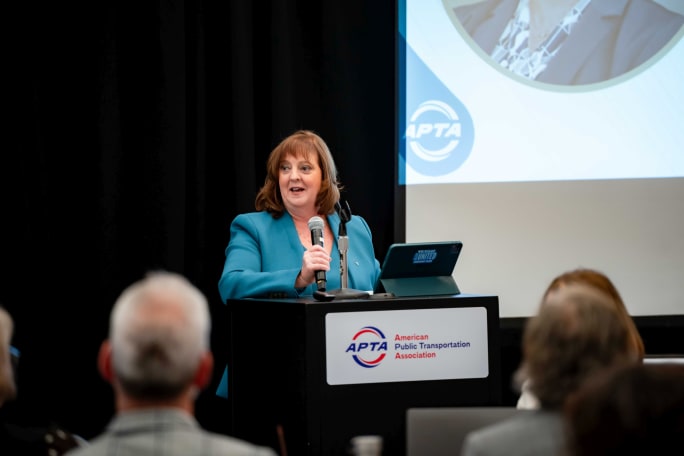
Before becoming GM/CEO at VTA, Carolyn Gonot started working in the private transportation sector with a transportation planning and engineering consulting firm.
Photo: VTA
Learning to Lead
In 2019, Gonot became the first woman to serve as executive director at the Utah Transit Authority, before finding her way into her current position.
While working up to the leadership position she now holds, Gonot prioritized the communities she was working with.
Ad Loading...
Finding out what is important to people in an area is an important part of transit planning. Transit plays a key role in the quality of life that people have.
“One of the things I did was sit in meetings with the public,” says Gonot. “Talking to the public and listening to their stories and what was important to them and holding that sort of close to your heart and mind about what’s going on. I always talk to employees coming in about how VTA is really more than the transportation agency for the county.”
Encouraging Women into the Field
There have been some challenges, however, as Gonot worked in the transportation industry. Even today, Gonot finds that occasionally she is the only woman in the room during meetings.
As times change, those situations are becoming less common, and she is actively encouraging women to get involved in the transit industry.
“We have so many jobs at VTA and so many good paying jobs that we really want to get women into the field,” says Gonot. “VTA has so many career ladders, so even if you come in as a bus operator, there are real opportunities to go into a whole variety of different areas. Some of those jobs are on a schedule that’s not consistent and difficult to deal with, and you need a lot of support and those are the things that we are trying to tackle right now.”
Ad Loading...
Gonot has been a longtime member of the Women’s Transportation Seminar and took advantage of the opportunities it offered to help grow her career.
She also encourages colleagues to get involved and participate on panels highlighting things like VTA’s mental health programs and the Women Innovating Transit initiative (WIT).
“WIT is a group of women VTA employees, mostly front line workers, whose goal is to support other women in transit and develop programs that help support women coming into the field or even once they’re here,” Gonot said. “One of the things we really want to do is make sure that our system feels safe for women to travel on. I feel like we have a fairly safe system, but I also want to make sure that even our operators feel safe as women driving our buses and trains at night.”
Contract Four is the largest in the Second Avenue Subway Phase 2 project and includes construction of station infrastructure, tracks, and signals for the subway expansion, MTA officials said. Work on Contract Four will begin in 2027.
The new regional transit authority appointed its first board chair and interim executive director while extending reduced fares across CTA, Metra, and Pace for eligible riders.
Reliability-Centered Maintenance helps transit agencies move beyond routine checklists to focus limited resources on the assets and failures that have the greatest impact on safety, reliability, and service.
The 90-day demonstration will deploy coordinated security teams at five light rail stations while testing controlled access and gathering data to guide future investments.
Learn about delivering 1300 gates at 91 stations while managing fare evasion. Explore the large scale deployment, solution customization and real-world results that affect the region. Prepare for deployment in your region now.
Between packed transit stations and team motorcoaches, see how agencies and operators across North America tackled the transportation demands of the 2026 FIFA World Cup.
The stopgap keeps federal transportation programs moving, but missing advance funding could complicate the transit and rail projects agencies are planning next.