



D.C. Approves Better Bus Redesign
Planners started the project in 2022 with the goal of making the bus system easier to use, faster, and more reliable.

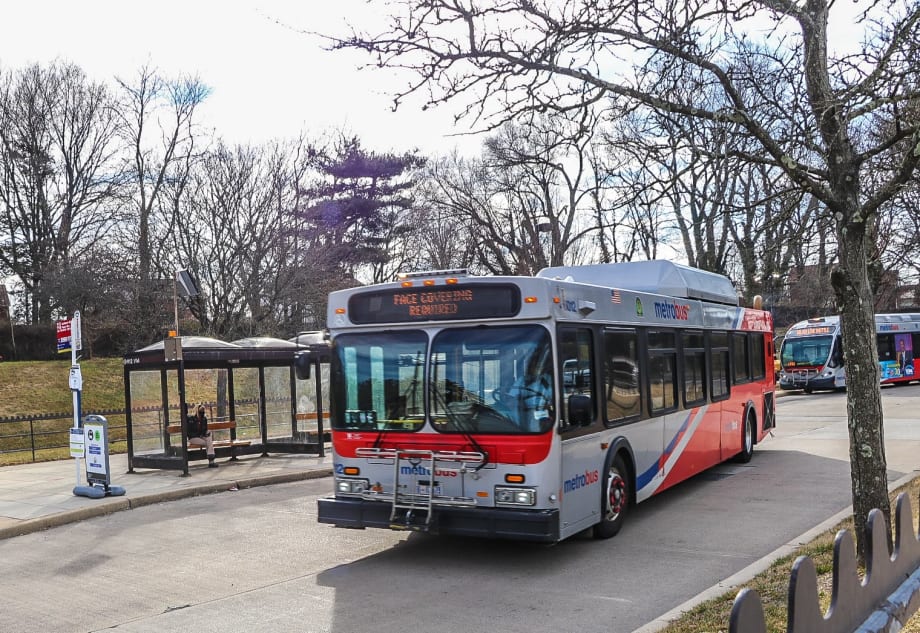
With community input, WMATA released two plans — a financially constrained network, which was adopted — and a Visionary Network that would increase frequencies and add more routes but cost 35% more than current resources.
Photo: WMATA
The Washington Metropolitan Area Transit Authority’s board voted to approve the Better Bus Network Redesign — the first major overhaul of the Metrobus network in its 50-year history.
Planners started the project in 2022 with the goal of making the bus system easier to use, faster, and more reliable.
WMATA will rename all routes with easier to understand route designations, eliminate 500 underused bus stops that slow down the bus, and make changes to most routes to better serve customers.
Better Bus Network Highlights
Some of the highlights of the new network include new connections from L’Enfant Plaza to National Harbor and from Deanwood to Washington Hospital via Ft. Lincoln in D.C., direct service across Glebe Road from Tysons to Ballston to Potomac Yards in Virginia, and new limited stop frequent service on Baltimore Ave/Route 1 corridor in Maryland.
WMATA also added 11 more routes to its frequent service network with service every 12 to 20 minutes.
Many bus routes are vestiges of the old trolley system in D.C., but travel patterns have changed. The network redesign will get people where they want to go faster and more directly.
“The DMV region has evolved over time and so should our bus network,” said WMATA Board Chair Valerie Santos. “Better Bus will improve our operating efficiency, enhance connectivity, and increase Metro’s environmental benefits. All of this leads to a more customer-friendly bus system that benefits our region that we at Metro serve.”
What’s Next
WMATA will launch the changes in June 2025.
“The bus is the backbone of transportation in our region, and this redesign will make our bus system more efficient for our customers,” said WMATA GM/CEO Randy Clarke. “This was a huge, years-long undertaking by our staff, and I’d like to thank them for their hard work and dedication to improving bus travel.
Over the next seven months, the agency will educate the public on the changes, rewrite bus schedule, train bus operators on new routes, update bus stop signage, and change data feeds that serve its transit planning app and third-party directions apps like Google Maps and Transit.
WMATA officials said they will continue to work closely with its partners at local departments of transportation to install new bus stops and make other adjustments to street infrastructure where needed.
How WMATA Got Here
Planners began the process two years ago by analyzing customer travel data to see how travel patterns have changed.
They engaged local stakeholders and community advocates and interviewed bus drivers and riders.
With community input, WMATA released two plans — a financially constrained network, which was adopted — and a Visionary Network that would increase frequencies and add more routes but cost 35% more than current resources.
The agency said it wants to someday implement the Visionary Network but doesn’t currently have the funding to do so.
After introducing the two plans, WMATA engaged nearly 45,000 people during the public comment period with more than 100 events and pop ups at Metro stations, on buses, and throughout the community.
Planners read and considered nearly 21,000 comments and refined the final network.
More Bus

New York MTA Plans Largest Bus Fleet Upgrade in More Than a Decade
The agency is seeking manufacturers for 650 new CNG buses to replace aging vehicles, improve reliability, and advance its broader fleet modernization strategy.
Read More →
Building a Flexible Path to Transit Electrification
John Hroncich discusses BAE Systems’ modular and scalable approach, lessons learned from decades of real-world operations, and how agencies can identify electrification strategies that fit their fleets.
Read More →
Bus Tech Talk: Keeping Transit Technicians Ahead of the Technology Curve
LA Metro’s Obed Mejia discusses technician training, evolving maintenance technology, fleet replacement, and strategies for getting the most out of today’s transit fleets.
Read More →
Biz Briefs: RIPTA Unveils New Frontrunners, Clevland RTA Adds New Siemens, and More
In METRO's latest installment, we take a look at recent news from Siemens, Prevost, Dodge, and more partnerships making headlines across the transportation sector.
Read More →
People Movement: Holly Arnold Joins Transdev and More
In this edition, we also cover recent appointments and announcements at Pace, CamTran, MCI, and more, showcasing the individuals helping to shape the future of transportation.
Read More →
The High Cost of Transit Buses: Industry Leaders Look to Procurement Reform
Transit leaders and policymakers examine how standardized bus designs, streamlined procurement, and predictable funding could help agencies stretch budgets and deliver better service.
Read More →
The Business Voice Behind Public Transportation
As chair of APTA’s Business Members Board of Governors, Ray Melleady explains how more than 850 business members are partnering with transit agencies to advance funding, innovation, and industry-wide collaboration.
Read More →
From Surviving to Thriving: Building Stronger Transportation Organizations
Bus Business Consultants founder Brian Dickson shares lessons on leadership, organizational health, and creating options for long-term success in a changing transportation industry.
Read More →
Finding the ‘Happy Medium’: Optimizing Maintenance Without Sacrificing Reliability
The key to maintenance optimization isn’t doing less work—it’s doing the right work at the right time on the right assets.
Read More →
LA Metro, City of West Hollywood, and Partners Advance Smarter Bus Lane Enforcement
The award-winning partnership combines AI-powered detection with human oversight to improve bus reliability, accessibility, and enforcement efficiency.
Read More →