



ABA’s New President/CEO Discusses Learning the Motorcoach Industry, Future Goals
With just a couple of months under his belt, Fred Ferguson talks about what he’s learned about the industry, the opportunities he sees, and how the industry is emerging post-COVID pandemic.

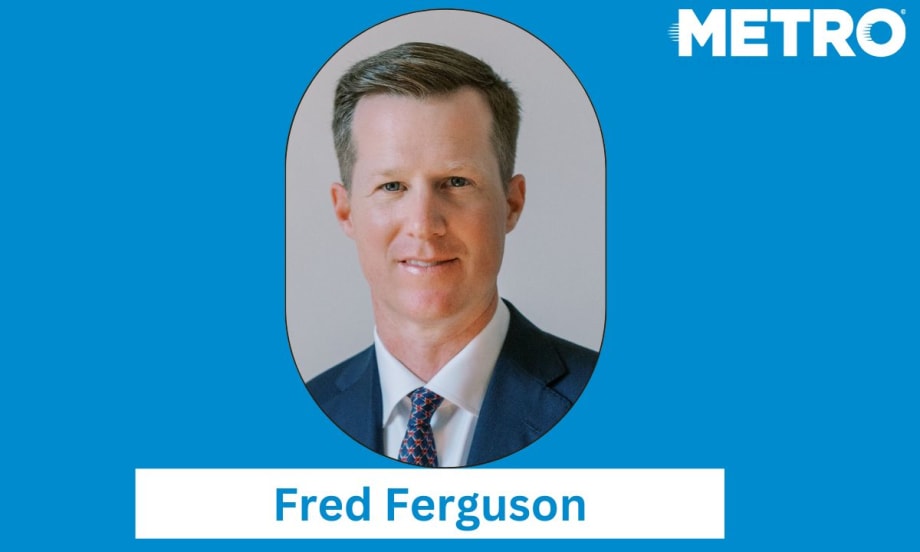
In his new role, Fred Ferguson will lead ABA into its next era, focusing on uniting diverse stakeholders to drive shared causes and improved outcomes.
Photo: American Bus Association
In July of this year, the American Bus Association’s (ABA) new President/CEO Fred Ferguson took the helm after Peter Pantuso’s illustrious 28-year run.
Ferguson brings over 15 years of extensive experience in public policy, strategic communications, and leadership within the government, non-profit, and private sectors to the job, most recently serving as VP, public affairs and communications, for Vista Outdoor Inc.
In his new role, Ferguson will lead ABA into its next era, focusing on uniting diverse stakeholders to drive shared causes and improved outcomes.
METRO’s Executive Editor, Alex Roman, recently had the chance to sit down with Ferguson to discuss his first 60-days on the job, the state of today’s motorcoach industry, his goals, and much more.
On Getting Acclimated with the Industry
As we’re talking, it’s been just over 60 days since you’ve been at the helm. Can you talk about your perception of the motorcoach industry as you continue to get your feet wet, so to speak?
I absolutely love it. It is a better job 60 days in, than it was back when I interviewed. And while there are several reasons for that, one that particularly stands out is the people. The people I’ve met in the industry are far more welcoming, personable, and authentic than I could have ever guessed.
Here at the ABA, our average employee tenure is 10-plus years, with many employees being here for over 20 years. When you have that level of continuity, it creates a work environment where people love to be there. It’s the same with our members. Many of them have been ABA members for decades, and they love being part of our association. Working here is really like being part of a family and that’s been really fun for me.
The second reason I love this job is that personal connection is also at the heart of the ABA value proposition in a way I didn’t fully appreciate coming in. What I mean by that is a substantial chunk of our membership are not people who operate buses. We have the manufacturers of buses and the suppliers of parts and services that go into the buses, but we also support the travel and tourism industries, as well as the operators, destinations, attractions, and more.
So, even though our name is the American Bus Association, our footprint is far broader than that. From a dynamic standpoint, it’s an awesome place to be because you can go into a meeting with bus operators or marketing organizations, but you can also go into a meeting where everyone’s together talking about how we can all support one another, and that’s what I like about the ABA.
So coming in, what kind of short-term goals did you set for yourself and the association?
The ABA is extremely healthy, both from a financial and operational standpoint. The leadership continuity that Pete Pantuso brought to the table means this organization is strong.
When someone like me comes in, it’s not as if you have to batten down the hatches on day one and go into transformation mode. I am grateful for that, because what it’s allowed me to do is really look, learn, and listen in these early days because that breadth of the association, which I mentioned earlier, is complicated.
Being able to have the time to meet the different sectors and their leaders during the first 60 days was key. We have a 38-member board of directors, plus the ABA Foundation, which has its own board of directors, so with the association being on good footing that gave me a chance to meet all of these people. I didn't meet every single person during the hiring process. Now, I feel like I've kind of met the full team.
We have used the early days to launch a lot of internal staff planning, which has been focused on getting to know one another. We’ve done an offsite. We got the team a bunch of swag, including some Nike Dunks that on the back celebrate our upcoming 100th anniversary, which is an incredible milestone. So, my first 60 days were a lot about learning and focusing on our staff.
From an association perspective, we’re starting to see travel come back. Many economic indicators continue to be positive, and now it’s time for the ABA to start going on the offensive so that we can do more to expand that member value proposition in more dynamic ways. That now has become my immediate focus — figuring out what the value proposition is and how we sell and expand it so that we can continue to bring the larger group travel industry together?
As people continue to grow their businesses and expand orders and bookings, we want them to count on us to represent the industry and their interests before Congress and federal regulatory agencies, as well as be a place where people can come to grow professionally through our educational seminars and networking events. If we can do all that well and communicate effectively, then the sky’s the limit.
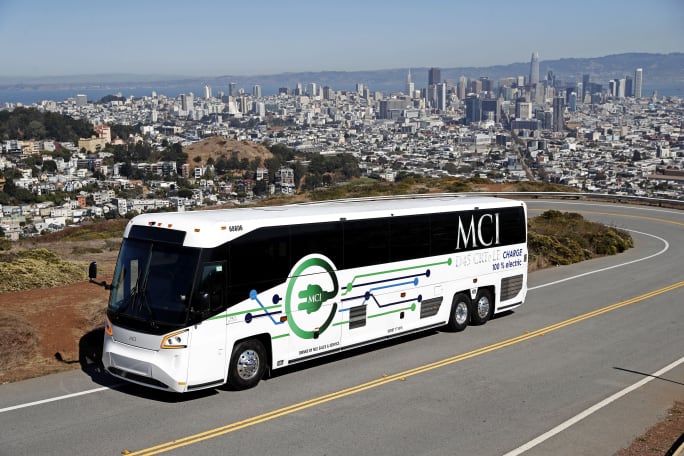
The ABA is hoping to continue to work with federal regulators to slow mandates that would force operators to have to go electric.
Photo: MCI
State of the Industry
Now that we’re seeing the industry begin to swing upwards post-COVID, what are some of the issues they are facing as they begin to look toward the future?
One is the regulatory environment. Earlier you asked if there were any kind of concerns as I walked through the door, and the regulatory hurdles facing the motorcoach industry are probably worse than I expected.
A good example of these regulations is the country’s migration to electric vehicles, which is happening every single day. There is a sort of assumption amongst policymakers and advocates that because we are seeing EV adoption at the consumer level you can easily have that same level of adoption at the large commercial vehicle level.
In our world, though, we do not represent transit agencies. We represent the private operators, the ones doing line or charter services and the like. But what I’m finding through my listening and learning sessions is that the charging infrastructure to support electric vehicle fleets at the motorcoach level, nationally and at scale, simply doesn’t exist.
In addition, the strategic planning as it relates to roads and safety medians has been designed for the internal combustion engine and not for the weight and power of a large motorcoach filled with batteries that are extremely heavy. The roads aren’t necessarily ready. The safety infrastructure isn’t ready. Our ability to charge, recharge, and manage hours of service just isn’t there yet.
The opportunity for us coming from the motorcoach industry is, as a whole, that we are extremely sustainable and environmentally friendly. When you really dive into the innovations of the diesel engines that are running our machines today, the environmental output of these diesel engines is honestly spectacular.
We are currently in the process of developing reports, one pagers, and whatever else we can to help tell the story that, yes, while we support EVs and want to have a roadmap to get to an all zero emissions world, we are still an environmentally sound way of transporting people as we exist today.
The reason we want to tell that story is we would like to work with public and private partnerships on developing what the future fleet looks like, but we also need time because doing this at scale nationally just doesn’t happen overnight. Our operators are commercial enterprises, so the more we can tell that story, it will give us more space to work with regulators and legislators so that they're not issuing these heavy-handed mandates that are going to limit our ability to move people, if not done with some thoughtful timing and considerations.
And from the operators themselves, can you talk about what you’re learning from them?
There is a lot that has changed since COVID, including a lot of industry consolidation and smaller operators that have gone out of business. There have also been some larger operators, like Megabus, who have essentially gone under and we’re now seeing some of these services being gobbled up by some of our industry’s larger, more established companies.
Any time you have that type of consolidation, there are questions about who’s in charge? You know, they used to work with a certain company but now they don’t know who they are working with. We’re seeing that happen to both our operators and our tour and travel members. As an association with a large member directory, we want to get more people using that resource, so that our members can potentially figure out who the person they should be talking to is when there is a change or acquisition.
Other than that, fuel costs are always going to be top of mind. Insurance costs; I’m learning more and more about the insurability of our operations, which is a huge question on our people’s minds.
But honestly, I am hearing the same questions — what does my booking sheet look like? Do I have the liquidity to manage the maintenance and upkeep of my vehicles knowing that my busy months are still 30 days out when, here as we stand today, we are not even fully booked. To me, it’s things of that nature.
I'm learning, like any other business, it's about cash flow management, demand planning, and making sure, in a business where people are your biggest asset, that you have what you need in terms of coverage. They are all remarkably similar pressures to the ones faced by small businesses, or businesses in general, really.
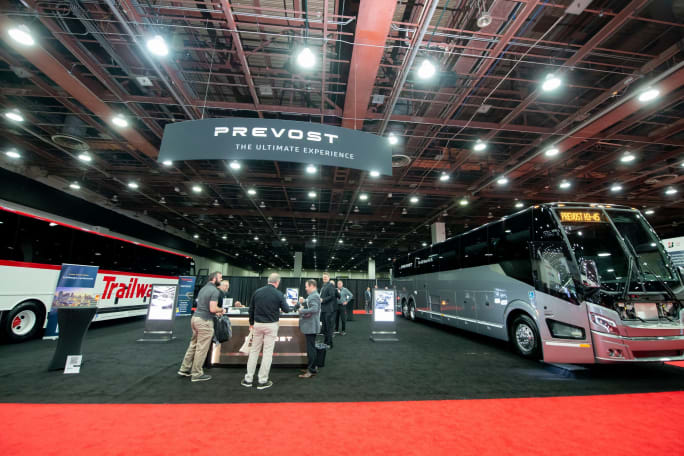
Fred Ferguson is set to helm his first ABA Marketplace in February.
Photo: American Bus Association
Looking Ahead
With the new President and Congress coming in, can you talk a little bit about the opportunities the ABA and industry have in potentially broadening the understanding of what it is you bring to the table?
The opportunity we have to insert ourselves into a broad array of policies is a huge upside. What I mean by that is people typically view us as a lobbying operation focused very narrowly on bus travel and regulations. In reality, we’re a much bigger part of the broader travel and tourism landscape.
For example, the Department of Commerce has an undersecretary for travel and tourism who is responsible for producing the country’s travel and tourism strategic plan, and our team is not involved in the process. For me, one of our focus areas, whether it’s a Republican or Democrat administration, is that we need to be seen as an active, proactive, and reliable value additive partner in developing that strategic plan and being the voice for group and motorcoach travel.
There are opportunities like that, where we need to make sure we are showing up in places where you typically might see the airlines, car companies, and others who are considered mainstream when it comes to travel. We want to be there too, because collectively we are a $100 billion industry, which is nothing to sneeze at. The number of consumer trips we facilitate every year is on par with the number of consumer trips that happen via the airlines. We have to tell that story, so that when we get into specific policymaking and legislation, we have people say, ‘my goodness, I had no idea you were so broad and critical in helping the country move.’
During COVID, policymakers were unsure of what we did and what our economic impact was. When we're in an emergency situation and looking for support or a policy that could give our operators relief, what I found was that we were spending too much time explaining who we were and what we actually did, which kept us behind. In contrast, because with every other transportation modality they already knew who they were, those industries were able to jump straight to the ask.
We really have to establish our name ID and establish our brand with policymakers, so that as we develop our policy agenda, it becomes a focus of here are the issues we care about and we know who you are and who you represent. We really have to build that out before we just jump into advocating for X, Y, and Z policy.
Now, in the interim, I can tell you, there are many policies we're going to pay close attention to. For example, in 2026 the federal government will reauthorize the Federal Highway Surface Transportation Program. We are gearing up to be an active participant in that reauthorization process, so that our interests are represented. We have to keep doing the tactical work, while at the same time, continue doing the strategic work to really establish who we are, what we stand for, and why policymakers should listen to us when we speak.
And looking forward to ABA’s big event, how excited are you to attend your first Marketplace?
We are tracking this event to easily be our biggest show since COVID. We’re seeing different data that travel is picking up. We put out a research report on the number of motorcoaches built each quarter, and we’re starting to see some significant growth, quarter-over-quarter, and year-over-year.
When I look at those indicators relative to Marketplace registration, what it's telling me is that the industry is solid and there is much optimism. In 2026, we have the 100th anniversary of Route 66, the soccer World Cup, the Declaration of Independence turns 250, and of course the ABA will celebrate 100 years. We are seeing a lot of group travel momentum pegged to those major events. What I'm excited for at Marketplace is to see if that buzz really comes through on the show floor.
From a personal perspective, I’ve met so many people and delegates in the industry through Zoom that it’s going to be great to meet people in person at Marketplace and shake their hands. I think for this event, I’m still going to be in listening mode.
It's hard for any leader of ABA to truly execute a strategic plan without having gone through a Marketplace. So even though I've been on the job for 60-plus days, it's almost like getting out of Marketplace will be like my unofficial start. Once I get through the event, learn the ropes, and hear how things are really going, I feel then we can really start to discuss what we need to change and improve so ABA can be strong for the next 100 years.
So, what I'm most looking forward to is continuing this learning tour, because I know it's going to be a firehose of meet and greets and different perspectives, opinions, and philosophies, and I’m excited for that.
More Motorcoach

People Movement: Dan Dipert Coaches Adds Third-Generation Leader, Keolis Names New Valley Metro VP/GM, and More
In this edition, we also cover recent appointments and announcements at the Wabtec, SilverRide, HNTB, and more, showcasing the individuals helping to shape the future of transportation.
Read More →
METRO Opens Submissions for 2026 Motorcoach Awards
Nominations are now being accepted for METRO Magazine’s Operator of the Year and Innovative Operator of the Year awards.
Read More →
Biz Briefs: Alstom Lands Canadian Contract, LYT to Supply California TSP, and More
In METRO's latest installment, we take a look at recent news from Complete Coach Works, Beep, FlixBus, and more partnerships making headlines across the transportation sector.
Read More →
Biz Briefs: RIPTA Unveils New Frontrunners, Clevland RTA Adds New Siemens, and More
In METRO's latest installment, we take a look at recent news from Siemens, Prevost, Dodge, and more partnerships making headlines across the transportation sector.
Read More →
People Movement: Holly Arnold Joins Transdev and More
In this edition, we also cover recent appointments and announcements at Pace, CamTran, MCI, and more, showcasing the individuals helping to shape the future of transportation.
Read More →
ABA Report: Motorcoach Travel Generates $161.6B Economic Impact
The 2025 analysis finds motorcoach travel supported nearly 900,000 jobs and generated $28 billion in federal, state, and local taxes.
Read More →
CharterUP’s Armir Harris on Technology, AI, and the Future of Group Mobility
In a recent episode of METROspectives, CharterUP Founder/CEO Armir Harris discussed the company’s evolution from an online charter bus marketplace into a technology platform supporting public- and private-sector mobility and much more.
Read More →
People Movement: ABC Names John Walsh as Chief Commercial Officer
In this edition, METRO also covers recent appointments and announcements at the DART, STV, and more, showcasing the individuals helping to shape the future of transportation.
Read More →
From Surviving to Thriving: Building Stronger Transportation Organizations
Bus Business Consultants founder Brian Dickson shares lessons on leadership, organizational health, and creating options for long-term success in a changing transportation industry.
Read More →
Biz Briefs: Luminator Marks Milestone and More
From manufacturers and suppliers to transit agencies and motorcoach operators, these updates offer a snapshot of the projects, partnerships and business moves driving the industry forward.
Read More →